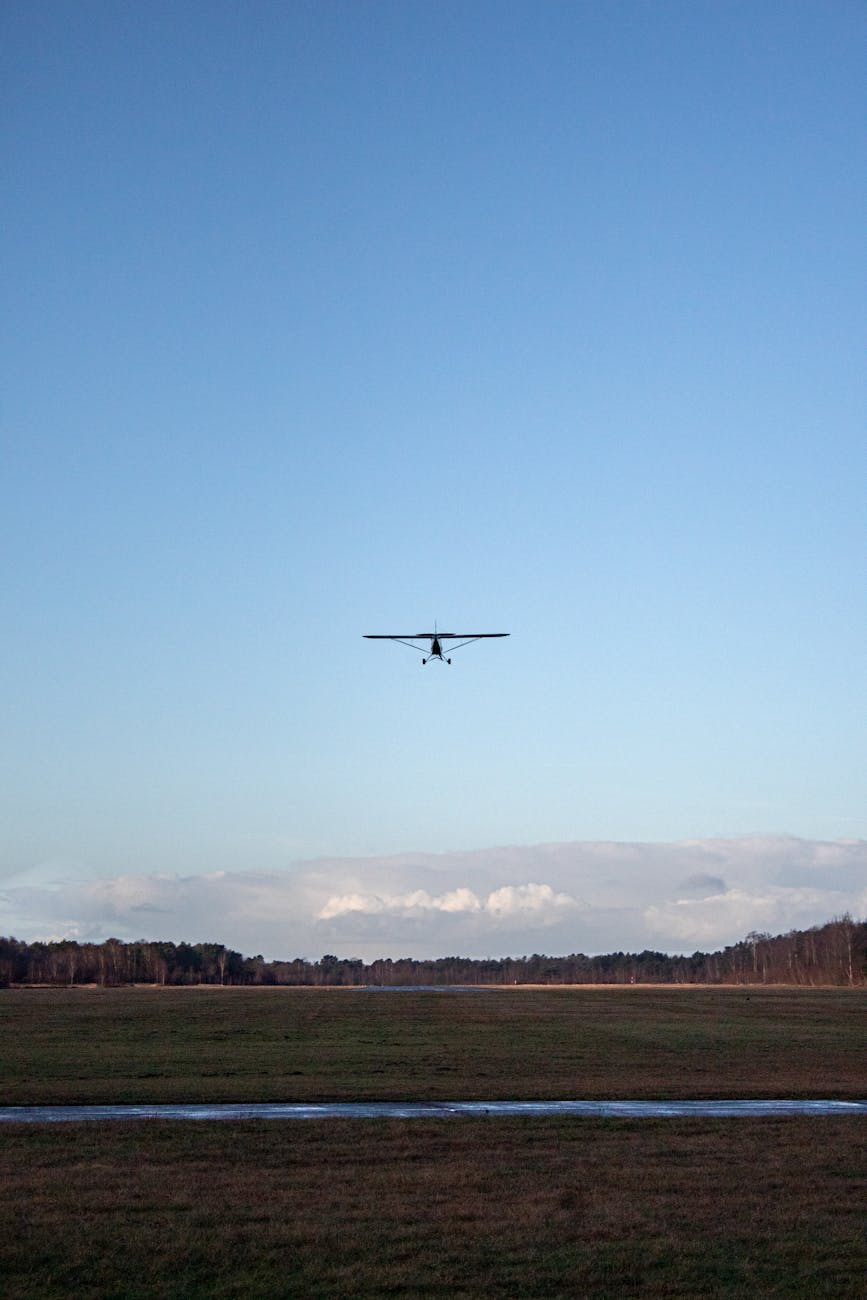
In aviation, runway length is margin. More pavement means more options, more forgiveness, and more room for error. But on the tiny Caribbean island of Saba, margin is a luxury aviation simply doesn’t have.
Perched on a cliff above the sea, Juancho E. Yrausquin Airport (IATA: SAB, ICAO: TNCS) is widely recognized as the shortest commercial runway in the world, measuring just 400 meters (1,312 feet). There is no overrun, no parallel taxiway, and no second chance. One end drops straight into the ocean; the other ends at a rocky hillside.
This article is a deep, aviation-focused look at:
- why Saba’s runway is so short,
- how aircraft operate there safely,
- what pilots must do differently,
- and why this airport has become legendary in both general and commercial aviation.
Where the World’s Shortest Runway Is Located
Saba is a small volcanic island in the northeastern Caribbean, part of the Kingdom of the Netherlands. The island is steep, mountainous, and ringed by cliffs, leaving almost no flat land suitable for an airport.
The only viable location for an airstrip was Flat Point, a narrow plateau on the island’s northeast coast. Even there, engineers had to carve the runway into solid rock and stop construction where geography simply made further extension impossible.
Key airport facts
- Airport: Juancho E. Yrausquin Airport
- Runway: 12/30
- Runway length: 400 m / 1,312 ft
- Surface: Asphalt
- Elevation: ~60 ft MSL
- Commercial operations: Yes (limited)
This is not “short by GA standards.” This is short by any standards.
Why the Runway Is So Short
The runway length at Saba is not the result of cost-cutting or poor planning. It is the maximum length physically possible on the island.
Several constraints define the runway:
- Cliffs on both ends – one end drops into the Caribbean Sea, the other terminates near steep terrain.
- No room for overruns – there are no engineered materials arrestor systems (EMAS) or paved safety areas.
- No space for extension – the surrounding terrain is protected and geologically unsuitable for major expansion.
- Environmental limitations – expanding would require massive ocean reclamation and cliff removal.
In other words: 1,312 feet is all the island can offer.
What Aircraft Can Land on the Shortest Runway in the World?
Despite its length, Saba does support scheduled commercial service—but only by aircraft that meet very specific performance and certification criteria.
Primary aircraft type: DHC-6 Twin Otter
The De Havilland Canada DHC-6 Twin Otter is the backbone of Saba operations.
Why it works:
- Exceptional STOL (Short Takeoff and Landing) performance
- High-lift wing design
- Robust landing gear
- Proven reliability in extreme environments
- Certified performance margins for very short fields
Even then, operations are conducted with strict weight limits, conservative power settings, and favorable weather requirements.
What you won’t see at Saba
- No jets
- No turboprops without certified short-field capability
- No private aircraft without prior approval
- No training operations
- No go-arounds in the traditional sense
This is a destination airport, not a practice field.
Pilot Requirements: Who Is Allowed to Land There?
Saba is not just about aircraft capability—it’s about pilot qualification.
Commercial pilot restrictions
Only pilots who:
- are specifically trained for Saba operations,
- have completed special airport qualification training, and
- are approved by the operator and local aviation authority
are permitted to land there.
This training typically includes:
- detailed performance planning,
- stabilized approach discipline,
- precise airspeed control,
- short-field braking technique,
- wind and turbulence assessment,
- and rejected landing decision-making before the runway threshold.
Why general aviation pilots can’t just “drop in”
Even if a GA aircraft could theoretically land within 1,300 feet, permission is tightly controlled, and insurance, regulatory, and safety considerations make casual GA operations impractical or impossible.
This is about risk containment, not pilot ego.
How Approaches and Landings Work at Saba
No margin for floating
At most airports, a little float is annoying. At Saba, float is unacceptable.
Pilots must:
- cross the threshold at precisely the correct airspeed,
- touch down at a predetermined point,
- apply maximum braking immediately,
- and stop before the pavement ends—because it ends abruptly.
Go-arounds are limited
Once below a certain point on final, a go-around may not be viable due to terrain, wind, and climb gradient limitations. This makes decision-making earlier in the approach absolutely critical.
Wind considerations
Saba is surrounded by water and steep terrain, which can cause:
- mechanical turbulence,
- wind shear near the cliff edges,
- rapidly changing crosswinds.
Only operations within strict wind limits are permitted.
Why Saba Is Often Called the “Most Dangerous Airport”
From a public perception standpoint, Saba is often labeled:
- “the most dangerous airport in the world”
- “the scariest runway”
- “the ultimate pilot challenge”
From a professional aviation standpoint, that label is misleading.
Reality check
- There have been no fatal commercial accidents attributable to runway length at Saba.
- Operations are conservative, not reckless.
- Aircraft and pilots are highly specialized.
- Flights are canceled frequently when conditions are not ideal.
In aviation terms, Saba is high-risk by environment, but low-risk by design and procedure.
It’s not dangerous because of carelessness—it’s safe because of discipline.
How Saba Compares to Other Famous Short Runways
Saba often gets grouped with other dramatic airports, but it stands apart in key ways.
Lukla (Nepal)
- Longer runway (~527 m)
- Much higher elevation
- One-way operations
- Significant weather risks
Courchevel (France)
- Sloped runway
- Longer than Saba
- Seasonal operations
- Visual illusions due to slope
Barra (Scotland)
- Beach runway
- Tidal operations
- Soft surface
- Much longer usable distance
Saba remains the shortest paved runway used for scheduled commercial service.
Why the Shortest Runway Still Matters in Modern Aviation
In an era of long runways, automation, and large safety buffers, Saba represents something important:
1. Performance still matters
Aircraft performance charts aren’t academic exercises. At Saba, every foot counts.
2. Pilot skill still matters
Automation helps, but precision flying, judgment, and discipline remain irreplaceable.
3. Infrastructure isn’t uniform
Aviation must adapt to geography, not the other way around.
4. STOL aircraft still have a role
The Twin Otter, designed decades ago, remains perfectly suited for missions modern aircraft can’t handle.
What Pilots Can Learn from Saba (Even If They Never Fly There)
You don’t need to land on a 1,312-foot runway to learn from Saba.
Key takeaways for any pilot:
- Respect stabilized approach criteria
- Know your aircraft’s real landing performance, not optimistic numbers
- Understand how weight, wind, and density altitude affect margins
- Make go/no-go decisions early
- Don’t normalize risk just because “it usually works”
Saba is an extreme case—but the principles apply everywhere.
Final Thoughts: The Shortest Runway as a Symbol
Juancho E. Yrausquin Airport is more than a trivia answer. It’s a reminder of what aviation looks like when environment dictates design, and when discipline replaces margin.
It exists not because it’s easy—but because it’s necessary.
And in doing so, it has earned its place as one of the most fascinating airports on Earth.