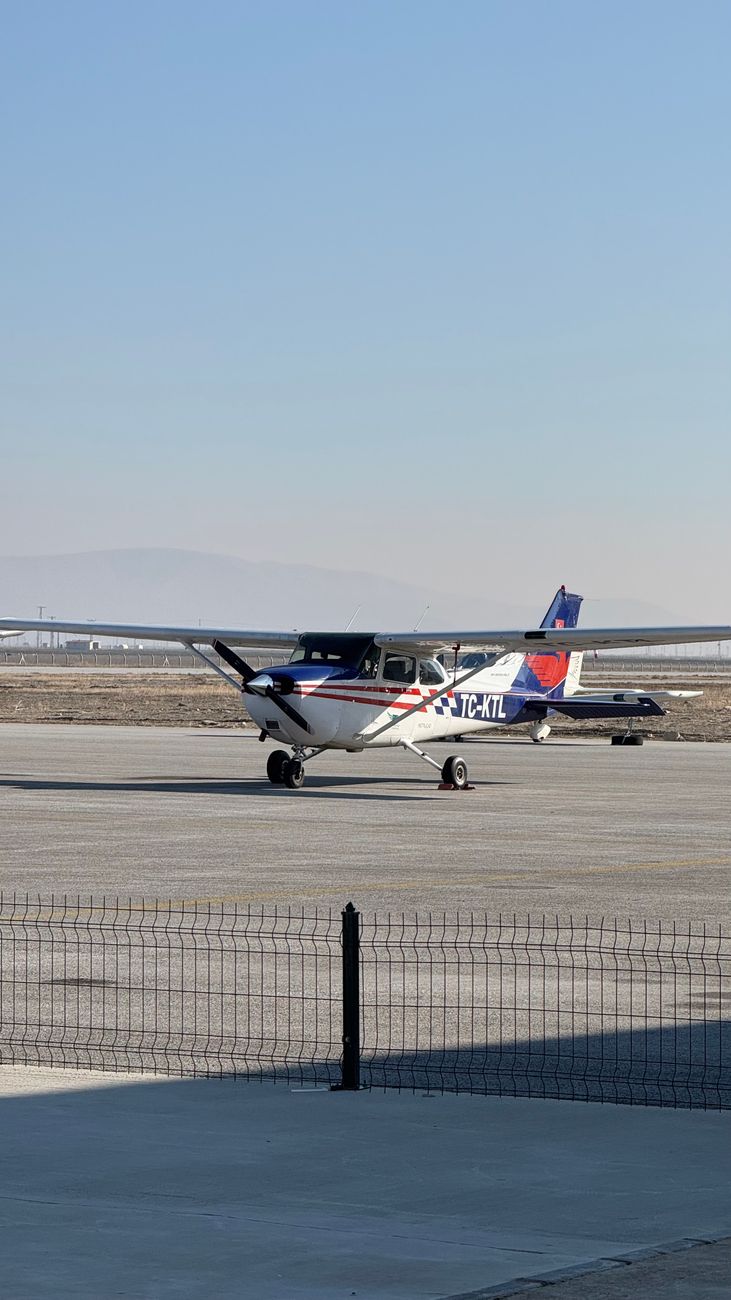
The Private Pilot checkride is the final exam between you and your pilot certificate. For most student pilots, it’s the most anxiety-inducing day of their training — and one of the most rewarding when it’s done. Understanding exactly what happens during the checkride, what your Designated Pilot Examiner (DPE) is evaluating, and how to prepare effectively is the key to walking out with that certificate. This guide gives you everything you need to know.
What Is the Checkride?
The Private Pilot practical test — commonly called the checkride — is the FAA-required evaluation to earn your Private Pilot Certificate. It is administered by a Designated Pilot Examiner (DPE), a certificated pilot and aviation professional authorized by the FAA to conduct practical tests on the FAA’s behalf. The checkride consists of two parts: an oral examination (ground portion) and a flight test (practical portion).
The entire evaluation is governed by the FAA Private Pilot Airplane Airman Certification Standards (ACS) — formerly called the Practical Test Standards (PTS). The ACS specifies exactly what tasks the DPE must evaluate, what knowledge questions may be asked, and what standards of performance constitute a passing grade. You can download the current ACS for free from faa.gov.
Before the Checkride: Prerequisites and Documentation
Before you sit down with the DPE, your instructor must have signed you off with specific endorsements confirming you meet all requirements. You’ll also need to bring a complete documentation package to the checkride. Here’s the full list:
- FAA Knowledge Test Results: Your written exam results slip, showing a passing score (70% minimum). Must have been taken within the previous 24 calendar months.
- Logbook with endorsements: Including your pre-solo knowledge, pre-solo flight training, cross-country planning, and checkride endorsements under §61.39.
- Student Pilot Certificate
- Government-issued photo ID
- Medical Certificate (Third-Class or higher)
- Aircraft documents (AROW): The aircraft’s Airworthiness certificate, Registration, Operating Limitations (POH/AFM), and Weight and Balance documentation must be in the aircraft.
- Completed IACRA application: Your instructor will have initiated your application in the FAA’s IACRA system. You’ll need your FTN (FAA Tracking Number).
- Checkride fee: DPE fees vary by region but typically run $700–$1,000. This is paid directly to the DPE, not the FAA.
Part 1: The Oral Examination
The oral exam typically lasts 1.5 to 3 hours, depending on the DPE and how the conversation flows. It is a conversational examination — not a written quiz. The DPE asks questions, you answer, and the conversation often goes wherever your answers lead it. There is no fixed list of questions — but there are fixed topic areas outlined in the ACS.
Core Oral Exam Topic Areas
- Pilot qualifications and certificates: Currency requirements, recent flight experience, medical certificate validity, logging requirements.
- Airworthiness: How do you determine if the aircraft is airworthy? What does AROW stand for? When are ADs (Airworthiness Directives) applicable? What inspections are required?
- Weather: Interpreting METARs, TAFs, PIREPs, AIRMETs, SIGMETs, winds aloft forecasts. VFR weather minimums by airspace class. Thunderstorm avoidance. Density altitude.
- Navigation and cross-country planning: You’ll be given a destination and asked to plan a VFR cross-country on the spot. This includes sectional chart reading, airspace identification, fuel planning, alternate selection, and filing a flight plan.
- Airspace: Every class from A through G. VFR cloud clearances. Communication requirements. Equipment requirements. Special use airspace (TFRs, MOAs, restricted areas).
- Aircraft systems: How does the engine work? What are the fuel system components? What does the vacuum system power? What happens if the pitot tube is blocked?
- Aerodynamics: Lift, drag, thrust, weight. Angle of attack. Stalls and spins. Load factor in turns. Ground effect.
- Performance and limitations: Using performance charts from the POH — takeoff distance, climb rate, cruise performance, landing distance. Weight and balance calculations.
- FAR/AIM requirements: Right-of-way rules, light signals, airspace entry requirements, logging requirements, required documents and inspections.
What DPEs Are Really Evaluating in the Oral
DPEs are not trying to trick you. They are evaluating whether you have the foundational knowledge to be a safe, competent private pilot. They want to see three things: that you know the regulations, that you understand the systems, and that you know how to find information you don’t know off the top of your head. That last one is important: you are allowed to use references (POH, FAR/AIM, sectional chart) during the oral. Using them correctly and efficiently is a sign of good airmanship, not weakness.
If you don’t know an answer, say so — and then show the DPE you know where to find it. “I don’t know that off the top of my head, but I’d look it up in the FAR/AIM, section X” is a perfectly acceptable answer for many questions.
Part 2: The Flight Test
After the oral, you and the DPE fly. The flight portion typically lasts 1.5 to 2.5 hours and covers the maneuvers and tasks specified in the ACS. The DPE acts as a passenger and observer — they may offer guidance in a true emergency, but otherwise they are watching and evaluating, not helping. You are acting as pilot in command.
Standard Flight Test Maneuvers (Private Pilot ACS)
- Preflight inspection: You conduct a full walk-around while the DPE observes. Know your aircraft, know what you’re looking for, and explain your findings.
- Engine start, taxi, and run-up: Use checklists, make appropriate radio calls, verify all systems before departure.
- Normal and crosswind takeoffs and landings
- Soft-field and short-field takeoffs and landings
- Ground reference maneuvers: Turns around a point, S-turns across a road, rectangular course. Evaluated on altitude control (±100 feet), coordination, and maintaining proper ground track.
- Slow flight: Flight at minimum controllable airspeed in various configurations. Must maintain control and heading without stalling.
- Power-off and power-on stalls: Clean recovery with minimum altitude loss, no secondary stall, coordinated throughout.
- Steep turns: 45-degree bank, 360 degrees in each direction. Standards: ±100 feet altitude, ±10 knots airspeed, roll out within ±10 degrees of entry heading.
- Emergency procedures: Simulated engine failure — the DPE will pull the throttle at altitude. You must establish best glide, pick a field, run the emergency checklist, and fly a realistic approach to the field.
- Cross-country navigation: You’ll fly a portion of the cross-country you planned in the oral, navigating by pilotage and dead reckoning, making position reports.
- Diversion: The DPE will ask you to divert to an alternate airport. You plan the diversion on the fly using your chart.
- Lost procedures: Demonstrating you can determine your position using available resources if disoriented.
- Night operations: May or may not be included depending on timing and DPE discretion.
ACS Standards: What Constitutes a Pass
The ACS specifies numerical tolerances for most maneuvers. Here are the key standards for the Private Pilot ACS:
- Altitude: ±100 feet for most tasks; ±50 feet for some precision tasks
- Heading: ±10 degrees for most tasks
- Airspeed: ±10 knots for most tasks; ±5 knots for some precision tasks
- Bank angle (steep turns): ±5 degrees
The DPE is also evaluating your decision making, situational awareness, risk management, and overall airmanship — not just mechanical performance. A technically proficient pilot who demonstrates poor ADM or unsafe habits can still fail.
If You Fail a Task: The Discontinuance
If you fail a task during the checkride, the DPE will issue a Notice of Disapproval (pink slip). This is not the end of the world. According to FAA data, first-attempt failure rates for the Private Pilot practical test run approximately 20–25% nationally. A notice of disapproval specifies exactly which task(s) failed. On a retest, you only need to repeat the failed tasks (plus any tasks the DPE was not able to evaluate because of the discontinuance).
Prepare for Your Checkride at Skyfare Academy
At Skyfarer, checkride preparation is a dedicated phase of training — not an afterthought. In the final stage of your private pilot training, your instructor will conduct a comprehensive stage check that mirrors the actual checkride experience, identifying weak areas and building your confidence before you sit down with the DPE.