
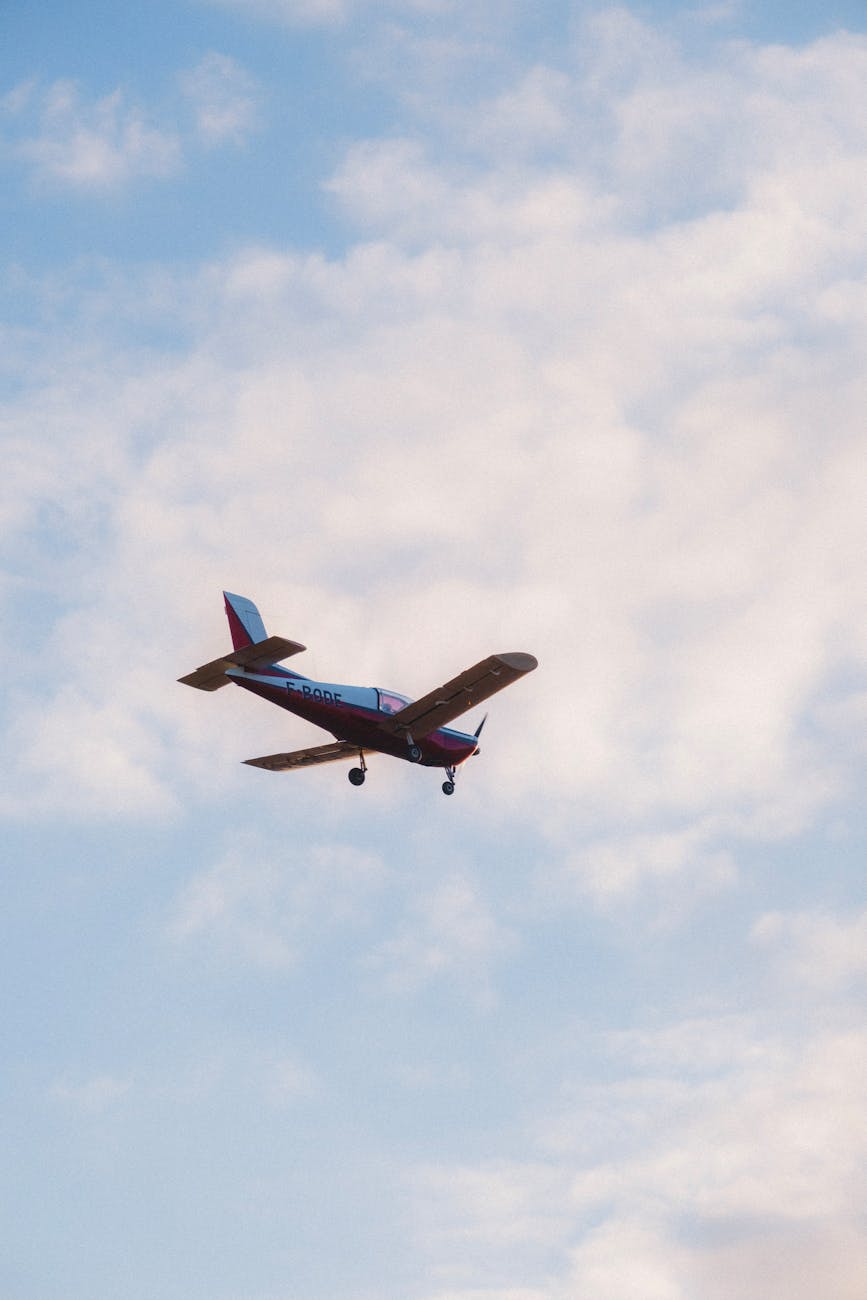
The FAA’s MOSAIC final rule (Modernization of Special Airworthiness Certification) has already delivered the first wave of changes that most pilots care about: expanded sport pilot aircraft eligibility and new endorsements for more capability, with a second wave (aircraft certification changes) arriving later.
This article breaks MOSAIC down into plain-English, cockpit-relevant takeaways—especially for sport pilots, student pilots, CFIs, and flight schools.
MOSAIC in one sentence
MOSAIC decouples sport pilot privileges from the old Light-Sport Aircraft (LSA) definition and replaces the weight/speed box with a “performance + design” standard—opening the door for sport pilots to fly many familiar legacy trainers and aircraft, while modernizing how future light-sport aircraft will be certificated.
The timeline (what’s effective now vs. later)
Already effective: Sport pilot rule changes
The sport pilot portions of MOSAIC became effective October 22, 2025 (90 days after publication), so they are in effect today.
Coming next: Light-sport aircraft certification changes
The aircraft-certification side—most notably the new Part 22 structure for light-sport category aircraft—is scheduled to take effect July 24, 2026 (365 days after publication).
The biggest structural change: “Sport pilot eligible” is no longer “LSA”
Historically, “sport pilot” and “LSA” were tightly tied together by the same definition (including the well-known weight cap). Under MOSAIC, the FAA severed that direct connection, so:
- Sport pilot privileges are now governed by new Part 61 performance/design limits (the key rule section is 14 CFR § 61.316).
- Light-sport category aircraft certification is being modernized under a separate framework (including Part 22) that takes effect later.
A weird-but-important consequence: some aircraft may be certificated as light-sport category aircraft after the Part 22 changes, yet still not be flyable by sport pilots, because the sport pilot limits can be narrower than the light-sport category limits.
What changed for Sport Pilots (the practical highlights)
1) A new “is this aircraft sport-pilot-eligible?” test: § 61.316
MOSAIC added a new rule—14 CFR § 61.316—that defines the performance limits and design requirements for aircraft a sport pilot may operate.
Here’s the plain-English version of the key items:
Stall speed threshold (the big one):
- For airplanes: Vₛ₁ ≤ 59 knots CAS (at max certificated takeoff weight and most critical CG).
- For other aircraft categories: Vₛ₁ ≤ 45 knots CAS.
Seats (airplane seating capacity expands):
- Most aircraft: max 2 seats
- Airplanes: may have up to 4 seats
Cabin pressurization:
- Must be non-pressurized (if equipped with a cabin).
Landing gear & prop rules (with exceptions via endorsements):
- Generally fixed landing gear (except gliders), unless you obtain the required endorsement to fly retractable gear.
- Generally a fixed / ground-adjustable / automated controllable pitch prop, unless you obtain the required endorsement to fly an airplane with a manual controllable pitch propeller.
Special categories:
- Helicopters must have the simplified flight controls designation (a MOSAIC concept aimed at safe, simplified operation).
Bottom line: the old “LSA definition checklist” is out; the new gatekeeper is § 61.316.
2) The practical effect: many “normal” trainers can now be eligible
One of the major real-world outcomes is that many familiar training aircraft can now fall within sport pilot eligibility if they meet the Vₛ₁ and other design limits—often discussed in the context of aircraft like the Cessna 172 family and other legacy trainers.
This matters for:
- Students who want the sport pilot path but live at airports without “classic LSAs”
- Flight schools that can potentially train sport pilots in aircraft already on the line
3) New endorsements unlock more capability (retractable gear + manual controllable pitch prop)
MOSAIC explicitly allows sport pilots to fly:
- Aircraft with retractable landing gear, and/or
- Airplanes with a manual controllable pitch propeller
…but only after training and endorsement under § 61.331 (or equivalent training/endorsement pathways referenced in the rule).
This is a major shift because it expands “what’s possible” under sport pilot privileges while still keeping a training gate for higher workload configurations.
4) Sport pilots can fly at night—with training + endorsement + medical qualification
Previously, sport pilot privileges were “no night” in practice. MOSAIC opens a path to night operations via § 61.329, requiring:
- 3 hours of night flight training in the specific category and class with an authorized instructor, including:
- At least one night cross-country with a landing at an airport ≥ 25 nm away (except powered parachutes), and
- 10 takeoffs + 10 full-stop landings at night
- A logbook endorsement confirming training + proficiency
- And importantly: for night operations you must either hold an FAA medical (Part 67) or meet the BasicMed-related conditions referenced in the rule.
So: driver’s license medical eligibility may still work for daytime sport pilot ops, but night ops add a higher medical bar.
What did NOT change (and what people still misunderstand)
You still can’t take “two friends” just because the airplane has four seats
Even though airplanes up to 4 seats can be eligible under § 61.316, the FAA kept the one-passenger limit for sport pilots. In practical terms: 2 occupants total (pilot + 1 passenger).
The FAA addressed comments on this directly and emphasized it remains a hard limitation.
You still can’t operate aircraft that require a type rating
The updated sport pilot limitations include an explicit restriction against acting as PIC of an aircraft that requires a pilot to hold a type rating.
MOSAIC does not automatically “upgrade” your privileges—you still must comply with training/endorsement rules
MOSAIC opens doors, but you still need the right:
- endorsements (gear/prop/night),
- category/class privileges, and
- operational compliance.
The “gotcha” that matters in the real world: Vₛ₁ in CAS, and “since original certification”
The stall speed requirement is specific—and can be hard to document on older aircraft
MOSAIC’s sport pilot airplane limit uses Vₛ₁ in calibrated airspeed (CAS), at max takeoff weight and most critical CG.
AOPA pointed out a practical issue: many older airplanes don’t publish Vₛ₁ in CAS in a way that cleanly matches the new rule language, which can create uncertainty about eligibility.
The FAA notes there is published guidance for determining and documenting Vₛ₁ CAS (including flight test methods referenced in FAA guidance).
“Since its original certification” matters
The sport pilot aircraft eligibility language includes “since its original certification” for the core § 61.316(a) requirements, and MOSAIC also addresses how certain modifications (like retractable gear or prop changes) interact with endorsements.
This is one reason it’s smart to treat “sport pilot eligible” as a specific compliance question for a given aircraft, not a vibes-based assumption.
What changes in July 2026 (why owners and manufacturers care)
Starting July 24, 2026, MOSAIC’s expanded framework for light-sport category aircraft certification kicks in—built around performance-based requirements and the FAA’s acceptance of consensus standards.
This is where you’re likely to see:
- new aircraft designs entering the fleet with lower certification friction, and
- broader capability inside the light-sport category.
But remember: light-sport category aircraft ≠ automatically sport-pilot eligible after MOSAIC (the rules are intentionally separated).
What MOSAIC means for students, CFIs, and flight schools
For student pilots
- You may have more training aircraft options available locally (not limited to “traditional LSAs”), depending on how your airport’s fleet lines up with § 61.316.
- Sport pilot can become a more accessible “on-ramp” for recreational flying—especially where LSA availability used to be a bottleneck.
For CFIs and flight schools
- Many schools can potentially train sport pilots using aircraft they already operate (again, aircraft-by-aircraft eligibility matters).
- A new category of demand emerges: endorsements for night, retractable gear, and manual controllable pitch prop.
Also, MOSAIC maintains that a flight instructor with a sport pilot rating can receive compensation for providing flight training under the applicable subpart—useful for schools structuring sport pilot instruction.
MOSAIC is a meaningful modernization because it reshapes how the FAA defines appropriate aircraft performance for the sport pilot training footprint, while giving pilots a path to add capability through endorsements (especially night operations and higher-workload configurations).



One thought on “FAA MOSAIC “Sport Pilot 2.0”: What Changed, What Didn’t, and What It Means in 2026”
Comments are closed.