When There Are Issues With the Aircraft — Should You Still Fly?
Every pilot eventually faces it.
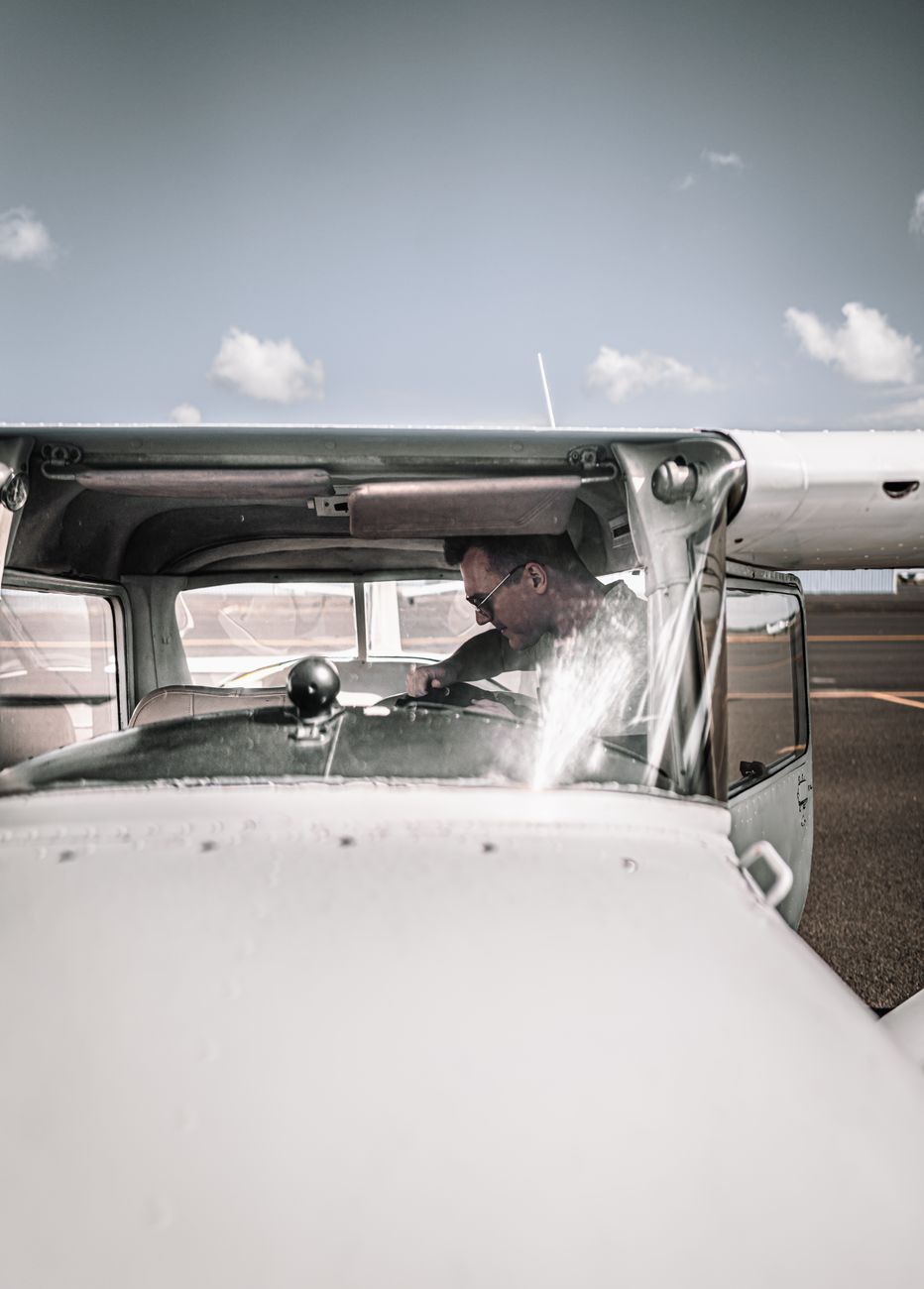
You walk out to the airplane. During preflight you notice something off — a flickering nav light, a damp oil streak, a radio that crackles, a soft brake pedal, a circuit breaker popped.
Someone says, “It’s fine, it’s been like that.”
Now what?
This article will go deep into:
- What a squawk really means
- The legal definition of airworthiness
- The structured decision process every PIC should use
- How regulations actually apply
- Risk-based judgment beyond legality
- Training environment realities
- Real-world scenario examples
- How to document and protect yourself
- How to build professional-level decision making
Because here’s the truth:
Aviation accidents rarely start in the air. They start with a decision on the ground.
1. What Is a “Squawk”?
A squawk is any aircraft discrepancy or abnormality, including:
- Inoperative equipment
- System malfunction
- Damage
- Abnormal engine indications
- Avionics issues
- Fluid leaks
- Structural irregularities
- Flight control feel abnormalities
- Or simply “this doesn’t look right”
Squawks fall into three broad categories:
- Cosmetic / nuisance
- Deferred maintenance
- Safety-critical
The key skill of a competent pilot is knowing which category you’re dealing with.
2. Airworthiness: The Legal Standard
Under 14 CFR §91.7, an aircraft is airworthy when:
- It conforms to its type certificate
- It is in a condition for safe operation
Two standards. Both must be met.
Conforms to Type Certificate
The aircraft must:
- Have all required equipment installed
- Comply with Airworthiness Directives (ADs)
- Have current inspections
- Match approved configuration
Condition for Safe Operation
This is subjective — and it belongs to the Pilot in Command.
Even if maintenance says it’s fine, the PIC makes the final call.
The FAA does not accept:
- “The instructor said it was fine.”
- “Maintenance said send it.”
- “Dispatch cleared it.”
The PIC owns the decision.
3. The Structured Decision Framework for Squawks
When you discover an issue, do not react emotionally. Follow a disciplined evaluation:
STEP 1: Is It Required Equipment?
Check:
- POH / AFM equipment list
- KOEL (Kinds of Operation Equipment List)
- 14 CFR §91.205 (Day/Night VFR equipment)
- AD compliance
- TCDS (Type Certificate Data Sheet)
If required equipment is inoperative:
- You cannot fly unless repaired
OR - You have an approved MEL (rare in training aircraft)
Most Part 91 flight school airplanes do NOT have MELs.
STEP 2: If Not Required — Can It Be Deferred Under §91.213(d)?
If the equipment is not required:
You may fly IF:
- It is not required by regulation
- It is not required by AD
- It is not required by the POH
- It is not required for the specific type of operation
- It is deactivated or removed
- It is placarded “INOPERATIVE”
- The PIC determines it does not affect safe operation
All seven conditions matter.
STEP 3: Safe vs Legal — The Most Important Distinction
Legal does not mean smart.
Legal does not mean low risk.
Legal does not mean good ADM.
The real question:
Does this reduce safety margins?
4. Risk-Based Evaluation — Professional-Level Thinking
Let’s elevate beyond basic regulatory compliance.
Every squawk should be evaluated using three lenses:
1. System Redundancy
If this fails further, what else fails?
2. Failure Mode Progression
Is this likely to get worse during flight?
3. Environment Amplification
Does weather, night, terrain, or workload increase consequences?
5. Common Squawks — Deep Analysis
Now let’s examine common real-world examples in detail.
Engine-Related Squawks
Low Oil Level
- How low?
- What was oil consumption trend?
- Is there fresh oil on cowling?
- Is it a known leak?
Risk progression:
Low oil → oil starvation → engine failure
If uncertain — do not fly.
Fluctuating Oil Pressure
This is not minor.
Could indicate:
- Failing oil pump
- Pressure relief valve malfunction
- Impending engine seizure
This is a grounding item until diagnosed.
Rough Mag
If one magneto drops excessively:
- Check POH limits
- Is it smooth at run-up?
- Is RPM drop within tolerance?
But if it feels abnormal:
Engine ignition reliability is not an area for optimism.
Electrical System Squawks
Alternator Intermittent
Day VFR may seem fine.
But ask:
- Battery condition?
- What if radio fails?
- What if transponder fails in Mode C airspace?
- What if flaps are electric?
Electrical degradation often cascades.
Popped Circuit Breaker
Never reset more than once in flight.
On ground:
Why did it pop?
Short?
Overcurrent?
Chafed wire?
CBs are not “switches.”
Flight Controls
Any abnormal control feel:
- Stiffness
- Grinding
- Slop
- Binding
This is immediate no-go until inspected.
Flight control anomalies are never deferred.
Tire / Brake Issues
Flat spot?
Minor.
Cord showing?
Grounded.
Soft brake pedal?
Investigate immediately — brake failure on rollout can escalate quickly.
Avionics Issues
GPS Failure
VFR Day local? Possibly okay.
Cross-country through complex airspace?
Risk increases.
IFR?
No.
Transponder Failure
Inside Mode C veil?
Not legal.
Rural uncontrolled airspace?
Legal — but consider ATC services.
6. The Training Environment Problem
Flight schools create subtle pressure:
- Schedule stacking
- Instructor availability
- Student momentum
- Aircraft scarcity
- “It flew fine earlier”
This leads to normalization of deviance.
Example:
Small oil stain becomes “it always does that.”
Then one day it doesn’t.
Professional pilots develop the habit of:
- Respecting early warning signs
- Treating trends seriously
- Not minimizing discrepancies
7. When You Should Absolutely Not Fly
- Any abnormal engine indication
- Control system anomaly
- Fuel leak
- Structural crack
- Unresolved AD
- Inoperative required equipment
- Unknown origin electrical fault
- Anything that makes you uneasy
That last one matters.
Discomfort is a data point.
8. Real-World Scenario Exercises
Let’s challenge you.
Scenario 1:
You find oil at 5 quarts. Minimum is 4. POH recommends 6.
Last flight used 1 quart in 2 hours.
Cross-country over mountains.
Would you go?
Consider:
Trend + environment + terrain risk.
Scenario 2:
Landing light inop.
Night flight at towered airport.
Legal?
Maybe.
Smart?
Depends on traffic density and backup lighting.
Scenario 3:
Alternator output fluctuating.
Day VFR 30-minute local pattern work.
Legal?
Possibly.
But what is failure progression risk?
9. Documentation — Protect Yourself
If you decide to fly with deferred equipment:
- Ensure proper logbook entry
- Ensure placarding
- Ensure deactivation
- Document PIC determination
- Confirm maintenance awareness
Paper trail protects professionalism.
10. The Psychology of Squawk Decisions
The biggest risk factors:
- Get-there-itis
- Instructor pressure
- Schedule pressure
- “It’s probably fine”
- Previous successful flight bias
Aviation punishes optimism.
11. Professional Standard vs Bare Minimum Standard
Minimum Standard:
“If it’s legal, I’ll fly.”
Professional Standard:
“If it reduces safety margins, I’ll wait.”
The second mindset builds long careers.
12. A Simple Golden Rule
If you are hoping the issue doesn’t get worse…
That is your answer.