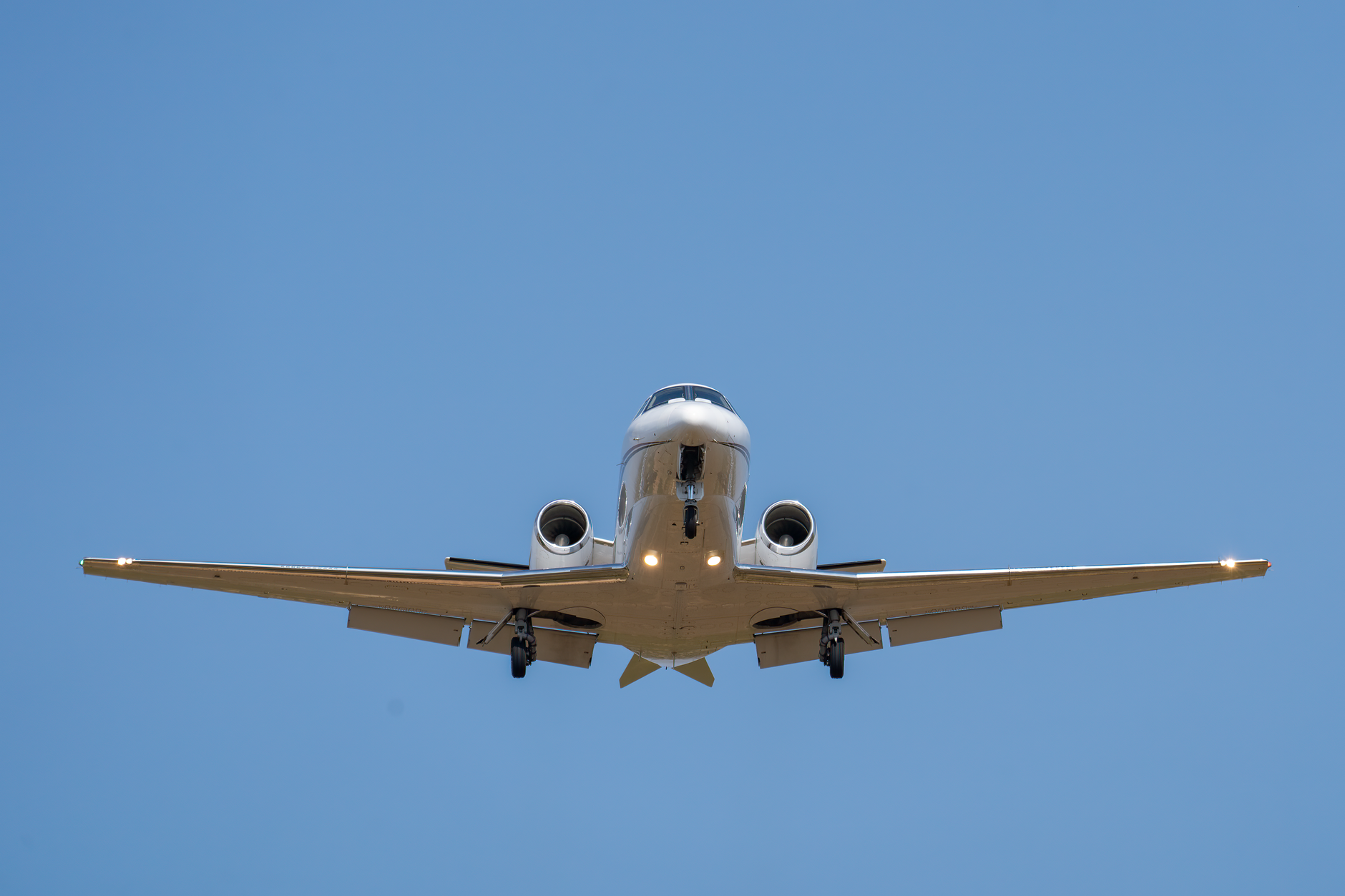
FAA Administrator Bryan Bedford has weighed in on one of the hottest debates in general aviation right now. In an interview with FLYING Magazine, Bedford said the agency is watching the growing controversy over airport landing fees — and warned that using ADS-B data to bill pilots could push them to disable critical safety equipment.
What’s Happening
More than 100 U.S. airports now charge landing fees linked to flight tracking data, according to AOPA. Many of these airports use third-party vendors that tap into ADS-B (Automatic Dependent Surveillance-Broadcast) signals to automatically detect and bill aircraft operations.
ADS-B is a surveillance system that broadcasts an aircraft’s position, altitude, and speed. The FAA required most aircraft operating in controlled airspace to be equipped with ADS-B Out by January 2020. Pilots invested thousands of dollars to comply with the mandate. The system was designed to improve safety — not to serve as a billing tool.
But that is exactly what some airports have done. They now use ADS-B data like an electronic toll booth on the runway. And the practice is spreading.
Bedford Draws a Line
Bedford did not mince words. He called ADS-B a “critical safety tool” and said pilots are right to be upset.
He acknowledged that airports are generally allowed to charge fees for services. But he drew a clear line: if the way fees are collected encourages pilots to turn off their avionics, that crosses into safety territory.
Bedford stopped short of announcing new federal rules. But he said the issue is “on the radar” and made clear the FAA is paying attention. His full interview will appear in FLYING’s June issue.
Why Pilots and Flight Schools Are Worried
The concern is simple. If ADS-B data is used to charge per-landing fees, some pilots may switch off their transponders to avoid the charge. That defeats the purpose of a system built to prevent midair collisions.
The impact on flight training is especially sharp. Student pilots practice takeoffs and landings repeatedly in a single lesson. A $20-per-landing fee can add thousands of dollars to training costs over time. At Falcon Field in Mesa, Arizona — one of the busiest GA training airports in the country — the city council approved a $20 landing fee in March 2026. Flight school owners said the fee could force them to relocate or close.
Mesa Gateway Airport followed shortly after with its own fee for visiting light aircraft. Together, the two airports represent a major shift in how a high-volume training region handles cost recovery.
States Are Fighting Back
The pushback is gaining ground fast. Florida became the second state — after Montana — to ban the use of ADS-B data for airport billing. Governor Ron DeSantis signed SB 422 in April 2026. The law takes effect July 1 and covers Part 91 aircraft under 12,500 pounds.
Similar bills are under consideration in Arizona, Oklahoma, Minnesota, and more than a dozen other states. But AOPA warns that a patchwork of state laws could create confusion for pilots flying across state lines. The group is pushing for a single federal solution.
Federal Legislation Picks Up Speed
At the federal level, momentum is building around the Pilot and Aircraft Privacy Act (PAPA). The bill would ban the use of ADS-B data for fee collection nationwide. It would also limit the use of ADS-B data to launch noncriminal investigations into pilots.
The House passed the ALERT Act in April 2026 by a vote of 396–10. That bill — written in response to the January 2025 midair collision over the Potomac River — includes key PAPA provisions. It now heads to conference with the Senate.
NTSB Chair Jennifer Homendy has also spoken out. At a February Senate hearing, she said the practice of using ADS-B to charge fees “should be prohibited.” She warned it could discourage pilots from installing or using the technology at all.
What This Means for Pilots
The message from the top of the aviation safety establishment is remarkably unified. The FAA Administrator, the NTSB Chair, AOPA, and a growing number of state lawmakers all agree: ADS-B should be used for safety, not as a cash register.
No one is saying airports cannot charge landing fees. They can. The issue is how they collect them. Using safety equipment to generate invoices creates a perverse incentive — one that could make the skies less safe, not more.
For student pilots and flight schools, the stakes are even higher. Higher landing costs raise the total price of training. And if pilots start disabling ADS-B to dodge fees, it undermines the very system that has helped drive general aviation accident rates to historic lows.
The FAA has not yet moved to regulate. But Bedford’s comments are the clearest signal yet that the agency sees this as more than just an airport policy debate. It is a safety issue — and one the FAA is not willing to ignore.