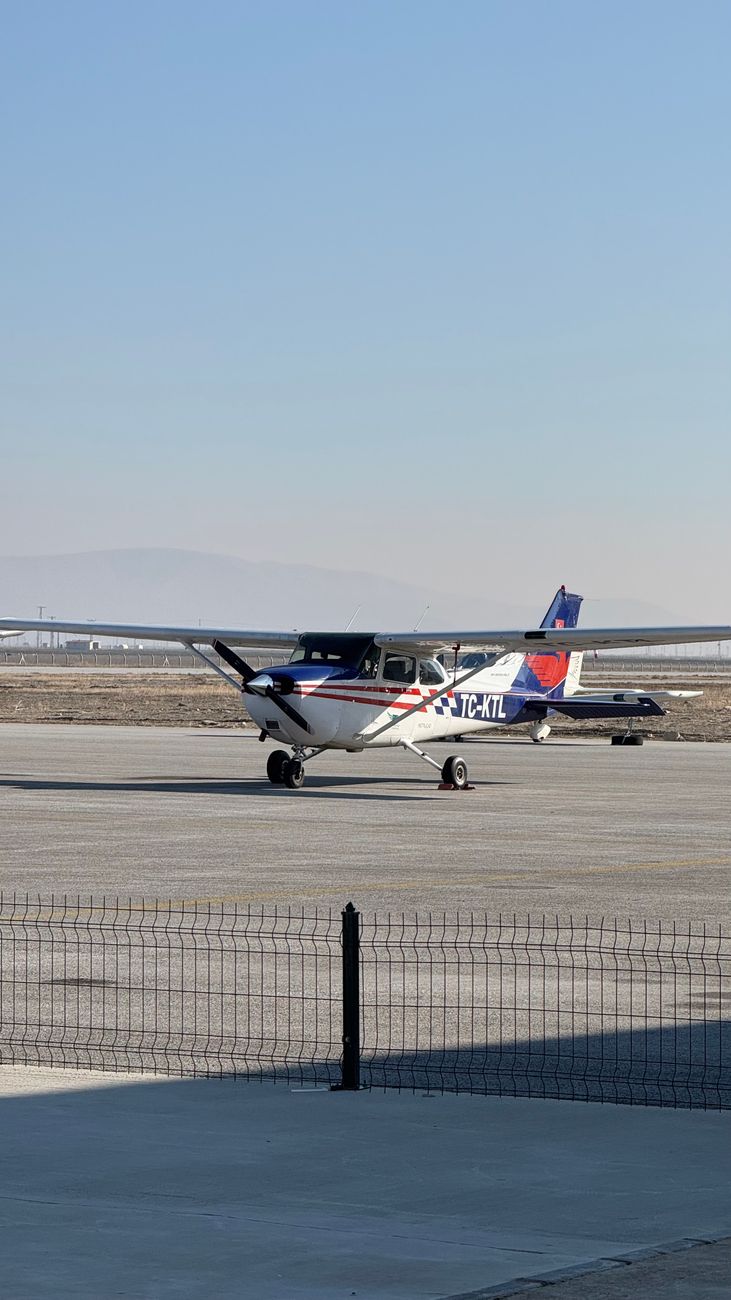
If you walk out to your airplane and notice small, white, grainy pellets bouncing off the ramp — not quite snowflakes, not quite hail — pay attention. Those are snow pellets, also called graupel. And they’re telling you something important about the air above you.
Snow pellets form when supercooled water droplets exist at the same altitude as snowflakes. That same supercooled water will freeze on contact with your airplane. Graupel on the ground is nature’s way of showing you that icing conditions exist aloft.
What Snow Pellets Are
Snow pellets — reported as GS in a METAR — are small, white, opaque grains of ice, typically 2 to 5 millimeters in diameter. They look like tiny styrofoam balls or grains of cauliflower. They’re soft, brittle, and usually break apart or bounce when they hit a hard surface.
They’re not hail. Hail forms in thunderstorms, can grow to significant size, and is hard and layered. Graupel forms through a completely different process and falls during wintry weather, often mixed with snow.
They’re also not ice pellets (sleet). Ice pellets — reported as PL — are small, clear, hard pieces of ice that form when rain or drizzle falls through a subfreezing layer and freezes before reaching the ground. Ice pellets tell you a different story about the atmosphere (a freezing rain layer exists above you), and that’s a different kind of dangerous.
Snow pellets tell you about supercooled water.
How They Form
The formation process is called riming. Here’s the sequence:
A snowflake forms in the upper portion of a cloud and begins falling. As it descends, it passes through a layer of the atmosphere that contains supercooled water droplets — liquid water that exists at temperatures below freezing, sometimes as cold as minus 40°C.
When the supercooled droplets contact the snowflake, they freeze instantly on its surface. As more droplets collect and freeze, they coat the snowflake in a layer of rime ice. Eventually, the original crystal shape disappears entirely. What’s left is a soft, rounded pellet of frozen rime — graupel.
The key word here is supercooled water. It takes supercooled liquid droplets to build graupel. And supercooled liquid droplets are exactly what cause structural icing on aircraft.
Why This Matters to Pilots
Structural icing occurs when an aircraft flies through air that contains supercooled water droplets. The droplets hit the airplane’s surfaces — wings, tail, propeller, windshield, antennas, pitot tubes — and freeze on impact. Depending on the droplet size and temperature, the result is rime ice (rough, opaque, milky white), clear ice (smooth, transparent, heavy), or mixed ice.
Any of these types can degrade aerodynamic performance rapidly. Ice on the wings changes the airfoil shape, reduces lift, increases drag, and can lower the stall speed enough to create an unrecoverable situation. Ice on the tail can cause a tailplane stall. Ice in the pitot tube or static ports can render your airspeed indicator and altimeter unreliable.
Now here’s the connection. Snow pellets on the ground prove that supercooled water droplets exist in the clouds above. If those droplets had the energy to rime a snowflake into a pellet of ice, they have the energy to rime your wing into a block of ice.
You don’t need a PIREPs database or a Current Icing Potential chart to see graupel on the ramp. It’s a direct, visual indicator that icing conditions are present in the atmosphere overhead.
Altitude and Terrain Matter
The layer where supercooled water and snowflakes coexist is often relatively thin. In the standard atmosphere, supercooled water tends to exist at higher altitudes in a cloud, while snowflakes populate the lower portions.
At high-elevation airports — like those in Colorado, Utah, or the mountain West — the distance between the ground and the supercooled layer is compressed. That means you may encounter icing very shortly after takeoff, or even on the ground during preflight. At sea-level airports, the supercooled layer is higher and you may have more vertical room before entering it — but it still exists.
The presence of graupel on the surface tells you that the overlap zone between supercooled water and falling snow is active. It doesn’t tell you exactly where the icing layer starts or how thick it is. For that, you need the standard tools: AIRMETs for icing, PIREPs, the Current Icing Potential (CIP) product, and the Forecast Icing Potential (FIP) product from the Aviation Weather Center.
But graupel is the first clue. And it’s free.
Snow Pellets vs. Ice Pellets: Two Different Warnings
It’s worth understanding the distinction, because these two types of frozen precipitation tell you about different atmospheric hazards.
Snow pellets (GS) mean supercooled water droplets are riming onto snowflakes in the clouds above. The hazard is structural icing from supercooled liquid water.
Ice pellets (PL) mean liquid rain or drizzle is falling into a subfreezing layer and freezing before it reaches the ground. The hazard is freezing rain aloft — which produces the most dangerous form of clear icing, often in a relatively narrow layer near the top of the subfreezing air.
Both are bad. But they point to different processes, different altitudes, and different types of ice accumulation. Knowing which one you’re looking at helps you assess what’s happening in the atmosphere before you leave the ground.
What to Do About It
If you see snow pellets on the ramp and you’re flying a non-FIKI (flight into known icing) aircraft, treat it as a serious weather consideration. It doesn’t automatically mean you can’t fly, but it means icing conditions exist in the clouds and you need to be prepared to stay out of them.
Check the freezing level. Review AIRMETs for icing and any available PIREPs. Look at the CIP and FIP charts. If you can stay VFR below the cloud bases and the terrain allows it, you may be able to avoid the icing layer entirely. If you’re filing IFR and planning to fly in the clouds, you need to know whether your aircraft is equipped and you are prepared.
If you’re at a high-altitude airport where the cloud bases are near the surface, the answer may be to wait. Supercooled water layers associated with graupel often move through relatively quickly, especially with frontal passages.
The bottom line: when you see those little white pellets bouncing off the pavement, look up. The atmosphere is telling you exactly what it will do to your airplane if you fly into it.