Tampa Executive Airport (KVDF) is adding four new hangars — totaling 42,000 square feet of aircraft storage — in what officials are calling one of the largest general aviation infrastructure expansions in the airport’s history. All four are expected to be open by the end of 2026.
The projects represent more than $6.4 million in private investment and cap off a multi-year modernization push at the Tampa Bay region’s busiest GA facility.
The Four Hangars
Each project is being developed independently by private developers, and they’re at different stages of completion.
Hangar 1 is already done. Built by Skyport, the airport’s fixed-base operator, it’s a nearly 12,000-square-foot facility that broke ground last summer and was finished in March 2026. The project also added 20 vehicle parking spaces.
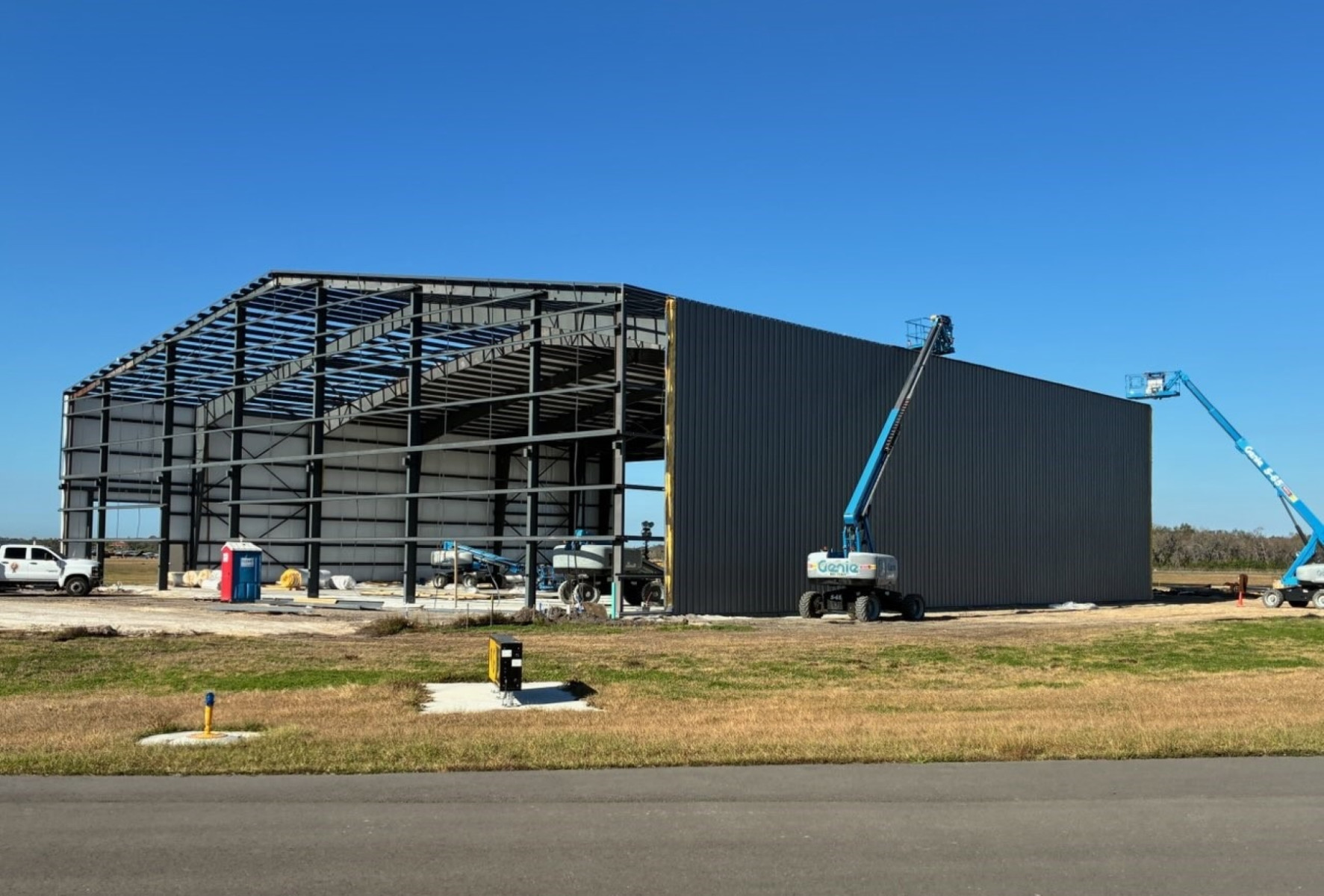
Hangar 2 is another 12,000-square-foot facility that began construction in June 2025. It’s now more than 50% complete and is expected to wrap up by end of summer 2026.
Hangar 3 is in early construction. It will be approximately 12,000 square feet, split into two separate units of about 6,000 square feet each. Completion is targeted for year-end.
Hangar 4 is the smallest at roughly 6,000 square feet and is currently in final permitting. It should also be finished by the end of 2026.
When all four are complete, KVDF will have added a combined 42,000 square feet of hangar space — a meaningful expansion for an airport that handles around 100,000 flight operations per year.
Part of a Bigger Transformation
The hangars are just one piece of a much larger investment at Tampa Executive Airport and the broader Tampa International Airport complex, both operated by the Hillsborough County Aviation Authority (HCAA).
KVDF itself recently completed a years-long airfield modernization. The airport’s primary Runway 5-23, a 5,000-foot strip, was reconstructed starting in 2020. The project included new signage, LED lighting, electrical systems, and upgraded taxiways designed to accommodate larger GA aircraft. The secondary Runway 18-36 and its taxiways were also rehabilitated.
All of that work was done while the airport stayed open — a complex feat given KVDF’s traffic volume. The total cost was $33 million, funded through a combination of Florida Department of Transportation funds, more than $5 million in FAA Airport Improvement Program grants, and HCAA capital reserves.
“Keeping Tampa Executive Airport operational through years of construction while enhancing its safety and efficiency reflects the dedication of our entire team and all of our business partners,” HCAA Vice President of General Aviation Brett Fay said when the runway work was completed in late 2025.
Why Hangar Space Matters
Hangar availability is one of the most persistent bottlenecks in general aviation. Across the country, GA airports face waitlists that can stretch years. Aircraft owners and operators need covered storage to protect their investments, and the shortage drives up lease rates and pushes tenants to less convenient airports.
Adding 42,000 square feet across four facilities doesn’t solve the national problem. But it signals that private developers see strong enough demand at KVDF to invest $6.4 million of their own capital — a meaningful vote of confidence in the airport’s growth trajectory.
Tampa’s broader appeal helps. The Tampa Bay area’s population has grown steadily, business aviation traffic is rising, and the region’s position as a hub for flight training, corporate aviation, and tourism creates consistent demand for GA facilities.
The Bigger Tampa Airport Picture
KVDF’s expansion is happening alongside a massive buildout at Tampa International Airport (TPA), the commercial hub in the same HCAA system.
In February 2026, TPA unveiled the final design of Airside D — a 16-gate terminal that will be the airport’s first new terminal in nearly two decades. Construction began in December 2025 and is expected to cost more than $1.5 billion. Airside D will offer both domestic and international service by 2029, helping TPA reach its goal of 35 million annual passengers.
Also in February, FBO Sheltair Aviation opened TPA’s ninth hangar complex, adding over 50,000 square feet of hangar space and a new 50,000-square-foot apron large enough for three Boeing business jets.
The HCAA’s board allocated $835.5 million for 34 projects across the airport system in September 2025. That includes $285.7 million for main terminal ticketing improvements, $298.6 million for baggage system upgrades across all terminals, and funding for runway maintenance, passenger boarding bridges, and a shuttle system overhaul.
TPA expects to see 25.7 million passengers in fiscal year 2026 — a 3.2% increase over the prior year — which would push annual revenue to $493 million.
What It Means for GA Pilots
For pilots and aircraft owners in the Tampa Bay area, the near-term takeaway is simple: more hangar space is coming, and coming fast. The first hangar is already done. Three more will be available within months.