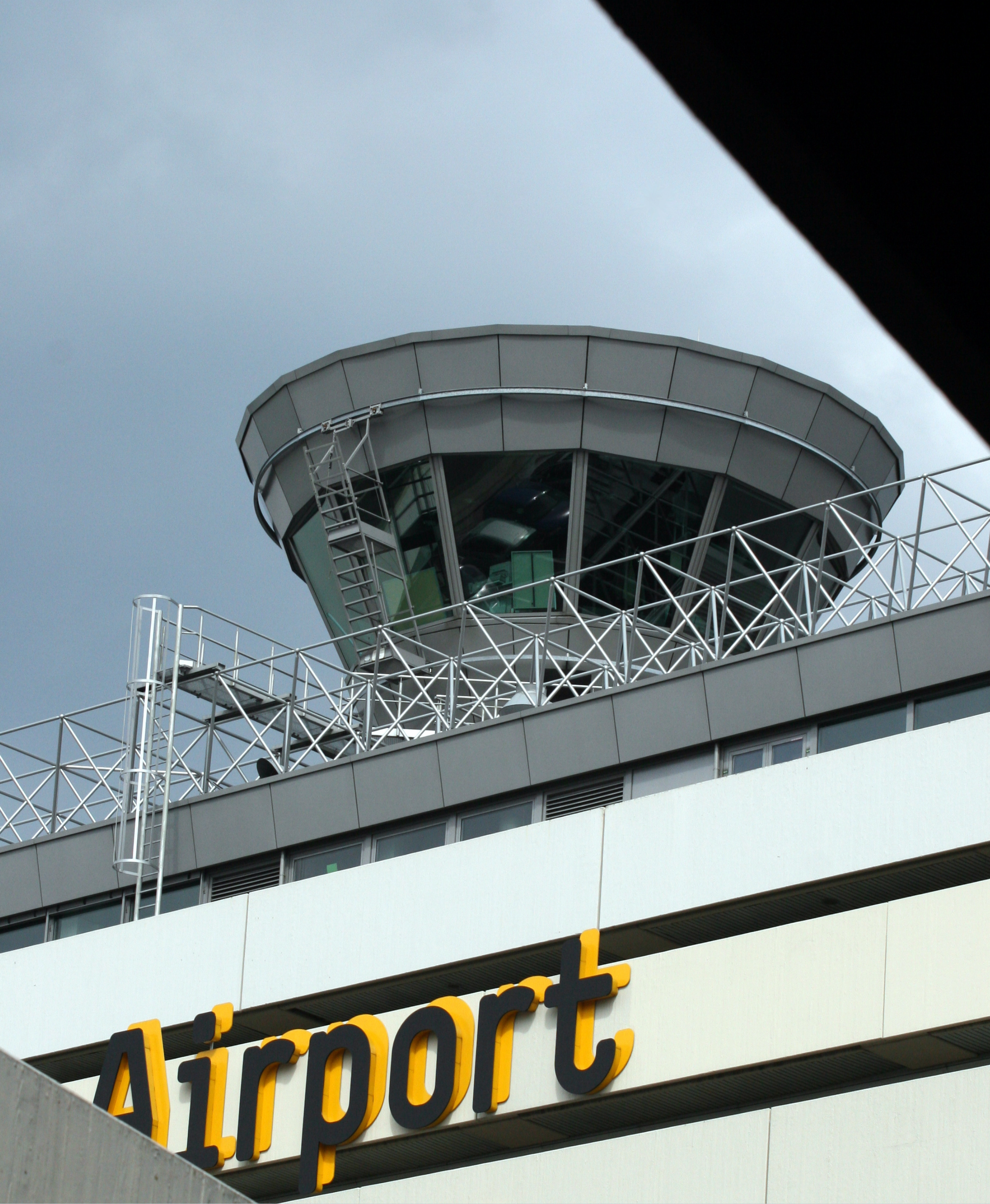
Air traffic controllers (ATCs) play a critical role in keeping the skies safe and efficient. They guide aircraft during takeoff and landing, monitor radar to maintain separation between planes, and communicate constantly with pilots to ensure safe operations. It is demanding work, and the compensation typically reflects that.
According to the U.S. Bureau of Labor Statistics (BLS), the median annual wage for air traffic controllers in May 2024 was $144,580, meaning half of controllers earned more than that and half earned less. The BLS also shows that the lowest 10 percent earned under $76,090, while the highest 10 percent earned over $210,410, underscoring how much compensation can vary across different work environments and experience levels. Most controllers are federal employees with the median federal wage slightly higher at about $154,000, reflecting the structured pay system within the Federal Aviation Administration (FAA).
To understand what these numbers mean, it helps to look at how and why air traffic controller salaries vary, and what typical compensation looks like over the course of a controller’s career.
What Air Traffic Controllers Do — And Why Pay Matters
Air traffic controllers are responsible for maintaining safe distances between aircraft in the sky and on the ground. They work in environments with constant real-time decision-making, where even small errors can have serious consequences. Because of the mental demands, controllers work in shifts that cover all hours, including nights, weekends, and holidays. The constant time pressure, shift work, and need for highest-level focus are part of why compensation trends toward the upper end of professional pay scales.
Controllers work in different settings. Tower controllers handle aircraft on runways and taxiways at airports. Radar controllers at Terminal Radar Approach Control (TRACON) facilities manage arrivals and departures in airport airspace. En route center controllers monitor large sectors of airspace between airports. The complexity and traffic volume of the facility directly influence not only the nature of the work but also a controller’s pay band placement and premium opportunities.
Understanding FAA Pay Structure: Base Pay, Locality, and Premiums
Most U.S. air traffic controllers work for the FAA, which does not use the classic federal General Schedule (GS) pay scale. Instead, the FAA’s specialized pay plan for air traffic controllers consists of multiple layers of compensation.
First, controllers receive a base pay band tied to their certification status — from trainees, to developmental controllers, to fully certified professional controllers (CPCs). While trainees are paid hourly during their time at the FAA Academy in Oklahoma City, certified controllers earn base salaries aligned with their facility’s complexity. The FAA publicly announced in 2025 that it raised starting salaries for paid Academy training by nearly 30 percent (from about $17.61 per hour to $22.61 per hour), and trainees may receive additional per diem while training, which helps offset living costs.
After Academy training, controllers are assigned to operational facilities and begin on-the-job training (OJT). As developmental controllers complete training milestones and certification requirements, their pay increases — often significantly. Within a few years of certification, many controllers see their annual earnings move into the six-figure range. FAA data indicates that within three years of graduating the Academy, the average Certified Professional Controller earns over $160,000 per year, not including overtime or premium pay.
In addition to base pay, FAA controllers receive locality pay, which adjusts compensation according to regional labor markets and cost-of-living differences. For example, a controller at a busy facility in a high-cost metropolitan area typically earns a higher total package than a controller with the same certification level at a smaller facility in a lower-cost region.
Controllers also earn premium pay for nights, Sundays, holidays, and overtime. These differentials can substantially increase annual income, particularly at facilities with heavy traffic or higher staffing demands.
Although controllers can earn significant pay through overtime and premium differentials, there is also a legal cap on total base pay based on statutory limits. The FAA/NATCA pay plan references a cap tied to the Executive Schedule Level II rate, meaning there is an upper boundary on how much base pay (plus locality) can grow.
Factors That Influence Salary
Several key factors shape how much a controller earns:
Employer type: While most controllers work for the FAA, others work in contract towers, for military bases, or for private support organizations. BLS data shows that federal employment often pays more than non-federal roles.
Facility complexity: Higher traffic volumes and more complex airspace generally correlate with higher pay bands and more premium opportunities.
Certification status: As controllers progress from trainee to developmental controller to CPC, their pay typically increases with each stage.
Geography and locality pay: Controllers in high-cost areas earn more due to the locality component of federal pay.
Schedule and overtime: Shift timing and staffing levels affect how much premium and overtime a controller earns. Reuters reporting on FAA staffing found that controllers logged more than 2.2 million hours of overtime in a recent year, costing the government about $200 million. This highlights how overtime can meaningfully influence individual annual compensation.
Work Schedule, Stress, and Rest Requirements
The responsibility and pace of the job also influence overall compensation. Controllers do not work a conventional 9-to-5 schedule. Facilities operate 24/7/365, and controllers may be assigned rotating shifts that include night, weekend, and holiday work. To mitigate fatigue, federal rules limit how much consecutive time a controller can work: shifts must not exceed 10 consecutive hours, and controllers must receive at least nine hours of rest before their next shift.
These scheduling realities help explain why controllers can earn above-average pay for what many would consider demanding work. Premium differentials for undesirable hours compensate controllers for this aspect of the job.
Benefits and Total Compensation
Paychecks are only part of the compensation picture. Controllers often receive a robust federal benefits package, including health insurance, retirement, leave, and flexible spending options. Crucially, FAA controllers can retire as early as age 50 with 20 years of service, or at any age with 25 years of service, under special federal retirement provisions. There is also a mandatory retirement age of 56 for controllers, instituted to minimize long-term burnout and preserve safety. These retirement rules, while unique, can contribute significantly to the appeal of controller careers.
Career Outlook and Long-Term Prospects
The BLS projects only modest employment growth (approximately 1 percent) for air traffic controllers from 2024 to 2034, slower than average. However, the same data predicts about 2,200 openings per year through that decade, driven largely by retirements and workforce turnover rather than rapid job expansion. This means controllers remain in steady demand as a profession where specialized skills and training are always needed.
For those considering the career path, the FAA notes that applicants must meet eligibility requirements, including U.S. citizenship, English proficiency, and certain age and experience conditions. Candidates also undergo aptitude testing, medical and psychological screening, and security clearances before acceptance into training.
A Clearer Picture of Controller Compensation
Pay numbers alone — like “median $144,580” — capture only part of the story. Air traffic controller compensation is a function of:
- Structured progression through training and certification
- Geographic pay differences
- Shift schedules and premium pay
- Overtime driven by staffing demands
- Federal benefit systems and retirement provisions
Each of these factors influences why two controllers with the same title might earn very different total compensation in a given year.
For readers interested in aviation careers, it helps to think of controller pay as a career journey rather than a single static number. Early in training, pay is modest but supported with benefits and per diem; once certified and well-placed at a busy facility, total annual income frequently enters the six-figure range, often significantly above the national wage median.