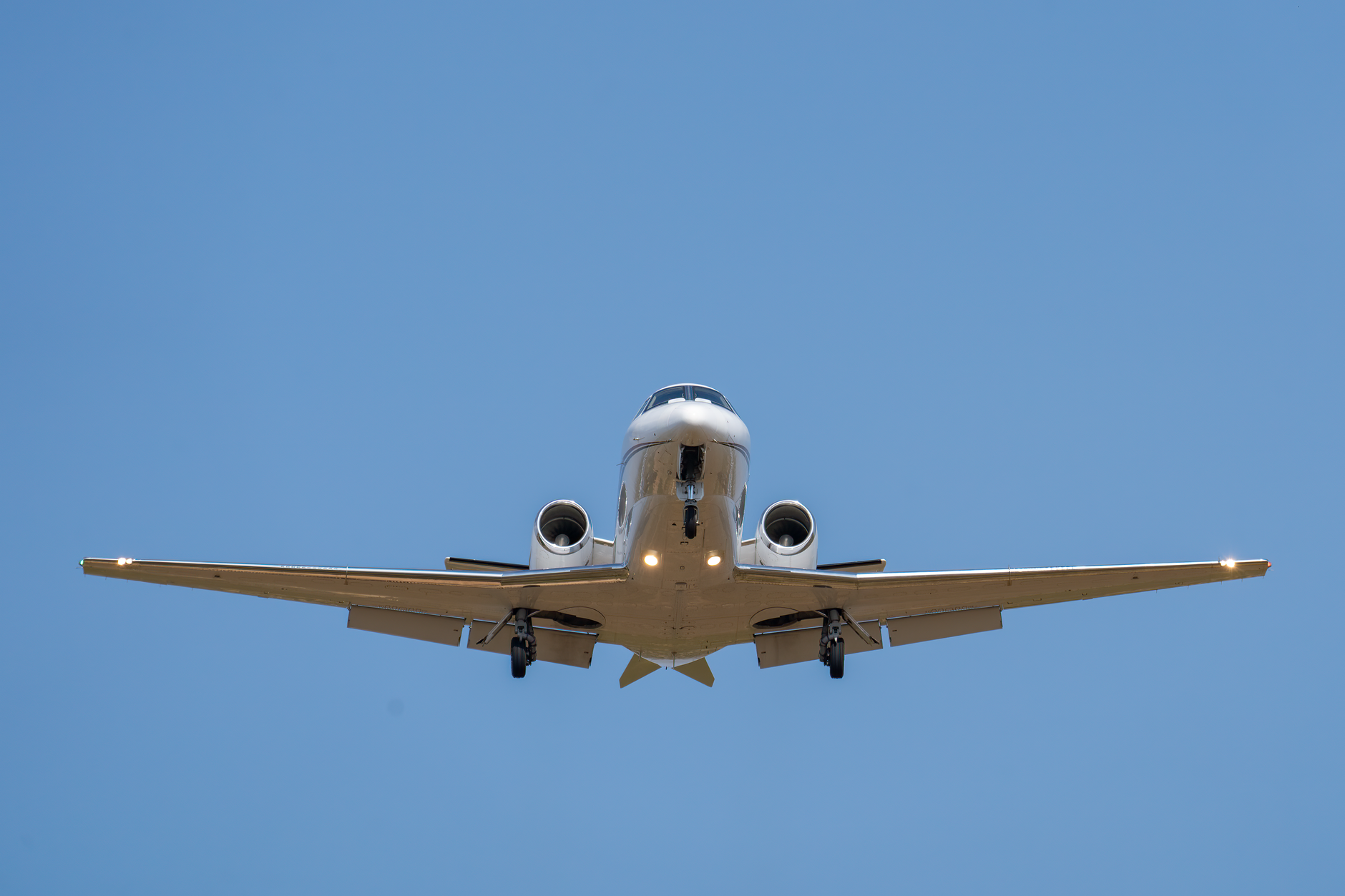
The FAA has issued a policy notice ending more than forty years of single-pilot exemptions for the Cessna Citation CE-500 series, and the action reaches further than most rescissions do: pilots who already hold logbook endorsements authorizing single-pilot operation of these aircraft must stop immediately. Those endorsements are no longer valid.
Signed September 24, 2026 by Hugh J. Thomas, Executive Director of Flight Standards Service, the notice (Docket FAA-2026-12343) is scheduled for Federal Register publication on September 28, 2026 and takes effect on publication. The FAA will cease issuing new exemptions, will rescind existing ones held by training providers through separate action, and has advised endorsed pilots that they must now operate these aircraft with two pilots.
The stated basis: widespread non-compliance uncovered in a 2024 review, and accident data showing these aircraft flown single-pilot are involved in roughly twice the accident rate of Citations actually certificated for single-pilot operation.
Which Aircraft Are Affected
The notice covers Part 25-certificated CE-500 variants — aircraft whose type certificates require two pilots and which, weighing more than 12,500 pounds, also require a second in command under 14 CFR 91.531(a)(2).
| Model | Required crew |
|---|---|
| Model 500 — Citation and Citation I | 2 pilots |
| Model 550 — Citation II | 2 pilots |
| Model S550 — Citation S/II | 2 pilots |
| Model 552 — Navy T-47A | 2 pilots |
| Model 560 — Citation V and Citation Ultra | 2 pilots |
| Model 550 — Bravo | 2 pilots |
| Model 560 — Encore | 2 pilots |
| Model 560 — Encore+ | 2 pilots |
What is not affected: the Part 23-certificated CE-500 variants — the CE-501 and CE-551 — along with the 510 (Mustang) and 525 (CJ) series. Those aircraft are certificated for single-pilot operation under their type certificates and don’t depend on an exemption.
That distinction is the crux of the whole matter. The CE-500 series is unusual in that some variants were certificated under Part 23 and others under Part 25, and only the Part 25 aircraft needed regulatory relief to be flown by one pilot.
Forty Years of Exemptions
The FAA issued the first CE-500 single-pilot exemption to Cessna Aircraft Company in 1984 (Exemption No. 4050). Its reasoning at the time: there was no data showing a safety difference between single-pilot operations in Part 23 CE-500 aircraft and two-pilot operations in the Part 25 variants, and granting relief would serve the public interest through operating flexibility and reduced cost — while generating data the agency could use to assess whether broader rulemaking was warranted.
Over time, the FAA began granting these exemptions to training providers operating under Parts 61, 141, and 142. Those providers could train, check, and issue a logbook endorsement permitting a pilot to fly a CE-500 single-pilot.
The FAA now identifies a structural flaw in that arrangement, and it’s worth understanding because it drives much of the decision.
The relief was needed by the pilot, but held by the training provider — an entity with no ongoing involvement in the flights where the relief applied. That differs from, say, an air carrier exemption, where the holder remains responsible for the operation and its pilots, and losing the exemption automatically stops the pilot from exercising it.
Here, a pilot could be flying single-pilot under an exemption that had quietly expired or been terminated, with no way of knowing — and no relief from the regulations. The FAA states plainly that such pilots were likely unaware and may have continued operating with no regulatory basis.
What the 2024 Review Found
The compliance review began after the FAA discovered that non-exemption holders were offering training under another entity’s exemption.
What followed was worse. The agency found numerous instances of non-compliance with the conditions and limitations, including:
- Incomplete records
- Required flight training conducted in an advanced aviation training device contrary to the exemption’s terms
- Improper checks by designated pilot examiners, including falsified records
The outcome was severe: 13 of the 14 Part 61 exemption holders either were denied an extension or had their exemption rescinded — for non-compliance, or for failing to respond to FAA information requests.
The FAA also took concurrent action against DPEs who administered checks for the non-compliant providers. Where records were falsified, the agency terminated the examiner’s designee authority.
The Accident Data
The safety argument is separate from the compliance findings, and arguably more consequential.
A review of CE-500 accidents over the past 18 years found that, even under conservative assumptions about crew configuration, Part 25 CE-500 aircraft operated single-pilot are involved in approximately twice the accident rate of Part 23 CE-500, 510, and 525 aircraft flown single-pilot. (The rate is based on total number of aircraft.)
That finding goes directly to the legal threshold. An exemption requires a showing that the relief provides an equivalent level of safety or results in no adverse safety impact. The FAA’s position is that this data undermines that showing — the original 1984 rationale was the absence of contrary data, and the data now exists.
The notice also cites two accidents, both still under investigation with no probable cause yet determined:
May 22, 2025 (NTSB WPR25FA161) — a CE-500 single-pilot operation in which six people aboard were killed and eight on the ground were injured. The FAA determined the pilot had received an improper check six months before the accident, administered by a DPE employed by a Part 61 exemption holder.
December 18, 2025, Statesville, North Carolina (NTSB WPR26MA063) — a CE-500 variant requiring two pilots was being operated without a qualified second in command.
Both remain under NTSB investigation. The FAA cites them as safety concerns rather than as established findings.
What This Means for Pilots Right Now
This is the part affected owners and operators need to be clear on.
Existing endorsements are invalid. The FAA states that with termination of the exemption relief, logbook endorsements authorizing single-pilot CE-500 operation are no longer valid. Pilots must comply with §§ 91.9 and 91.531 and operate these aircraft in a two-pilot configuration consistent with the type certificate’s operating limitations.
No new exemptions will be issued. The FAA will stop granting this relief to training providers petitioning on behalf of pilots.
Existing provider exemptions are being rescinded through separate action following publication.
One piece of relief: if a pilot completed a § 61.58 proficiency check while complying with the exemption’s conditions and limitations, that check can still be used to satisfy PIC requirements for two-pilot operation in a CE-500. The training wasn’t wasted — it just no longer supports single-pilot privileges.
On past flights: the FAA says it will apply the principles of its Compliance Program in addressing flights conducted by pilots endorsed by providers whose exemptions were rescinded or denied before this notice. That signals a focus on corrective action rather than automatic enforcement, though individual circumstances will govern.
What Owners Should Do
Stop single-pilot operations in affected models. Effective on publication, there is no regulatory relief available.
Confirm your aircraft’s certification basis. If you fly a CE-501, CE-551, 510, or 525, you are not affected — those are certificated for single-pilot operation. If you fly any model in the table above, you are.
Find a qualified SIC. Aircraft in the affected group now require two pilots as a matter of regulation, not preference.
Keep your § 61.58 documentation. A proficiency check completed under the exemption still counts toward PIC requirements in two-pilot operations.
Talk to your insurer. Crew requirements are frequently written into policies, and a change of this significance is worth confirming.
Expect a market effect. Older Citations have been attractive partly because a single owner-pilot could fly them. Removing that changes the operating economics materially — a second crewmember on every flight is a real recurring cost.
The Bottom Line
The FAA is ending single-pilot exemptions for the Part 25 Citation CE-500 series — the Citation I, II, S/II, V, Ultra, Bravo, Encore, and Encore+ — after a compliance review found falsified DPE records, training conducted contrary to exemption terms, and 13 of 14 Part 61 exemption holders losing their exemptions. Accident data over 18 years shows these aircraft flown single-pilot at roughly twice the accident rate of Citations actually certificated for it.
The immediate consequence for pilots is unusual and significant: an endorsement you already hold is no longer valid. Affected aircraft must be flown with two pilots as of the notice’s publication date.
For an arrangement that ran for more than four decades on the premise that no data showed a safety difference, the ending is straightforward — the data arrived.
Frequently Asked Questions
Which Citation models are affected by the FAA single-pilot exemption rescission? The notice covers Part 25-certificated CE-500 variants: the Model 500 (Citation and Citation I), Model 550 (Citation II), Model S550 (Citation S/II), Model 552 (Navy T-47A), Model 560 (Citation V and Ultra), Model 550 Bravo, Model 560 Encore, and Model 560 Encore+. All require two pilots. The Part 23-certificated CE-501 and CE-551, along with the 510 Mustang and 525 CJ series, are not affected because they are certificated for single-pilot operation.
Are existing single-pilot endorsements still valid? No. The FAA has advised pilots holding logbook endorsements authorizing single-pilot CE-500 operation that, with termination of the exemption relief, those endorsements are no longer valid. Affected pilots must comply with 14 CFR 91.9 and 91.531 and operate the aircraft with two pilots, consistent with the operating limitations in the type certificate data sheet.
Why did the FAA end the exemptions? Two reasons. A 2024 compliance review found widespread non-compliance with the exemptions’ conditions and limitations, including incomplete records, flight training conducted in an advanced aviation training device contrary to the terms, and improper checks by designated pilot examiners involving falsified records — resulting in 13 of 14 Part 61 exemption holders losing their exemptions. Separately, an 18-year accident review found Part 25 CE-500 aircraft operated single-pilot were involved in approximately twice the accident rate of Part 23 CE-500, 510, and 525 aircraft flown single-pilot, undermining the equivalent-level-of-safety showing an exemption requires.
Does training completed under the exemption still count for anything? Partly. The FAA states that if a pilot received a 14 CFR 61.58 proficiency check while complying with the exemption’s conditions and limitations, that completed check can still be used to satisfy pilot-in-command requirements for two-pilot operations in a CE-500 model aircraft. It no longer supports single-pilot privileges.
When does the policy take effect? The policy notice was signed September 24, 2026 and is scheduled for publication in the Federal Register on September 28, 2026, taking effect on the date of publication. The FAA will cease issuing new exemptions immediately and is rescinding existing training provider exemptions through separate action following publication.
Sources: