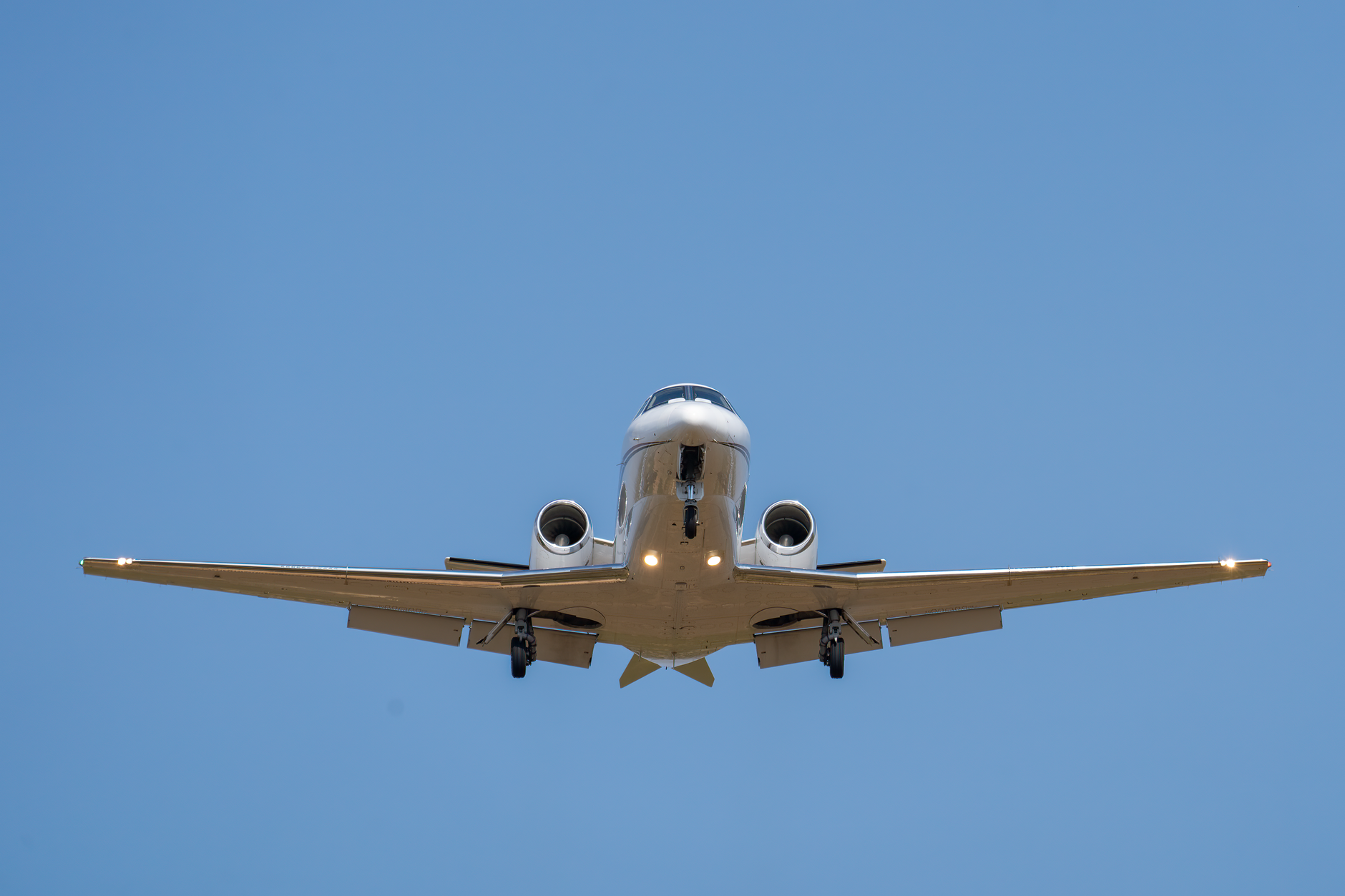
The Bombardier Global 8000 — billed by its Canadian manufacturer as the world’s fastest business jet — completed its full regulatory certification cycle over an eight-month window starting in late 2025. Transport Canada awarded the aircraft type certification on November 5, 2025, the FAA followed with U.S. certification on December 19, 2025, the Global 8000 entered service that same month, and the European Union Aviation Safety Agency (EASA) added its approval in January 2026. As of mid-2026, the Mach 0.95-capable ultra-long-range jet is being delivered to customers and is also available as a $3 million upgrade for existing Global 7500 owners through Bombardier service centers.
For pilots and aviation observers who watched the Global 8000’s protracted development since its 2010 launch, the completion of the certification trifecta marks the formal close of one of business aviation’s most-anticipated programs. Here’s the full story and what the aircraft brings to the market.
What Transport Canada Certified
Transport Canada Civil Aviation (TCCA) issued the Global 8000 its type certification on November 5, 2025 — three years after Bombardier formally launched the program in 2022. Canadian certification was the first regulatory milestone in what Bombardier had structured as a phased global approval process.
“Bombardier has worked rigorously and collaboratively with Transport Canada toward certification for the Global 8000,” said Stephen McCullough, Senior Vice President of Engineering and Product Development at Bombardier. “This marks a pivotal milestone for Bombardier, our customers and the entire business aviation industry — solidifying the Global 8000’s position as the unrivalled leader setting a new standard.”
The Transport Canada certification cleared the aircraft for delivery to Canadian operators and provided the foundation for reciprocal certification by other regulators. As Bombardier noted at the time, FAA and EASA approvals would follow “aligned with delivery requirements.”
The Full Certification Timeline
The Global 8000’s regulatory approval arc spanned three jurisdictions and roughly eight months:
November 5, 2025 — Transport Canada Type Certification. Canadian regulators issued the first certification, clearing the aircraft for entry into service.
December 19, 2025 — FAA Type Certification. The U.S. Federal Aviation Administration approved the Global 8000 just over six weeks after the Canadian milestone. The FAA approval opened the aircraft to U.S. customers — by far the largest single market for ultra-long-range business jets.
December 2025 — First Delivery and Entry Into Service. Bombardier handed over the first Global 8000 to a customer in December 2025, marking formal entry into service. The aircraft’s certified top speed of Mach 0.95 makes it the fastest civil aircraft in operation today — faster than any commercial airliner and the fastest business jet to ever enter service.
January 2026 — EASA Type Certification. The European Union Aviation Safety Agency completed the certification trifecta in January 2026, opening the European market.
The cadence — eight months from initial certification to final regulatory approval across the three primary jurisdictions — was relatively efficient by ultra-long-range business jet standards, reflecting Bombardier’s pre-coordination with all three regulators during the certification campaign.
What Makes the Global 8000 Different
The Global 8000 isn’t just an incremental update to the Global 7500 (Bombardier’s previous flagship, in service since 2018). It’s a substantively different aircraft with five headline performance and comfort claims:
Mach 0.95 top speed. During supersonic flight testing in 2021, the Global 8000 reached Mach 1.015 — making it the only civil aircraft to break the sound barrier since the Concorde. The production aircraft is certified at Mach 0.95 maximum operating speed (MMo), the highest of any business jet in service. The closest competitor, the Gulfstream G800, has a top speed of Mach 0.925.
8,000 nautical miles of range. True ultra-long-range capability with a single fuel load. This enables nonstop city pairs that previously required at least one fuel stop, including New York–Hong Kong, Tokyo–New York, and Sydney–Los Angeles. The Gulfstream G800 narrowly exceeds the Global 8000 on range at 8,200 nm.
2,691 ft cabin altitude at 41,000 ft cruise. The lowest cabin altitude in business aviation. By comparison, most business jets cruise with cabin pressures equivalent to 6,000–8,000 ft of altitude. The lower cabin altitude reduces the physiological stress of long flights, which Bombardier markets through references to the Burj Khalifa observation deck (2,717 ft above ground).
Four-zone cabin with up to 19 seats. The Global 8000 is the only four-zone business jet currently in service at 8,000 nm range. It also includes Bombardier’s Pũr Air HEPA filtration system with VOC removal and the Soleil circadian lighting system designed to reduce jet lag.
Light-jet takeoff and landing performance. Despite its size, the Global 8000 has a takeoff distance of 5,760 ft and a landing distance of 2,220 ft. The advanced wing design with leading-edge slats lets the aircraft operate at approximately 30 percent more airports than its closest competitor — an estimated 2,000 additional destinations.
The aircraft is powered by two GE Aerospace Passport engines producing 19,000 lbf (84.5 kN) of thrust each — the same powerplant used on the Global 7500.
The Production Path
The Global 8000 has had one of the longer development arcs in modern business aviation. Bombardier first announced the type alongside the Global 7000 in 2010 — but the project was deprioritized as the company focused on the Global 7500’s development and production ramp. The Global 7500 entered service in 2018 and went on to accumulate more than 250,000 flying hours by mid-2026.
Bombardier formally relaunched the Global 8000 program in 2022, this time as a stretched, faster, and longer-ranged evolution of the 7500 rather than a separate airframe. The 8000 and 7500 share the same fuselage, simplifying production and enabling existing 7500 owners to upgrade their aircraft to 8000 specification through a service bulletin available in early 2026 at approximately $3 million per aircraft.
Production milestones since the 2022 relaunch:
- October 2024: Production launch
- April 2025: Entry into final assembly line
- May 2025: Maiden flight
- November 2025: Transport Canada certification
- December 2025: FAA certification and entry into service
- January 2026: EASA certification
Bombardier produces the Global 8000 at its Toronto Pearson International Airport assembly facility, the same plant where the Global 7500 is built. The company plans to phase out 7500 production entirely in 2026 to focus exclusively on the 8000.
Market Position
The Global 8000 enters a small but lucrative segment of business aviation dominated by ultra-long-range, four-zone aircraft. The main competitors:
Gulfstream G800. Entered service in August 2025. Range of 8,200 nm (slightly longer than the Global 8000), top speed Mach 0.925. Powered by Rolls-Royce Pearl 700 engines. Roughly comparable cabin layout and amenities.
Gulfstream G700. Slightly shorter-range predecessor of the G800, in service since 2024. Range of 7,500 nm, top speed Mach 0.935.
Dassault Falcon 10X. Still in development as of mid-2026, with first flight expected later in the year. Designed for 7,500 nm range with widebody-cabin dimensions Dassault is positioning against Bombardier and Gulfstream’s offerings.
The three-way competition at the top of the business jet market has driven aggressive feature parity and one-upmanship across cabin altitude, speed, range, and cabin comfort. The Global 8000’s combination of Mach 0.95 top speed and 2,691-ft cabin altitude positions it strongly on performance metrics that matter to long-haul corporate and head-of-state operators.
GAMA reported earlier this year that GA aircraft billings hit $6.85 billion in Q1 2026 — a 36 percent increase over Q1 2025 — with business jet deliveries driving most of the growth. The Global 8000 is exactly the kind of high-margin product feeding that surge.
Why This Matters for the Industry
The Global 8000’s certification and entry into service is consequential for several reasons:
Bombardier’s flagship transition. The 8000 takes over from the 7500 as Bombardier’s flagship and represents the company’s primary growth product through the late 2020s. The phase-out of 7500 production and the upgrade pathway for existing 7500 owners reflect Bombardier’s strategic concentration on the new aircraft.
Civil supersonic threshold. While the 8000 doesn’t operate supersonically in service, its certification at Mach 0.95 represents the first formal civil aircraft certification at speeds approaching supersonic thresholds since the Concorde. It establishes regulatory precedent that may matter as other ultra-high-speed civil aircraft programs (including Boom’s Overture and emerging supersonic business jets) seek certification later this decade.
Workforce and supply chain implications. Bombardier’s Toronto assembly facility and its U.S. supplier network — including GE Aerospace’s Lynn, Massachusetts engine facility — represent thousands of high-skill aviation manufacturing jobs. Sustained delivery rates for the Global 8000 sustain those jobs and the broader business aviation supply chain.
Comlux and other launch customers. At NBAA-BACE 2025 in Las Vegas, charter operator Comlux Aviation confirmed a firm order for the Global 8000 with delivery scheduled for 2026. Comlux CEO Andrea Zanetto positioned the aircraft as fitting between Comlux’s Global 6500 fleet and wide-body fleet — a placement that reflects how launch customers are integrating the type into their charter operations.
The Bottom Line
The Bombardier Global 8000’s Transport Canada certification on November 5, 2025, was the first step in what became a complete regulatory certification across three primary jurisdictions and full entry into service within roughly eight months. The aircraft now represents the leading edge of ultra-long-range, ultra-fast, ultra-comfortable business aviation — and its $3 million upgrade pathway for existing Global 7500 owners gives Bombardier a unique tool to migrate its installed base into the new flagship over time.
For business jet operators, charter companies, and ultra-high-net-worth owners considering ultra-long-range aircraft, the Global 8000 establishes a new performance benchmark. For the broader aviation industry, it’s a reminder that business aviation remains one of the most dynamic segments in commercial aerospace — and that the next generation of long-range jets continues to push speed, comfort, and operational flexibility into territory that would have been unthinkable just a decade ago.
Frequently Asked Questions
When was the Bombardier Global 8000 certified by Transport Canada? Transport Canada Civil Aviation (TCCA) awarded the Bombardier Global 8000 type certification on November 5, 2025. This was the first regulatory approval in the aircraft’s certification arc, followed by FAA certification on December 19, 2025, and European Union Aviation Safety Agency (EASA) certification in January 2026. The Global 8000 entered service in December 2025.
What is the Bombardier Global 8000’s top speed? The Global 8000 is certified at a maximum operating speed of Mach 0.95, making it the fastest business jet in service and the fastest civil aircraft of any type since the Concorde. During supersonic flight testing in 2021, the aircraft briefly exceeded Mach 1, reaching Mach 1.015.
What is the Global 8000’s range? The Bombardier Global 8000 has a maximum range of 8,000 nautical miles, enabling nonstop service between city pairs like New York–Hong Kong, Tokyo–New York, and Sydney–Los Angeles that previously required at least one fuel stop. Its closest competitor, the Gulfstream G800, has a slightly longer range of 8,200 nm.
Can Global 7500 owners upgrade to Global 8000 specification? Yes. Bombardier offers a service bulletin upgrade pathway that allows existing Global 7500 owners to convert their aircraft to Global 8000 specification at approximately $3 million per aircraft. The upgrade became available through Bombardier service centers in early 2026 and is enabled by the fact that the Global 7500 and Global 8000 share the same fuselage.
How does the Global 8000 compare to the Gulfstream G800? The Global 8000 and Gulfstream G800 are the two leading ultra-long-range business jets currently in service. The Global 8000 has a higher top speed (Mach 0.95 vs. Mach 0.925), a lower cabin altitude at cruise (2,691 ft vs. higher figures for the G800), and access to approximately 30 percent more airports due to its wing design. The G800 has slightly longer range (8,200 nm vs. 8,000 nm).
Sources:
- Bombardier — Global 8000 Awarded Transport Canada Type Certification (November 5, 2025)
- Bombardier — Global 8000 Receives FAA Certification (December 19, 2025)
- Flight Global — Bombardier Hands Over First Global 8000 (December 2025)
- Flight Global — Bombardier Global 8000 Business Jet Receives Transport Canada Certification
- Aerospace Global News — Bombardier Global 8000 Clears Transport Canada Certification
- Aviation Week — Bombardier Global 8000 Cabin Design Revealed
- Corporate Jet Investor — Bombardier Global 8000 Type Certified in Canada