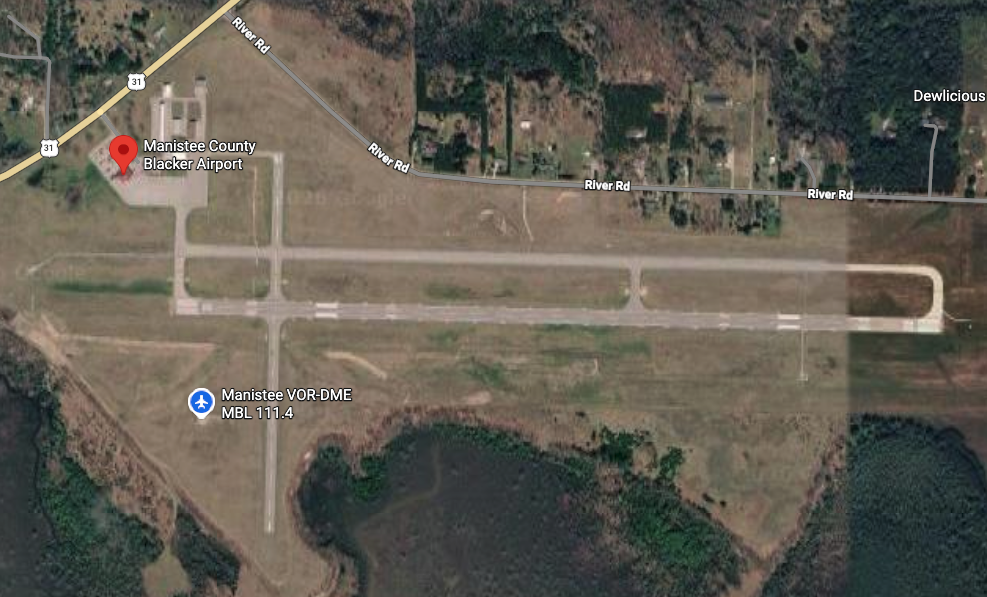
The Manistee Blacker Airport Authority voted on August 17, 2026 to implement landing fees at Manistee County/Blacker Airport (KMBL) in northwestern Michigan, beginning October 1. The fees start between $10 and $30 for most general aviation aircraft and are scheduled to increase every year through 2031. AOPA has objected, calling the proposed schedule “extremely concerning” and noting that small general aviation airports rarely charge landing fees to all aircraft — and that the proposed fee for light aircraft under 12,500 pounds far exceeds comparable schedules at airports across the country.
The association has also asked the authority to produce the financial analysis behind the decision, raising questions about whether the fees meet the FAA’s requirements for federally obligated airports.
What Was Approved
The fee schedule applies to aircraft using the airport, with most general aviation aircraft starting in the $10 to $30 range depending on category. Those figures are the starting point — the schedule includes annual escalation through 2031.
Manistee County/Blacker Airport logged 3,749 operations in 2025, the substantial majority of which were general aviation traffic. That’s a modest-volume field, which is part of AOPA’s concern: the revenue a fee schedule can generate at that operation count may not justify what it costs the airport in lost activity.
Why AOPA Is Objecting
Kyle Lewis, AOPA’s Great Lakes Regional Manager, laid out several objections.
Landing fees are unusual at small GA airports. Of 215 public-use airports in Michigan, only one general aviation airport currently charges fees across all weight categories of light GA aircraft — Mackinac Island Airport, a major Great Lakes tourism destination with a genuinely unusual operating profile. Manistee would become the second, and it does not share Mackinac Island’s circumstances.
The fee level is out of line. AOPA’s position is that the proposed charge for light aircraft under 12,500 pounds exceeds many comparable categorical landing fee schedules at airports around the country.
The activity consequences are documented. Lewis pointed to GA airports that have imposed landing fees on general aviation operators and subsequently seen activity drop by as much as 40 percent. That’s the core of the practical argument: a fee intended to raise revenue can reduce the operations generating it, along with fuel sales, maintenance work, and the local spending transient pilots bring.
The Grant Assurance Question
Beyond the policy objection, AOPA has raised a compliance question that could matter more.
The association requested that the airport authority provide the financial analysis used to set the fees, along with the cost-allocation methodology, an operational-impact analysis, and supporting information — in order to determine whether the fees are fair, reasonable, and appropriately allocated.
Those aren’t rhetorical requests. Airports that accept FAA funding agree to grant assurances, and FAA rates and charges policy requires that fees imposed on aeronautical users be reasonable and reflect a defensible allocation of actual costs. An airport can’t simply select a number it would like to collect.
This is the same body of obligation that governs hangar use, airport access, and self-service rights at federally obligated fields. If a sponsor cannot show the cost basis for a fee, the FAA can find it in noncompliance with its grant assurances — a finding that puts future federal funding at risk.
The escalation schedule through 2031 raises a related question: a fee structure that increases automatically on a predetermined timeline may be difficult to tie to actual year-by-year cost allocation.
Why This Matters Beyond One Airport
Landing fees at small GA fields are a recurring flashpoint, and the reason is precedent.
Most general aviation airports don’t charge them. The economics generally don’t work: collection requires administrative overhead, the revenue at a few thousand annual operations is limited, and the deterrent effect on transient traffic can cost the airport and surrounding businesses more than the fees bring in. Transient pilots buy fuel, eat at the airport restaurant, stay overnight, and rent cars — spending that stops when they route around a field.
That’s why the 40-percent figure carries weight. If a fee schedule reduces operations by anything approaching that, the airport has traded a broad economic base for a narrow revenue line.
There’s also a network effect. Airports watch what neighboring airports do. A fee schedule that survives at one Michigan GA field makes it easier for the next authority to adopt one — which is why AOPA engages on individual cases that might otherwise look small.
For pilots, the practical concern is cumulative. General aviation flying already absorbs fuel costs, maintenance, insurance, hangar rent, and — in states like Washington — rising registration and excise taxes. Each individual fee is manageable. The aggregate is what pushes people out of flying.
What Happens Next
The fees are scheduled to take effect October 1, 2026. AOPA’s request for the airport’s financial analysis and cost-allocation methodology remains outstanding, and how the authority responds will shape whether this becomes a compliance matter or stays a local policy dispute.
For pilots who use KMBL or fly the northwestern Michigan corridor: plan for the fees beginning October 1 and confirm current amounts with the airport before arriving.
For pilots who want to weigh in: airport authority meetings are public, and local pilot and business input carries real weight with boards that answer to county government. AOPA’s regional managers also welcome member reports on fee proposals at other fields.
For anyone tracking GA airport policy: this is a case worth following. Whether a small Michigan field can adopt an escalating landing fee schedule — and whether it can document the cost basis when asked — will inform how similar proposals are received elsewhere.
The Bottom Line
Manistee County/Blacker Airport will begin charging landing fees on October 1, starting at $10 to $30 for most general aviation aircraft and escalating annually through 2031. AOPA has called the schedule extremely concerning, noting that only one of Michigan’s 215 public-use airports currently charges light GA across all weight categories, that the proposed levels exceed comparable schedules nationally, and that GA airports adopting such fees have seen activity fall by as much as 40 percent.
The unresolved question is documentation. Federal grant assurances and FAA rates and charges policy require that fees on aeronautical users be fair, reasonable, and grounded in an actual cost allocation. AOPA has asked to see that work. Whether the authority can produce it may determine how far this goes.
Frequently Asked Questions
What landing fees is Manistee County/Blacker Airport implementing? The Manistee Blacker Airport Authority voted on August 17, 2026 to implement landing fees beginning October 1, 2026. The fees start between $10 and $30 for most general aviation aircraft and are scheduled to increase annually through 2031. The airport logged 3,749 operations in 2025, the majority of which were general aviation.
Why does AOPA object to the new landing fees? AOPA’s Great Lakes Regional Manager Kyle Lewis called the proposed schedule extremely concerning, noting that small general aviation airports rarely charge landing fees to all aircraft and that the proposed fee for light aircraft under 12,500 pounds exceeds many comparable schedules at airports nationally. AOPA also pointed out that GA airports imposing such fees have seen activity decline by as much as 40 percent, and requested the financial analysis and cost-allocation methodology behind the decision.
Do other Michigan airports charge landing fees to light general aviation aircraft? According to AOPA, of 215 public-use airports in Michigan, only one general aviation airport currently charges fees across all weight categories of light GA aircraft — Mackinac Island Airport, a major tourism destination along the Great Lakes with an unusual operating profile. Manistee County/Blacker would become the second.
Can an airport charge whatever landing fees it wants? Not at federally obligated airports. Airports that have accepted FAA grant funding agree to grant assurances, and FAA rates and charges policy requires that fees imposed on aeronautical users be fair, reasonable, and reflect an appropriate allocation of actual costs. AOPA has asked the Manistee Blacker Airport Authority to provide its financial analysis, cost-allocation methodology, and operational-impact analysis to determine whether the fees meet that standard.
How do landing fees affect small general aviation airports? Evidence cited by AOPA indicates GA airports that impose landing fees on general aviation operators have seen operations fall by as much as 40 percent. Because transient pilots also purchase fuel, use maintenance services, and spend money locally, reduced traffic can cost an airport and surrounding businesses more than the fee revenue generates — which is why most small GA airports do not charge landing fees.
Sources: