The four steps of spin recovery, taught by the FAA in the Airplane Flying Handbook and widely remembered by the acronym PARE, are: Power to idle, Ailerons to neutral, Rudder full opposite the direction of rotation, and Elevator briskly forward to break the stall. Applied in that order, these steps stop the rotation and return the airplane to normal flight. The single most important caveat: always use the specific spin recovery procedure published in your airplane’s flight manual (AFM/POH) — the PARE technique is the general procedure the FAA teaches, but the manufacturer’s procedure for your specific aircraft always takes precedence. If there is no manufacturer-published procedure, the FAA’s recommended recovery is what follows.
Spins remain one of the deadliest events in general aviation, and understanding recovery — along with the prevention that matters even more — is fundamental airmanship. Here’s the FAA-recommended procedure, step by step, along with the aerodynamics behind it and the prevention mindset that keeps pilots out of spins in the first place.
What Is a Spin?
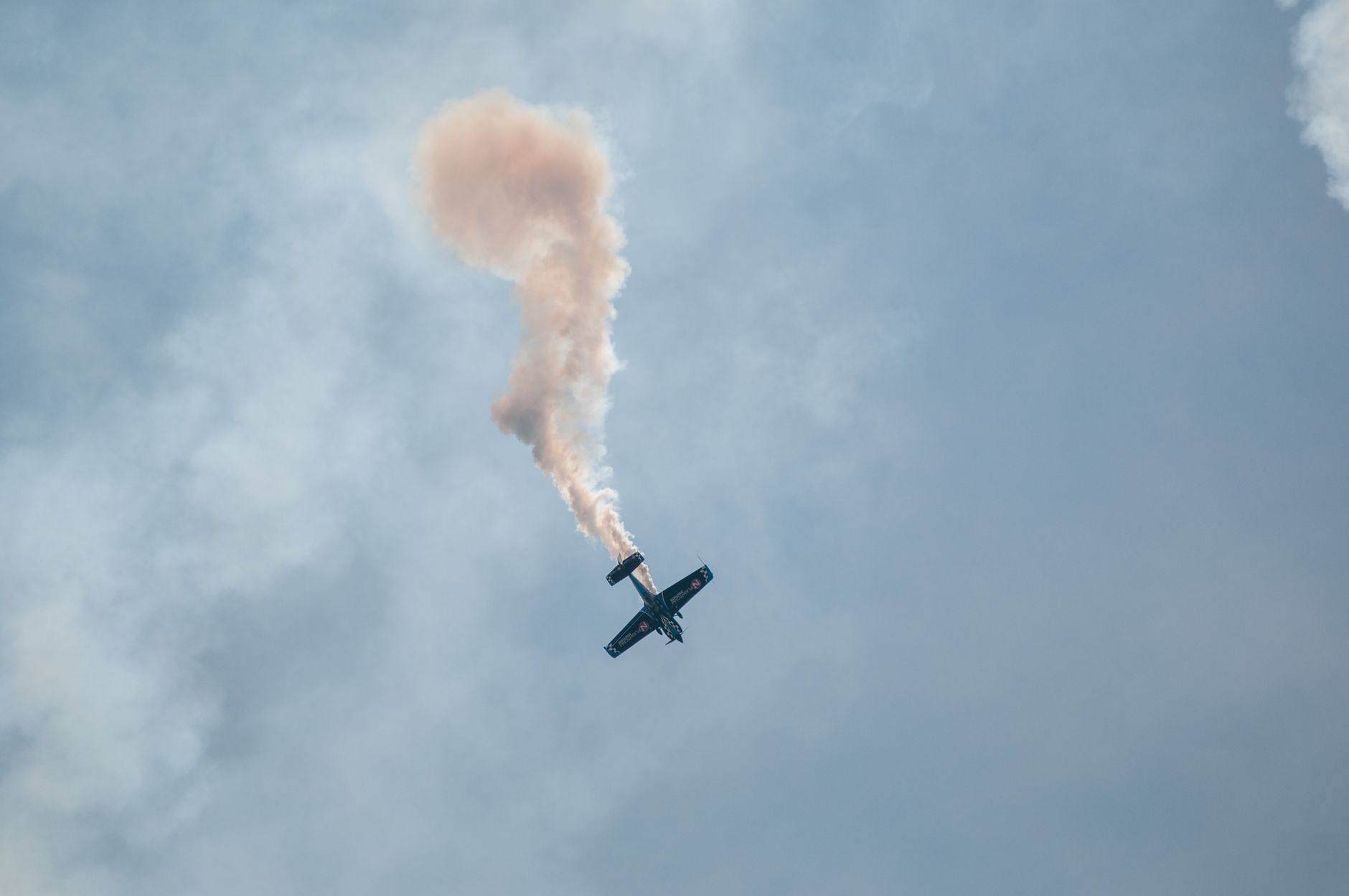
Per the FAA’s Airplane Flying Handbook (FAA-H-8083-3C), a spin is an aggravated stall that results in what the FAA describes as an autorotation — the airplane follows a downward corkscrew path. In a spin, both wings are stalled, but one wing is more deeply stalled than the other. That asymmetry is what drives the rotation: the more deeply stalled wing produces less lift and more drag, causing the airplane to roll and yaw toward that wing while descending rapidly.
A spin is fundamentally different from a spiral dive. In a spin, the wings are stalled and airspeed is typically low and stable. In a spiral dive, the wings are not stalled and airspeed increases rapidly. Applying spin-recovery inputs to a spiral dive — or vice versa — can make the situation worse, which is why correctly identifying the condition matters.
The FAA identifies two key phases of a spin:
The incipient spin. This is the phase from the moment the airplane stalls and rotation begins until the spin becomes fully developed. The incipient spin is not yet stabilized. Recovery initiated early in this phase is generally quicker and requires less altitude, which is one reason early recognition is so valuable.
The developed spin. This is when the airplane’s angular rotation rate, airspeed, and vertical speed are stabilized in a flight path that is nearly vertical. A fully developed spin requires deliberate, correct recovery inputs.
Why Spins Matter: The Safety Picture
Understanding spin recovery matters because loss of control in flight remains a leading cause of fatal general aviation accidents. The NTSB has repeatedly identified loss of control in flight as a top contributor to GA fatalities, and stall/spin events are a significant subset of those accidents.
The most dangerous characteristic of spins is that they most often occur at low altitude, where recovery may be impossible regardless of pilot skill. The classic fatal scenario is the base-to-final stall/spin: a pilot overshoots the runway centerline on the turn from base to final, applies excessive rudder to tighten the turn while pulling back on the elevator, and enters an uncoordinated, cross-controlled stall that breaks into a spin — with only a few hundred feet of altitude available. At traffic-pattern altitude, there is rarely enough height to recover.
This is why the FAA and experienced instructors emphasize a critical truth: spin prevention is far more important than spin recovery. The best way to survive a spin is to never enter one. Recovery technique is essential knowledge, but it is the last line of defense, not the first.
The 4 Steps of Spin Recovery (PARE)
For airplanes where the manufacturer has not published a specific procedure, the FAA’s Airplane Flying Handbook provides a recommended spin recovery technique. The steps are performed in sequence and are commonly remembered with the acronym PARE:
Step 1 — P: Power to Idle
Reduce the throttle to idle.
Power aggravates spin characteristics. In many airplanes, power tends to flatten the spin — raising the nose toward the horizon, which increases the rotation rate and can make recovery more difficult or, in extreme cases, prevent it. Engine power can also produce gyroscopic and slipstream effects that worsen the spin. Bringing the power to idle removes these adverse effects and is the first step in a stable recovery.
Step 2 — A: Ailerons to Neutral
Neutralize the ailerons.
It is a common instinct to try to “pick up” the low wing with aileron, but in a spin this is exactly wrong. Applying aileron in a spin can aggravate the condition — deflecting the ailerons changes the relative angle of attack of each wing in ways that can deepen the stall on the more deeply stalled wing and accelerate rotation. The correct action is to move the ailerons to neutral and leave them there throughout the recovery.
Step 3 — R: Rudder Full Opposite the Rotation
Apply full rudder opposite the direction of rotation.
This is the input that most directly stops the spin. The rudder counteracts the yaw that sustains the autorotation. The critical requirement is to apply rudder opposite the direction the airplane is rotating — which means the pilot must first correctly determine the direction of rotation, typically by reference to the turn coordinator or the outside view. Applying rudder in the wrong direction will accelerate the spin rather than stop it. Full, positive opposite rudder is applied and held.
Step 4 — E: Elevator Briskly Forward
Move the elevator control briskly forward to break the stall.
After applying opposite rudder, the elevator (control yoke or stick) is moved positively and briskly forward to reduce the angle of attack and break the stall. In some airplanes, forward elevator may need to be brisk and substantial; in others, less movement is required. Because both wings must be unstalled to end the autorotation, this step is what actually recovers the wing from the stalled condition. The FAA notes that the sequence matters — rudder before elevator — because applying forward elevator first can, in some airplanes, accelerate the spin rotation before the anti-spin rudder takes effect.
After the Rotation Stops
Once the rotation stops:
- Neutralize the rudder. Leaving full rudder applied after rotation stops could induce a spin in the opposite direction.
- Recover from the resulting dive with smooth back-pressure. After the spin breaks, the airplane will be in a nose-low, descending attitude. Ease out of the dive with smooth elevator back-pressure — pulling too abruptly can trigger a secondary (accelerated) stall or overstress the airframe.
- Return to level flight and add power as appropriate once flying speed and a safe attitude are established.
Why the Order Matters
The PARE sequence is not arbitrary. Each step is ordered to make the next one effective:
- Power first removes the effects that aggravate and flatten the spin.
- Ailerons neutral removes an input that would otherwise deepen the stall asymmetry.
- Rudder before elevator stops the yaw that drives autorotation before the wings are unstalled — because in some airplanes, breaking the stall first (with forward elevator) while yaw is still present can momentarily accelerate the rotation.
- Elevator last breaks the stall once the anti-spin rudder is already working to stop rotation.
This is why rote memorization of the acronym isn’t enough — understanding why each step comes when it does helps a pilot execute the recovery correctly under the stress of a real spin.
The Manufacturer’s Procedure Always Wins
The FAA is explicit on this point, and it bears repeating: the spin recovery procedure in your airplane’s flight manual (AFM/POH) always takes precedence over any general technique.
Different airplanes have different spin characteristics and different certified recovery procedures. Some aircraft have specific requirements or prohibitions. Many general aviation training aircraft are certificated in the utility category for intentional spins under specific loading conditions — and many are placarded against intentional spins entirely. An airplane loaded outside its approved envelope, or one not approved for spins, may exhibit unpredictable spin behavior and may not recover using standard techniques.
Before flying any airplane, a pilot should know:
- Whether the airplane is approved for intentional spins, and under what loading
- The manufacturer’s published spin recovery procedure, if any
- Any placards or AFM limitations regarding spins
The PARE technique described above is the FAA’s general recommendation for airplanes lacking a manufacturer procedure — not a universal override of aircraft-specific guidance.
Prevention: The Skill That Matters Most
Because low-altitude spins are so often unrecoverable, the FAA emphasizes prevention above recovery. The key prevention principles from FAA training guidance:
Coordinate your controls. Most inadvertent spins result from an uncoordinated, cross-controlled stall — the ball out of center at the moment of stall. Keeping the airplane coordinated (ball centered) dramatically reduces spin risk. Awareness of the slip/skid indicator, especially in the pattern, is essential.
Respect the base-to-final turn. The overshoot-and-tighten scenario kills pilots every year. If you overshoot final, the correct response is a coordinated go-around or a stabilized correction — never a skidding, cross-controlled tightening of the turn with bottom rudder and back-pressure.
Manage angle of attack. A wing stalls at a critical angle of attack, not a specific airspeed. Understanding and respecting angle of attack — and avoiding the aggressive pull that drives the wing past critical AoA — is the foundation of stall/spin prevention.
Maintain adequate airspeed and energy in the pattern. Getting slow and uncoordinated at low altitude is the setup for the fatal scenario. Fly stabilized approaches at appropriate speeds.
Recognize the warning signs. Buffet, mushy controls, a high sink rate, and stall warnings are cues to reduce angle of attack immediately. Early recognition of an approaching stall prevents the spin entirely.
Consider spin awareness training. Many pilots benefit from formal stall/spin awareness or upset prevention and recovery training (UPRT) with a qualified instructor in an appropriate aircraft. Experiencing recognition and recovery in a controlled environment builds the reflexes that matter when it counts. This training should only be conducted in an airplane approved for spins, with a properly qualified instructor, at a safe altitude.
The Bottom Line
The four steps of spin recovery — Power idle, Ailerons neutral, Rudder full opposite, Elevator briskly forward — are the FAA’s recommended recovery technique for airplanes without a manufacturer-published procedure. Applied in the correct order, PARE stops the autorotation and returns the airplane to controlled flight, followed by a smooth recovery from the resulting dive.
But the deeper lesson from FAA and NTSB data is that spin prevention is what saves lives. Because most fatal spins begin at low altitude — where no recovery technique can help — coordinated flight, angle-of-attack awareness, disciplined base-to-final turns, and stabilized approaches are the real defense. Know the recovery. Master the prevention. And always fly the specific procedure your airplane’s flight manual prescribes.
Frequently Asked Questions
What are the 4 steps of spin recovery? The four steps of spin recovery, per the FAA’s Airplane Flying Handbook and remembered by the acronym PARE, are: (1) Power to idle, (2) Ailerons to neutral, (3) Rudder full opposite the direction of rotation, and (4) Elevator briskly forward to break the stall. After rotation stops, neutralize the rudder and smoothly recover from the resulting dive. Always use the spin recovery procedure published in your airplane’s flight manual if one is provided, as it takes precedence over the general PARE technique.
What does PARE stand for in spin recovery? PARE is a memory aid for the FAA’s recommended spin recovery steps: P — Power to idle; A — Ailerons to neutral; R — Rudder full opposite the direction of rotation; E — Elevator briskly forward. The order is important: reducing power removes spin-aggravating effects, neutral ailerons prevent deepening the stall, opposite rudder stops the rotation, and forward elevator breaks the stall — with rudder applied before elevator because breaking the stall first can accelerate rotation in some airplanes.
Why is the base-to-final turn so dangerous for spins? The base-to-final turn is a common site of fatal stall/spin accidents because pilots who overshoot the runway centerline may apply excessive bottom rudder to tighten the turn while pulling back on the elevator. This creates an uncoordinated, cross-controlled, skidding turn at low airspeed — the exact setup for a spin entry. Because it happens at traffic-pattern altitude (often just a few hundred feet), there is usually not enough altitude to recover. The safe response to overshooting final is a coordinated go-around, never a skidding tightening of the turn.
Is spin prevention more important than spin recovery? Yes. The FAA and NTSB emphasize that spin prevention is far more important than recovery, because most fatal spins occur at low altitude where recovery is impossible regardless of pilot skill. Prevention centers on maintaining coordinated flight (ball centered), managing angle of attack, respecting the base-to-final turn, flying stabilized approaches at appropriate speeds, and recognizing the warning signs of an approaching stall. Recovery technique is the last line of defense, not the first.
Should I use PARE for every airplane? No. The PARE technique is the FAA’s general recommended recovery for airplanes that do not have a manufacturer-published spin recovery procedure. The spin recovery procedure in your specific airplane’s flight manual (AFM/POH) always takes precedence, because different aircraft have different spin characteristics and certified recovery procedures. Before flying, know whether your airplane is approved for intentional spins and under what loading, and know its published recovery procedure and any placarded limitations. Intentional spin training should only be conducted in an approved airplane with a qualified instructor at a safe altitude.
Sources:
- FAA — Airplane Flying Handbook (FAA-H-8083-3C), Chapter 4: Maintaining Aircraft Control (Upset Prevention and Recovery) and Spin Awareness
- FAA — Pilot’s Handbook of Aeronautical Knowledge (FAA-H-8083-25C)
- FAA — Advisory Circular 61-67C: Stall and Spin Awareness Training
- NTSB — General Aviation Loss of Control In-Flight Safety Information
- FAA — 14 CFR 23 Airworthiness Standards and Spin Certification Requirements