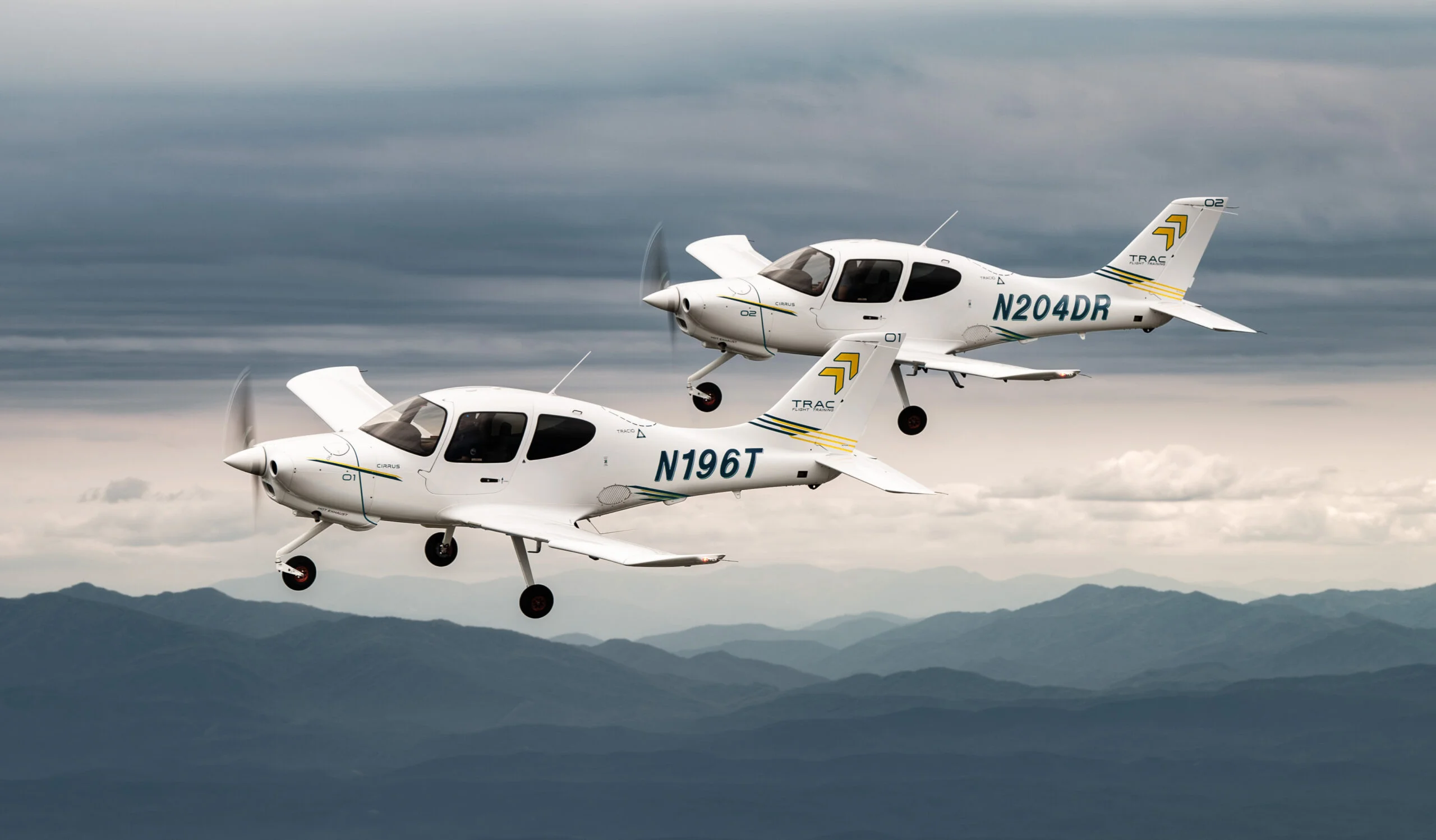
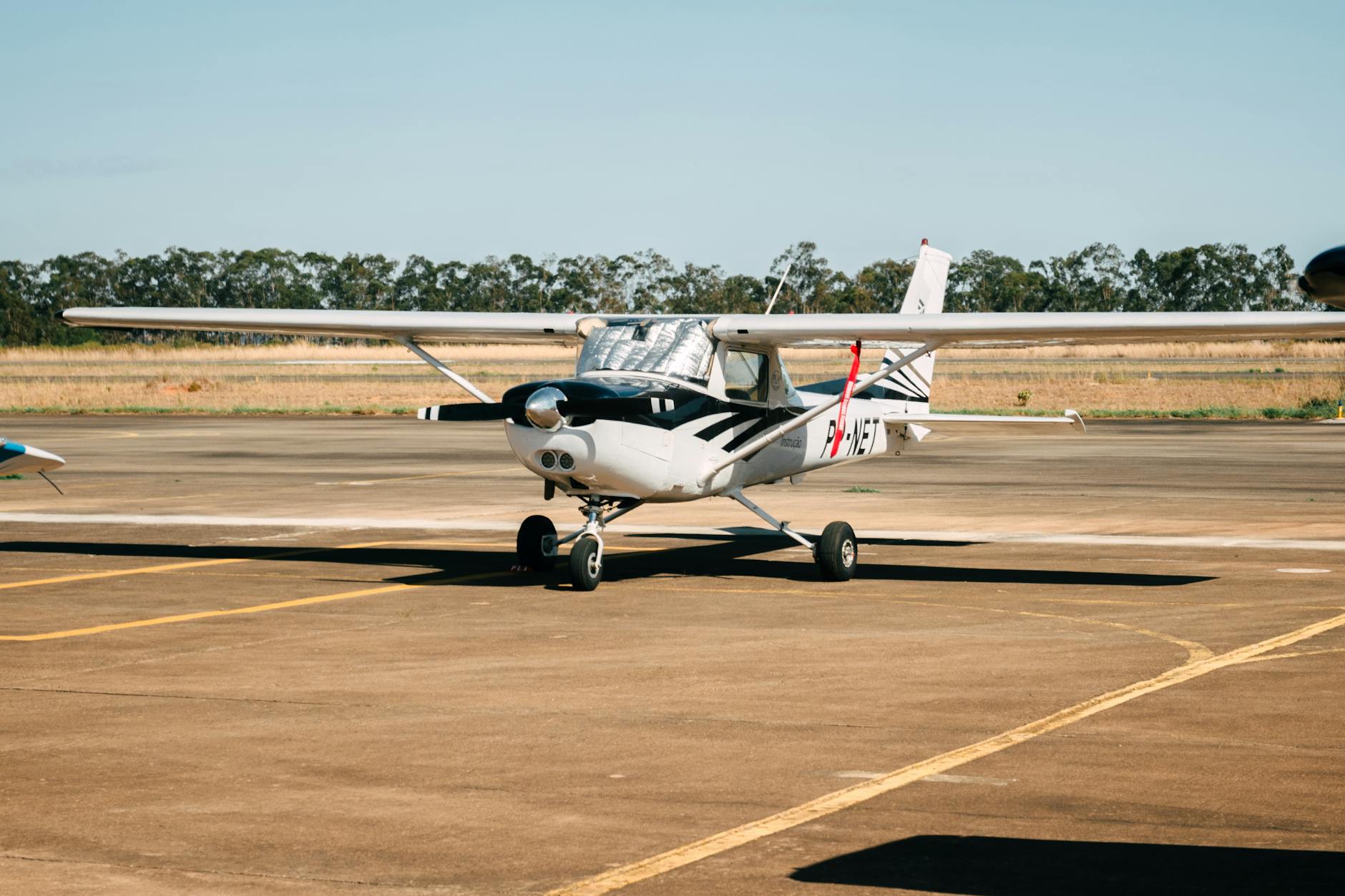
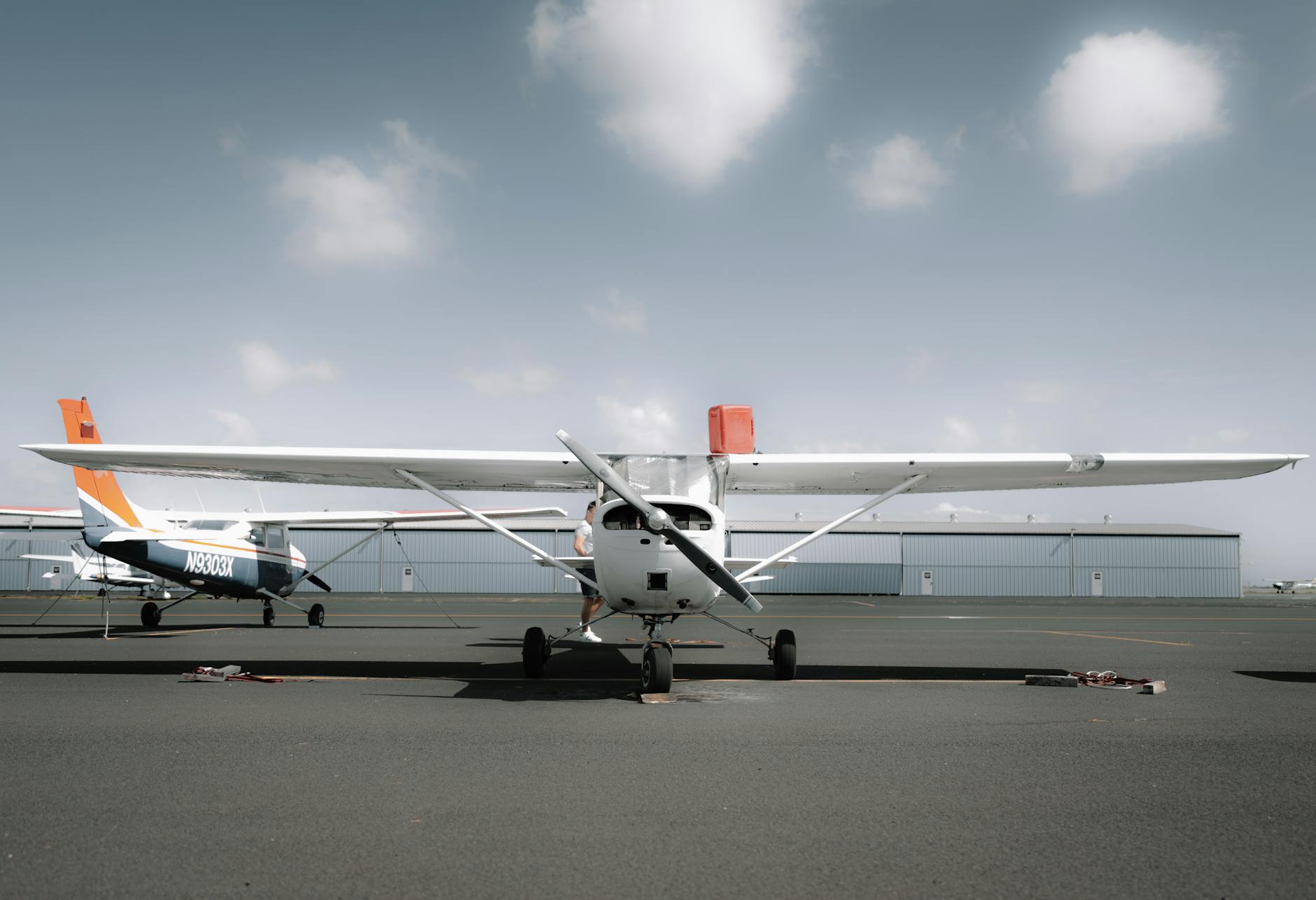
If there’s one airplane that practically defines “general aviation,” it’s the Cessna 172 Skyhawk—a four-seat, single-engine, high-wing airplane that has trained generations of pilots and quietly moved an absurd number of people from Point A to Point B. It first flew in 1955, entered production in 1956, and remains in production today.
The 172’s reputation isn’t built on flash. It’s built on:
- predictable handling,
- strong parts and maintenance ecosystem,
- real-world practicality,
- and a design that has steadily evolved while staying familiar.
This is a long, detailed, publish-ready guide you can use for Skyfarer’s blog—covering history, models, modern specs, ownership, and how to choose the right 172 for your mission.
Quick facts (modern Skyhawk)
Textron Aviation’s current Cessna Skyhawk (the modern 172 variant) is published with these headline numbers:
- Max cruise: 124 ktas
- Max range: 640 nm
- Useful load: 878 lb
- Stall speed: 48 KCAS
- Climb rate: 730 fpm
- Service ceiling: 14,000 ft
- Engine: Lycoming IO-360-L2A, 180 hp
And as of 2025, Textron’s own materials describe the Skyhawk as the aircraft of choice for pilot training and note that more than 45,000 Cessna 172s have been delivered globally (the “most popular aircraft in aviation history” framing).
Why the Cessna 172 became the default airplane
The 172 hits a rare balance: it’s simple enough to teach in, but capable enough to travel in. It’s forgiving without being sloppy, stable without being dull, and practical without being slow (for what it is).
Some real reasons it became the global standard:
1) High-wing, fixed gear, simple systems
A high wing gives great downward visibility in turns and keeps you farther from ramps and debris. Fixed landing gear is robust and maintenance-friendly.
2) A “normal-person” cabin and useful load
Four seats on paper, usually “two adults + baggage + fuel” comfortably in practice (varies by year and equipment), and modern published useful load numbers around 878 lb.
3) Training ecosystem and standardization
Flight schools love aircraft that are easy to schedule, easy to maintain, and predictable for students. Textron explicitly positions the Skyhawk as the training default and has run programs placing factory-new Skyhawks with schools/universities.
A short history of the 172 (1955 → today)
Born from the Cessna 170 (but with tricycle gear)
The 172 evolved from the Cessna 170, trading tailwheel configuration for tricycle landing gear—marketed as “Land-O-Matic” in the era—making ground handling more approachable for the growing postwar pilot population.
Type certification and early engine
The FAA Type Certificate Data Sheet for the 172 family (TCDS No. 3A12) records the Model 172 in Normal Category as approved November 4, 1955, with early models using the Continental O-300 engine family.
Production pause and the 1990s restart
Cessna famously paused much of its single-engine piston production in the mid-1980s amid liability pressure and market conditions, then restarted after the General Aviation Revitalization Act (GARA) created an 18-year statute of repose for many civil actions. AOPA’s historical coverage links the 1994 passage of GARA to Cessna’s decision to restart production and establish the Independence, Kansas facility.
Modern era: 172R and 172S, and continued upgrades
Wikipedia summarizes that production resumed in the 1990s and that the 172R and later 172S represent the modern lineage (common in today’s fleets).
In current Textron materials, the Skyhawk is positioned with Garmin G1000 NXi avionics and a package of modern interior and training-focused features.
Understanding the “many versions” of the Cessna 172
When someone says “I fly a 172,” that can mean very different airplanes depending on model year.
A useful mental model is to group them into eras:
1) Classic 172s (1950s–1970s)
- Often Continental O-300-powered in early years (145 hp class)
- Generally lighter and simpler avionics
- The “vintage Skyhawk feel”—charming, but often upgrades/maintenance matter a lot
2) Late legacy models (1970s–mid 1980s)
- Many flight schools still fly these because they’re economical to own
- Panels range from basic six-pack to highly upgraded retrofits
3) Restart and modern fleet models (late 1990s–present)
- Common “training fleet standard”
- Modern engines and avionics packages, plus newer interiors
- Textron publishes current performance/spec targets for this class.
Notable “172-adjacent” variants you may hear about
- T-41 Mescalero (military trainer variant)
- “Higher performance” marketing names like Hawk XP and others, depending on year/trim
(These are broadly summarized in historical references and variant lists.)
Skyfarer tip: If you’re writing listings or educational pages, always include the exact model (e.g., 172N vs 172S), engine type, and avionics—because that’s what actually changes the experience.
The modern Skyhawk: engine, avionics, and what’s new
Powerplant: Lycoming IO-360-L2A (180 hp)
Textron lists the current Skyhawk with the Lycoming IO-360-L2A at 180 hp, paired with a McCauley fixed-pitch prop in the standard configuration.
Avionics: Garmin G1000 NXi + training-oriented features
Textron’s 2025 materials specifically call out:
- Garmin G1000 NXi with wireless connectivity
- Standard angle-of-attack (AoA) display
- Updated interior features like powered headset jacks, USB charging ports, upgraded seating (varies by year/package)
2025 update: dual electronic ignition system
Textron announced a Skyhawk enhancement introducing a dual electronic ignition system (dual EIS) as part of efficiency/maintenance improvements.
Performance: what you can expect (and what changes it)
From the current manufacturer-published numbers, the modern Skyhawk targets:
- 124 ktas max cruise
- 640 nm max range
- 730 fpm climb
- 48 KCAS stall
But here’s what makes real-world performance vary:
1) Airframe year + drag details
Wheel fairings, antennas, paint, rigging, and exterior condition matter more than people expect.
2) Prop and engine health
A tired engine or wrong prop for mission can make a “good 172” feel disappointingly average.
3) Weight and CG
A 172 with full fuel, four adults, and bags is usually not a happy airplane. Most owners learn to plan realistically: payload vs fuel vs performance.
Why flight schools love the 172 (and why students do too)
Stable platform that teaches fundamentals
The 172 tends to be predictable in pitch and roll, making it ideal for building scan discipline, trim habits, and consistent approaches.
Great visibility and “situational learning”
The high wing is excellent for training maneuvers and traffic pattern work—especially when learning how to look outside and manage spacing.
The global support network
From maintenance shops to parts availability to instructors who know the type, the 172 is everywhere—so it’s easy to continue training or rent when traveling.
Textron explicitly frames the Skyhawk as the training default and highlights global training program adoption.
Buying a Cessna 172: the practical checklist
If you’re buying a 172 (especially used), you’re not just buying a model—you’re buying the maintenance history.
Here’s what matters most.
1) Logs: continuity > perfection
Look for:
- complete airframe/engine/prop logbooks,
- consistent annual inspections,
- evidence of recurring squawks being addressed (not ignored).
A clean-looking airplane with “missing years” in logs should trigger extra scrutiny.
2) Engine time: hours matter, but context matters more
Ask:
- time since major overhaul (SMOH),
- compressions and oil analysis trends (if available),
- how often it flies (regular flying is often healthier than long inactivity).
3) Corrosion and environment
A “hangared in Arizona” airplane and a “tied down near salt air” airplane can look the same online—and be completely different in person.
4) Avionics reality: what’s installed, what’s supported
Older panels can be great, but check:
- WAAS GPS capability (if you want IFR GPS approaches),
- ADS-B compliance,
- autopilot condition (if installed),
- whether components are still supported.
5) Damage history: not always a dealbreaker, but it changes pricing
A well-repaired incident with strong documentation can be fine. A vague story with incomplete paperwork usually isn’t.
6) Prebuy inspection: always
A true prebuy with a mechanic who knows Skyhawks is often the best money you’ll spend in the whole purchase.
Ownership costs and market pricing (realistic ranges)
Prices move with the market, avionics, engine time, and airframe condition. Still, it helps readers to see grounded ranges:
- A training academy price guide cited new 172s in the $400k–$500k range, with used aircraft spanning tens of thousands to a few hundred thousand depending on year/condition/equipment.
- A live aircraft marketplace page shows used 172 listings commonly in the ~$90k–$245k window at the time of their snapshot (listings fluctuate).
Important note for your blog: present these as ballpark ranges and encourage readers to compare multiple sources because avionics and engine time swing value dramatically.
Common upgrades owners consider (and why)
Every 172 owner eventually ends up choosing “mission upgrades.” Common themes:
1) Avionics modernization
Even modest upgrades (better audio panel, ADS-B, WAAS GPS) can transform utility.
2) STOL and handling kits
Some owners prioritize shorter-field margins and low-speed handling (especially for backcountry-ish operations). This is often paired with pilot training and conservative decision-making.
3) Useful load and interior decisions
Big, heavy avionics stacks and plush interiors can reduce payload. Practical owners balance comfort with mission.
(Exact STC choices vary by year/model—your readers should reference their aircraft’s eligibility and consult an A&P/IA.)
The 172 compared to its most common alternatives
Cessna 172 vs Piper PA-28 (Cherokee/Warrior/Archer)
- 172: more “upright,” high-wing visibility, often feels more floaty in turbulence
- PA-28: low-wing sight picture, different landing/flare feel, often “tracks” nicely
Both are excellent trainers; the better choice is usually availability and instructor fit.
Cessna 172 vs Diamond DA40
- DA40: modern composite feel, often more “efficient” cruise, very modern ergonomics
- 172: simpler ecosystem, ubiquitous maintenance network, deeply standardized training platform
Cessna 172 vs Cirrus SR20
- SR20: higher-performance training vibe, different safety systems and operating costs
- 172: generally simpler and less expensive to operate and insure, widely available for rental/training
Cessna 172 FAQ
Is the Cessna 172 still in production?
Yes. Textron continues to market and deliver new Skyhawks, celebrating the model’s long production run and ongoing role as a standard trainer.
How fast is a modern Skyhawk?
Textron publishes 124 ktas max cruise for the current Skyhawk configuration.
How many 172s exist?
Textron’s 2025 materials state more than 45,000 Cessna 172s have been delivered globally.
Why did production stop and restart?
AOPA’s reporting ties the shutdown era to liability pressures and the restart to the 1994 GARA environment and the creation of the Independence facility that resumed piston output in the mid-1990s.