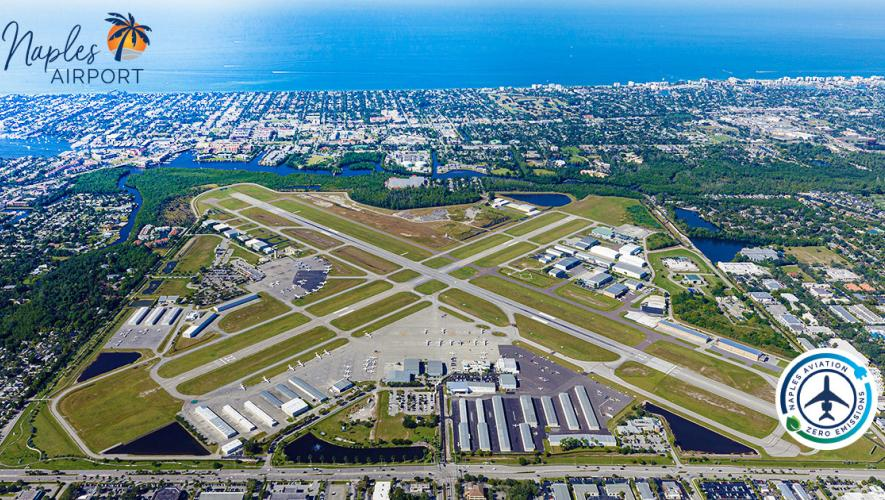

Governor Ron DeSantis has signed HB 4005, a new Florida law that transfers control of the Naples Airport Authority board from City Council appointment to countywide election by Collier County voters. All five board seats will appear on the ballot in the 2026 general election — the first time in the airport’s history that residents will directly choose who governs Naples Municipal Airport (KAPF).
The law ends years of conflict between the City of Naples and the broader aviation community over who should control one of southwest Florida’s busiest general aviation airports. For pilots and flight schools across the region, it’s a significant win.
What Changed and Why It Matters
Under the previous system, the Naples City Council appointed all five members of the Naples Airport Authority board. That gave a single municipal government full control over an airport that serves a much larger regional population — including pilots, flight schools, business aviation operators, and emergency services across all of Collier County.
The tension was straightforward: residents near the airport who wanted to restrict operations had outsized influence through City Council appointments, while the broader community of airport users — many of whom live outside city limits — had no direct say in who governed the facility.
HB 4005, sponsored by Naples Republican Rep. Adam Botana, changes the governance model entirely. Starting with the 2026 general election, all five board seats will be filled by voters across Collier County rather than by City Council appointment.
“The airport serves a regional population and governance should reflect its impact on other Collier County residents,” Botana said during the bill’s legislative process.
Board Composition and Qualifications
The new law sets specific requirements for who can serve on the board:
Geographic representation. Three seats are reserved for residents within the City of Naples. Two seats must be held by residents of unincorporated Collier County outside city limits. All five seats are elected at-large by the full Collier County electorate.
Professional qualifications. Every board member must have at least five years of experience in financial management, small-business operations, or the aerospace industry. This is a new requirement that didn’t exist under the appointment system.
Staggered terms. Members elected to odd-numbered seats will serve four-year terms. Those elected to even-numbered seats will initially serve two-year terms before transitioning to standard four-year cycles. This staggering prevents the entire board from turning over in a single election.
Vacancy provisions. If a seat becomes vacant mid-term, the Governor of Florida — not the Naples City Council — will appoint a replacement to serve the remainder of the unexpired term.
Current board members will continue serving until the 2026 general election results are certified, at which point the newly elected board takes over.
The Backstory: Years of Conflict
This legislation didn’t appear out of nowhere. Naples Municipal Airport has been at the center of contentious disputes between aviation users and city officials for years.
The core disagreement centered on airport growth and operations. Naples is home to a large and active GA community, with significant flight training activity, business aviation, and recreational flying. The airport’s projected annual revenues for fiscal year 2025–26 are $45.8 million — a 12 percent increase over the prior year — with two-thirds of revenue coming from aviation fuel sales.
City officials, responsive to noise complaints from nearby residents, pushed for restrictions on airport operations. Aviation stakeholders argued that an appointed board gave anti-airport voices disproportionate control over a facility that the broader region depends on.
AOPA was heavily involved in advocating for the change. The organization supported HB 4005 throughout the legislative process, arguing that voters — not appointed officials — should have the final say over the airport’s governance.
“This change puts the decision where it belongs — with the residents of Collier County,” said AOPA Southern Regional Manager Stacey Heaton. “Naples Municipal Airport doesn’t just serve the city — it’s a critical hub for general aviation for all of southwest Florida, supporting flight training, emergency operations, recreational flying, and business travel across the region. This law ensures the people who depend on it have a direct voice in who protects it.”
The First Candidates Are Already Filing
The political implications are already playing out. Within weeks of the bill’s signing, current Naples Airport Authority member Michelle Arnold launched a campaign for one of the five seats — making her both an incumbent and a first-time candidate for a position that was never previously elected.
At least one other current board member is also seeking election under the new system. With five open seats and a countywide electorate, the 2026 race is expected to draw significant interest from both aviation advocates and community members with differing views on the airport’s future.
The candidate qualification period and filing deadlines will follow standard Florida election law timelines. Collier County voters — not just Naples residents — will cast ballots for all five seats in the November 2026 general election.
Broader Implications for Airport Governance
The Naples situation is a case study in a tension that plays out at GA airports across the country: who controls a public airport — the municipality that hosts it, or the community that uses it?
Many GA airports are governed by appointed boards or fall under direct city or county control. When the interests of nearby residents (who want less noise, less traffic, and fewer operations) conflict with the interests of airport users (who want continued access, growth, and investment), the governance structure determines who wins.
Florida’s decision to move Naples from appointment to election is a meaningful precedent. It suggests that when an airport serves a regional population, the governance model should reflect that — not just the preferences of the immediate municipal government.
For pilots, flight schools, and aviation businesses at other airports facing similar governance challenges, the Naples model offers a legislative blueprint. AOPA’s successful advocacy here could inform similar efforts in other states where appointed airport boards are making decisions that affect communities well beyond their appointing municipality.
What Naples Pilots Should Do Now
If you fly out of Naples Municipal Airport or use it for training, business, or recreational flying, the 2026 general election is your opportunity to directly shape the airport’s future. Register to vote in Collier County, research the candidates as they file, and participate in the November election.
This is the first time Collier County voters will have a direct voice in who governs KAPF. Use it.
Frequently Asked Questions
When will Naples Airport Authority board members be elected? All five Naples Airport Authority board seats will appear on the ballot in the 2026 general election in Collier County, Florida. This is the first time the board will be directly elected by voters rather than appointed by the Naples City Council.
Who can vote for the Naples Airport Authority board? All registered voters in Collier County, Florida, can vote for the airport authority board — not just residents of the City of Naples. The law changed governance from city-level appointment to countywide election.
What qualifications are required to serve on the Naples Airport Authority board? Under HB 4005, board members must have at least five years of experience in financial management, small-business operations, or the aerospace industry. Three seats are reserved for City of Naples residents and two for residents of unincorporated Collier County.
Why did Florida change how the Naples Airport Authority board is selected? The change followed years of conflict between the City of Naples and aviation stakeholders over airport operations and growth. AOPA and other aviation advocates argued that an appointed board gave the city disproportionate control over an airport that serves the entire southwest Florida region.
Does this law affect other Florida airports? HB 4005 applies specifically to the City of Naples Airport Authority. However, it could serve as a legislative model for other Florida airports or airports in other states where appointed boards face similar governance disputes.