Quick answer: JAV Imagery publishes the lowest entry minimum of any flying job we have documented — 250 hours for the Cessna 172, rising to 400 for the 182 and 500 for the 206, each requiring commercial, instrument and high-performance qualifications. Pilots fly solo aerial imagery missions across the lower 48 and build a reported 500 to 600 hours per season. The contract runs mid-November to mid-June, which makes it counter-seasonal to almost every other hour-building job.
If you are a commercial pilot around 250 hours wondering how to get paid to fly, this is close to the shortest route in existence — provided you can live on the road for seven and a half months.
The Published Minimums
Tiered by aircraft, which is unusual and useful — it means a lower-time pilot has a defined entry point rather than a single wall.
| Aircraft | Total time | Ratings required |
|---|---|---|
| Cessna 172 | 250+ hours | Commercial, instrument, high performance |
| Cessna 182 | 400+ hours | Commercial, instrument, high performance |
| Cessna TU206 | 500+ hours | Commercial, instrument, high performance |
A second-class medical is required. The page lists a specific validity date, which appears to relate to a prior season, so confirm the current requirement when you apply.
Two details in that table are worth pausing on. The instrument rating is mandatory at every tier, including the 250-hour entry — you are repositioning across states in real weather, even if collection itself is flown visually. And the high-performance endorsement is required throughout, which is a cheap, fast qualification that unlocks the whole ladder.
500 to 600 Hours in a Season
This is the number that matters. A pilot entering at 250 hours and flying a full contract could finish the season somewhere near 800 hours — a year of instructing compressed into seven and a half months, while being paid.
The company also notes that pilots log IFR and cross-country time and maintain currency through the season. That composition matters more than the raw total: as our guide to hour-building pathways explains, the cross-country, night and instrument sub-minimums are what gate later Part 135 jobs, and many pilots reach 1,200 hours without them.
Flying solo into unfamiliar airports across multiple states, week after week, generates exactly that kind of experience.
The Counter-Seasonal Advantage
Most aerial survey runs in summer, because photogrammetry generally needs a high sun angle. JAV’s contract runs the other way — mid-November through mid-June — which points to leaf-off imagery work, where bare trees give clearer views of ground structures.
For a pilot planning a career, that is genuinely useful, because it stacks with the summer-only jobs. banner towing and jump flying both hire for summer seasons. A pilot could realistically fly imagery through the winter and banners or jumpers through the summer, and accumulate hours nearly year-round in two low-minimum roles.
Very few people plan their hour-building that deliberately, and the seasonal complementarity is why they should.
The Aircraft and the Work
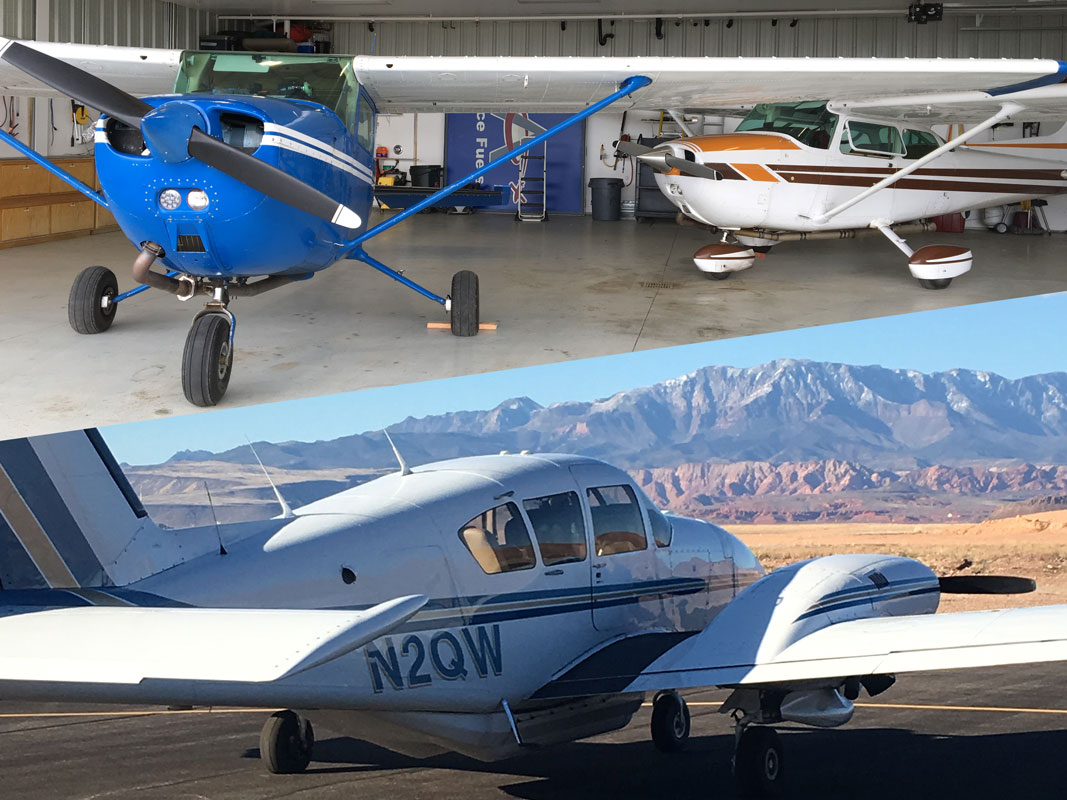
The fleet is Cessna 172s, 182s and turbocharged 206s, equipped with Garmin IFR avionics and ADS-B In/Out. That is a sensible, accessible progression — familiar airframes, modern panels, and the turbocharged 206 as the capable top end.
The flying is solo. You are responsible for the mission, the aircraft, the sensor operation and the decision-making, landing at new airports routinely. For a pilot straight out of instructing, that independence is a step change, and it is precisely what makes the experience valuable in an interview later.
Life on the Road
The company is direct about this, and so should we be. The role is described as a seasonal position, full time on the road, on a mandatory seven-and-a-half-month contract. Relocation is not required, because you are not based anywhere — you go where the imagery work is.
Compensation is described as a competitive salary with a flight-hours bonus, plus per diem and a company credit card. The flight-hours bonus is worth understanding in detail, since it aligns your pay with the thing you actually want — hours — and per diem plus a company card means living costs on the road are covered rather than eroding your salary.
Compare that with Aerial Services Inc., which publishes $20 per hour with 250-plus travel days. Different structures, same underlying bargain: the lowest entry minimums in aviation are paid for in time away from home.
Where the Work Comes From
JAV describes itself as a vendor supplying aerial imagery to a large imagery technology company. That structure is worth recognising, because it recurs across aviation: the recognisable brand often is not the pilot employer. The technology company sells the imagery; the flying is contracted to operators like JAV, who hire the pilots.
It is the same pattern we documented in air medical, where hospital-branded programmes contract Part 135 operators who actually employ the crews. If you are job-hunting, the practical lesson is to look for the operators behind the brands.
Timing Your Application
The employment page indicates that the current season’s positions are filled and that hiring for the next cycle begins in early September.
That timing is not incidental — it reflects a November season start with training and onboarding ahead of it. If you are targeting this kind of work, applying in September for a November start is the rhythm, and applying in January is far too late.
- Check JAV Imagery’s employment page for the current cycle before applying.
- Confirm your medical class and validity covers the full contract period.
- Get the high-performance endorsement if you do not hold it — it is required at every tier and is quick to obtain.
- Address life on the road directly in your cover letter. They ask for it explicitly, which tells you it is the main thing they screen for.
- Have your IFR time and five-year history ready, along with references.
Who This Suits
A newly commercial pilot with an instrument rating, around 250 to 500 hours, no immediate ties keeping them in one place, and a clear goal of reaching Part 135 minimums quickly. Done once, a season here removes a substantial chunk of the distance between a fresh commercial certificate and a turbine job.
It suits almost nobody who needs to be home. That is the trade, and it is the same one that runs through all of aerial survey flying.
A note on timing: hiring cycles and openings change. The details above are drawn from JAV Imagery’s own published employment information at the time of writing — verify the current cycle, requirements and terms directly with the company before making plans.
Frequently Asked Questions
What are JAV Imagery’s pilot minimums? Tiered by aircraft: 250+ hours for the Cessna 172, 400+ for the 182 and 500+ for the TU206. All tiers require commercial and instrument ratings plus a high-performance endorsement, and a second-class medical.
How many hours can you build in an aerial imagery season? The company reports pilots building 500 to 600 hours per season across a seven-and-a-half-month contract, including IFR and cross-country time. A pilot entering at 250 hours could therefore approach 800 by season’s end.
When does JAV Imagery hire? The contract runs mid-November to mid-June, with hiring for the next cycle beginning in early September. Applying in September for a November start is the rhythm — applying mid-season is too late.
Why is the season in winter rather than summer? The mid-November to mid-June window points to leaf-off imagery work, where bare trees give clearer views of ground structures. That makes it counter-seasonal to most survey flying and to summer jobs like banner towing and jump flying, so the two can be stacked across a year.
Do you need an instrument rating for aerial imagery flying? For this operator, yes — it is required at every aircraft tier including the 250-hour entry point, because pilots reposition across multiple states in real weather even where collection itself is flown visually.
What is the lifestyle like? Full time on the road for the length of the contract, flying solo into unfamiliar airports across the lower 48, with seasonal Alaska work available. Relocation is not required because there is no fixed base. Per diem and a company card cover living costs on the road.
All details above are drawn from JAV Imagery’s own published employment information at the time of writing. Requirements, compensation and hiring cycles change — verify directly with the company. This article is informational and is not affiliated with or endorsed by JAV Imagery.