
Quick answer: Ameriflight publishes first officer minimums starting at 500 hours total time — among the lowest entry points to turbine, multi-crew, scheduled cargo flying in the United States. They operate a fleet of turboprops from 13 bases, publish pay ranges openly, and run a pilot career path programme with UPS Airlines. For a pilot who has finished instructing and wants structured Part 135 experience, it is one of the most concrete next steps available.
What makes them worth a close look is transparency: unlike most operators in this space, they publish detailed minimums by aircraft and seat, along with salary ranges. That lets you plan against real numbers rather than guesses.
Who They Are
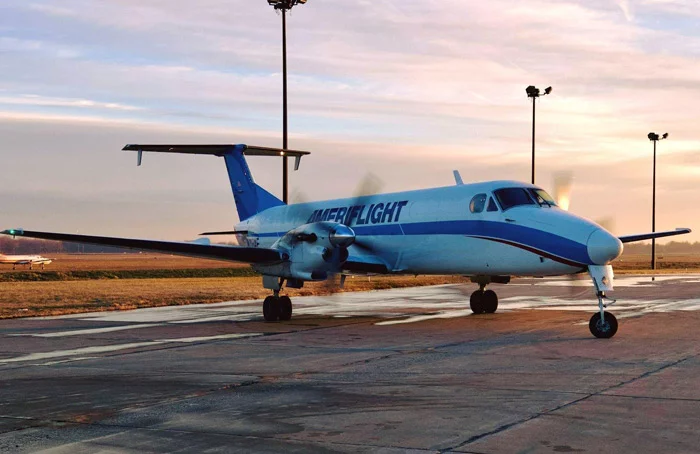
Ameriflight is a cargo airline headquartered in Dallas, Texas, flying freight — including medical supplies and regional parcel work — across a network that reaches from the West Coast to Puerto Rico. They describe operations across New Mexico, Ohio, California, Washington and Puerto Rico among others, from 13 bases nationwide.
The fleet is turboprop: Beechcraft 99, Beechcraft 1900, Fairchild SA227 Metro, Embraer EMB120 and Saab 340. That range matters, because it creates an internal ladder from light twin turboprop into larger regional-airline-type equipment.
The Published Minimums
This is the part worth studying, because it illustrates something we covered in our guide to cargo feeder flying: total time alone does not qualify you. Every position carries sub-minimums for cross-country, night, PIC and instrument time.
First officer positions
| Aircraft | Total | Multi | Cross-country | Night | PIC | Instrument |
|---|---|---|---|---|---|---|
| EMB120 / Saab 340 | 500 | 25 | 100 | 50 | 350 | 75 |
| ACP | 750 | 50 | 300 | 100 | 500 | 75 |
Captain positions
| Aircraft | Total | Multi | Cross-country | Night | PIC | Instrument |
|---|---|---|---|---|---|---|
| BE99 | 1,200 | 50 | 500 | 100 | 500 | 75 |
| BE1900 | 1,800 | 250 | 500 | 100 | 1,000 | 100 |
| SA227 | 2,000 | 250 | 500 | 100 | 1,000 | 100 |
| EMB120 / Saab 340 | 3,000 | 500 | 500 | — | 1,000 | 200 |
Look at the 500-hour first officer line carefully. It also asks for 350 hours of pilot-in-command time, 100 cross-country, 50 night and 75 instrument. A pilot who has been instructing will likely have the PIC time comfortably, but night and instrument are the two that catch people short.
This is the practical argument for building hours deliberately rather than simply accumulating them. If a job like this is your target, take the night cross-countries and fly actual instrument approaches while you are still instructing — see our guide to flight instructing.
Certificates and Documents
- Commercial pilot certificate with multi-engine land and instrument rating, or an ATP
- Current instrument proficiency check
- FAA medical — first or second class
- FCC radiotelephone permit
- Valid passport
The passport and FCC permit requirements are worth noting early, since both take time to obtain and are easy to leave until the application is otherwise ready.
Published Pay
Ameriflight publishes salary ranges, which is unusual enough in this segment to be worth stating plainly.
| Seat | Published base salary range |
|---|---|
| First officer | $40,921 – $47,563 |
| Captain | $76,503 – $117,701, depending on aircraft and seniority |
Additional compensation elements listed include load pay incentives, mileage bonuses in the region of $0.18 to $0.27 per statute mile, and a housing stipend of $1,500 per month at the El Paso base.
Figures are as published at the time of writing and will change — confirm current terms directly.
The UPS Career Path Programme
Ameriflight lists a pilot career path programme with UPS Airlines. Arrangements of this kind typically create a defined route from the feeder operator toward the major carrier, subject to performance and requirements.
For a pilot weighing this against other options, a published pathway to a major is a genuine differentiator — but the details matter, so ask specifically what the programme requires, what it guarantees, and what the realistic timeline looks like.
What the Job Builds
- Turbine time in scheduled operations, from light twin turboprops upward.
- Multi-engine time — the commodity most hour-building pathways do not provide.
- Part 135 operational discipline — dispatch, duty limits, ops specs, on-time performance.
- Real instrument experience, flown on a schedule rather than when convenient.
- An internal upgrade ladder, from first officer through captain across progressively larger equipment.
That combination is precisely the profile regional airlines and beyond look for, which is why cargo feeder experience is so consistently well regarded.
What to Ask Before Accepting
Questions worth putting to any cargo operator, including this one:
- How are bases assigned, and how much say do you have in where you are placed?
- What does the duty day actually look like on your typical route — and how is the split-duty pattern managed?
- What happens operationally when a pilot delays or cancels for weather?
- What is the realistic upgrade timeline given current staffing?
- What are the specific requirements and commitments attached to the UPS pathway programme?
On the first of those — base assignment is often the single biggest lifestyle variable in this kind of flying, and it is worth resolving before you accept rather than after.
How to Apply
- Check current openings on Ameriflight’s pilot careers page, since minimums and positions change.
- Audit your logbook against the sub-minimums — particularly night, cross-country and instrument — before applying.
- Sort your FCC permit and passport early if you do not already hold them.
- Apply through their recruitment portal, linked from the careers page.
All details above are drawn from Ameriflight’s published pilot careers information at the time of writing. Minimums, pay, bases and programmes change — verify current details directly with the company. This article is informational and is not affiliated with or endorsed by Ameriflight.
Frequently Asked Questions
What are Ameriflight’s pilot minimums? Published first officer minimums start at 500 hours total time for EMB120 and Saab 340 positions, with 25 multi-engine, 100 cross-country, 50 night, 350 PIC and 75 instrument. Captain positions range from 1,200 hours on the BE99 up to 3,000 hours on the EMB120 and Saab 340.
Can you fly for Ameriflight at 500 hours? Their published EMB120 and Saab 340 first officer minimum is 500 hours total time, but it also requires 350 hours pilot-in-command, 100 cross-country, 50 night and 75 instrument. The sub-minimums, particularly night and instrument, are what most low-time applicants fall short on.
What aircraft does Ameriflight fly? Their published fleet includes the Beechcraft 99, Beechcraft 1900, Fairchild SA227 Metro, Embraer EMB120 and Saab 340, operated from 13 bases nationwide.
How much do Ameriflight pilots earn? Published ranges are $40,921 to $47,563 for first officers and $76,503 to $117,701 for captains depending on aircraft and seniority, with additional load pay, mileage bonuses and a housing stipend at certain bases. Verify current figures directly.
Does Ameriflight have an airline pathway programme? They list a pilot career path programme with UPS Airlines. Ask directly about its specific requirements, commitments and realistic timelines, as the details of such programmes vary.
Sources
- Ameriflight’s pilot careers page — published minimums, fleet, pay and programme information
- Ameriflight — company website