
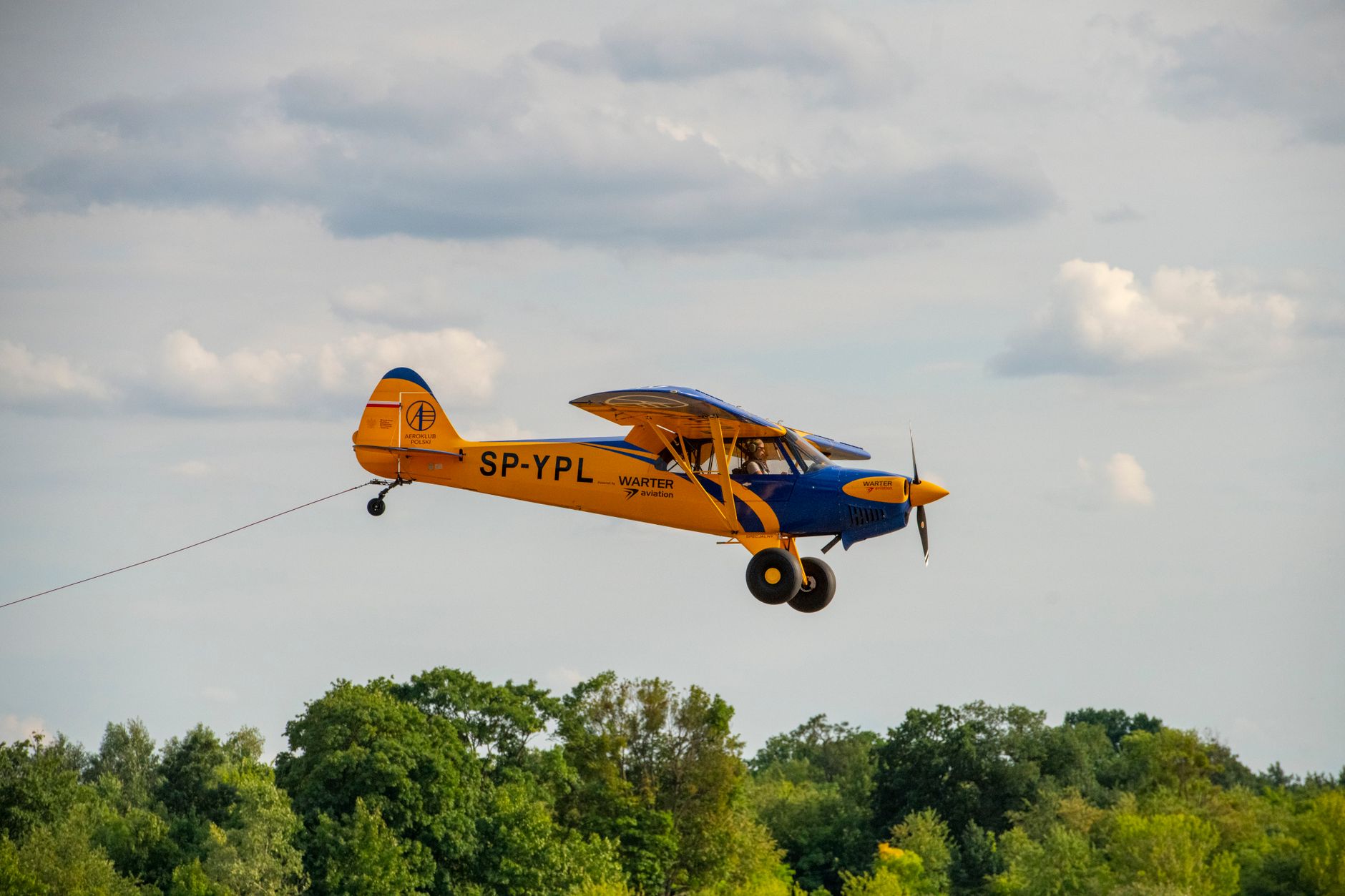
Quick answer: Banner towing typically wants around 500 hours and a tailwheel endorsement, and it is widely regarded as the finest stick-and-rudder education available at that experience level. You fly low, slow and hot, at high angles of attack, in a tailwheel aircraft, executing a precision pickup manoeuvre that has no equivalent anywhere else in aviation. It is also genuinely higher-risk flying than most hour-building work, and that deserves an honest look before you apply.
The work is intensely seasonal and geographically concentrated — summer, and mostly the coasts and Florida — with very few operators nationally.
What the Job Involves
The banner is laid out on the ground, with its leading edge attached to a tow rope suspended between two poles. You fly a low pass with a grapple hook trailing behind the aircraft, catch the rope, and then transition immediately into a steep climb to lift the banner off the ground cleanly.
From there you fly a slow, low-level route — along a beach, over a stadium, around an event — with a large drag-producing object behind you. At the end you return and drop the banner on the airfield.
The whole operation is flown in an aircraft that is heavy on drag, light on excess power, and operating well down the back of the drag curve.
Why Pilots Rate It So Highly
Ask pilots who have towed banners and most will describe it as the flying that taught them the most. There are concrete reasons.
- Energy management becomes instinctive. With a banner attached you have little surplus power, so every turn, climb and descent must be planned for energy rather than flown casually.
- Slow flight stops being an exercise. You operate near the slow end of the envelope for hours, and develop a genuine feel for how the aircraft behaves there.
- Coordination is constant. Tailwheel aircraft, slow speeds and asymmetric drag mean your feet work the entire flight.
- Precision under pressure. The pickup demands an exact height, speed and flight path, with an immediate transition to a climb.
- Volume of takeoffs and landings. Short sorties mean many circuits per day.
It also builds tailwheel time, which unlocks other categories — jump flying, bush operations, and a good deal of general aviation work.
The Risk Conversation
This needs stating directly rather than buried in a caveat. Banner towing combines several factors that individually raise risk and together compound it: low altitude, low airspeed, high angle of attack, high drag, and hot summer conditions with the density altitude penalty that brings.
Two implications:
- Margins are thin by design. There is less altitude and less energy available to resolve a problem than in almost any other flying you will have done.
- Operator culture matters enormously. Training quality, aircraft maintenance, and whether a company pushes pilots to fly in marginal conditions vary between operators, and those differences are consequential.
This is not a reason to avoid the job. It is a reason to ask specific questions before accepting one, and to treat the answers as decision-relevant. How long is the training? Who does it? What are the published limits on wind and density altitude? What happens if you decline a flight?
An operator that answers those confidently and specifically is telling you something. So is one that does not.
Requirements and Aircraft
| Typical | |
|---|---|
| Total time | Around 500 hours is the commonly published figure |
| Certificate | Commercial, since you are flying for compensation |
| Endorsement | Tailwheel — effectively mandatory for most operators |
| Aircraft | Tailwheel types with good low-speed handling and useful power |
| Season | Summer, concentrated on coasts and in Florida |
Worth knowing on the regulatory side: towing an object other than a glider is not something a pilot may simply do. Banner tow operations are conducted under a certificate of waiver issued by the FAA, and operators hold the relevant authorisations for the operation and its altitudes. The operator handles this, but understanding that the operation is specifically authorised — and bounded by conditions — is part of understanding the job.
The Practical Realities
- It is seasonal work. A summer job, not a year-round career. Plan the rest of your year around it.
- It is hot. Low-level flying over beaches in July, often in aircraft without meaningful ventilation, for long days.
- Pay is usually per tow or hourly rather than salaried, so income tracks the weather.
- Location is not negotiable. The work exists where the advertising market is — beaches, stadiums, tourist areas.
- Training is provided by most operators, since the pickup cannot reasonably be learned elsewhere. That training period is worth asking about in detail.
How to Get Hired
- Get your tailwheel endorsement first. It is the single most effective thing you can do, and it opens other categories too.
- Apply in late winter or early spring. Summer operations hire well ahead of the season.
- Be willing to relocate for the season. Almost all of these jobs require it.
- Build some conventional-gear time beyond the bare endorsement if you can. It differentiates you.
- Ask the safety questions listed above — in a professional way. Good operators respect it.
Is It Worth It?
For handling skill, it is arguably the best value in low-time flying. Pilots come out of a banner season with energy management, slow flight and coordination that are difficult to develop any other way, plus tailwheel time that widens their options.
The honest counterweight is that the flying carries more inherent risk than instructing or survey work, and that the quality of the operator matters more here than in almost any other entry-level job. Choose carefully, ask directly, and treat your own limits as real.
For how it compares with the alternatives, see our overview of hour-building pathways.
Frequently Asked Questions
How many hours do you need to tow banners? Around 500 hours is the commonly published minimum, along with a commercial certificate and a tailwheel endorsement. The endorsement is effectively mandatory, since almost all banner operations use conventional-gear aircraft.
Do you need a tailwheel endorsement for banner towing? In practice yes. Most banner tow aircraft are tailwheel types, and operators expect the endorsement before you apply. Getting it is also the single most useful step for opening other low-time pathways such as jump flying.
Is banner towing dangerous? It carries more inherent risk than most hour-building work, because it combines low altitude, low airspeed, high angle of attack, high drag and hot conditions. Margins are thinner than in other flying, which makes operator training quality, maintenance and safety culture unusually important — ask specific questions before accepting a position.
What does banner towing teach you as a pilot? Energy management, genuine slow-flight feel, constant coordination, and precision under pressure during the pickup manoeuvre. Many pilots describe it as the most instructive flying they have done, and it builds tailwheel time that widens later options.
When do banner tow operators hire? Late winter and early spring, ahead of the summer season. The work is concentrated on the coasts and in Florida, and almost always requires relocating for the season.
Is banner towing regulated differently from normal flying? Yes. Towing an object other than a glider requires a certificate of waiver issued by the FAA, and operators hold the authorisations covering the operation and its altitudes. The operator manages this, but the operation is specifically authorised and bounded by conditions.
This article is general career information and is not flight instruction or safety guidance. Banner tow operations are conducted under specific FAA authorisations and operator procedures — requirements, training and compensation vary and change, so confirm details directly with the operator.


One thought on “Banner Towing: The Best Stick-and-Rudder Job in Aviation, and What It Really Asks of You”