Most published estimates for commercial pilot training are too low, and they’re too low for a specific, consistent reason: they count the cost of training and leave out the cost of hour building.
Add both honestly and the realistic 2026 range is $70,000 to $95,000 for someone starting from zero and paying standard rental rates — with the lower end achievable through aircraft ownership, partnerships, or an efficient structured program, and the upper end common for anyone training inconsistently or in a high-cost market.
Here’s the full accounting, and where the money actually goes.
The Certificate-by-Certificate Costs
Redbird’s State of Flight Training 2026 report, drawn from 1,180 industry responses, gives the clearest picture of median costs and timelines:
| Certificate or Rating | Median Cost | Median Weeks |
|---|---|---|
| Private Pilot (PPL) | $16,500 | 24 |
| Instrument Rating (IR) | $11,500 | 15 |
| Commercial Pilot (CPL) | $10,000 | 12 |
| Multi-Engine Add-On | $6,000 | 2 |
| CFI Initial | $5,500 | 8 |
| CFI Add-On (CFII or MEI) | $4,000 | 4 |
| ATP Certificate | $5,000 | 2 |
A separate 2026 analysis by PilotBound, built from published rates at 500 flight schools across all 50 states, puts the private pilot certificate at $18,257 based on a 72-hour completion model, with a median trainer rental of $165/hour and instructor rate of $69/hour.
Add the first five rows and you get roughly $49,500. That’s the number most cost guides publish.
It’s incomplete.
The Hidden Cost: Hour Building
Here’s what the table doesn’t capture.
A commercial certificate under Part 61 requires 250 hours of total flight time. (Part 141 reduces that to 190 hours, which matters — more on that below.)
Run the math on where you actually are:
- Private pilot: roughly 72 hours, per current national completion data
- Instrument rating: typically another 40 to 50 hours, much of it dual
- Running total: somewhere around 115 to 125 hours
The commercial certificate’s training — the maneuvers, the cross-countries, the checkride prep — is what Redbird’s $10,000 median covers. But you still need to get from roughly 120 hours to 250.
That’s about 130 hours of flying you have to pay for just to be eligible.
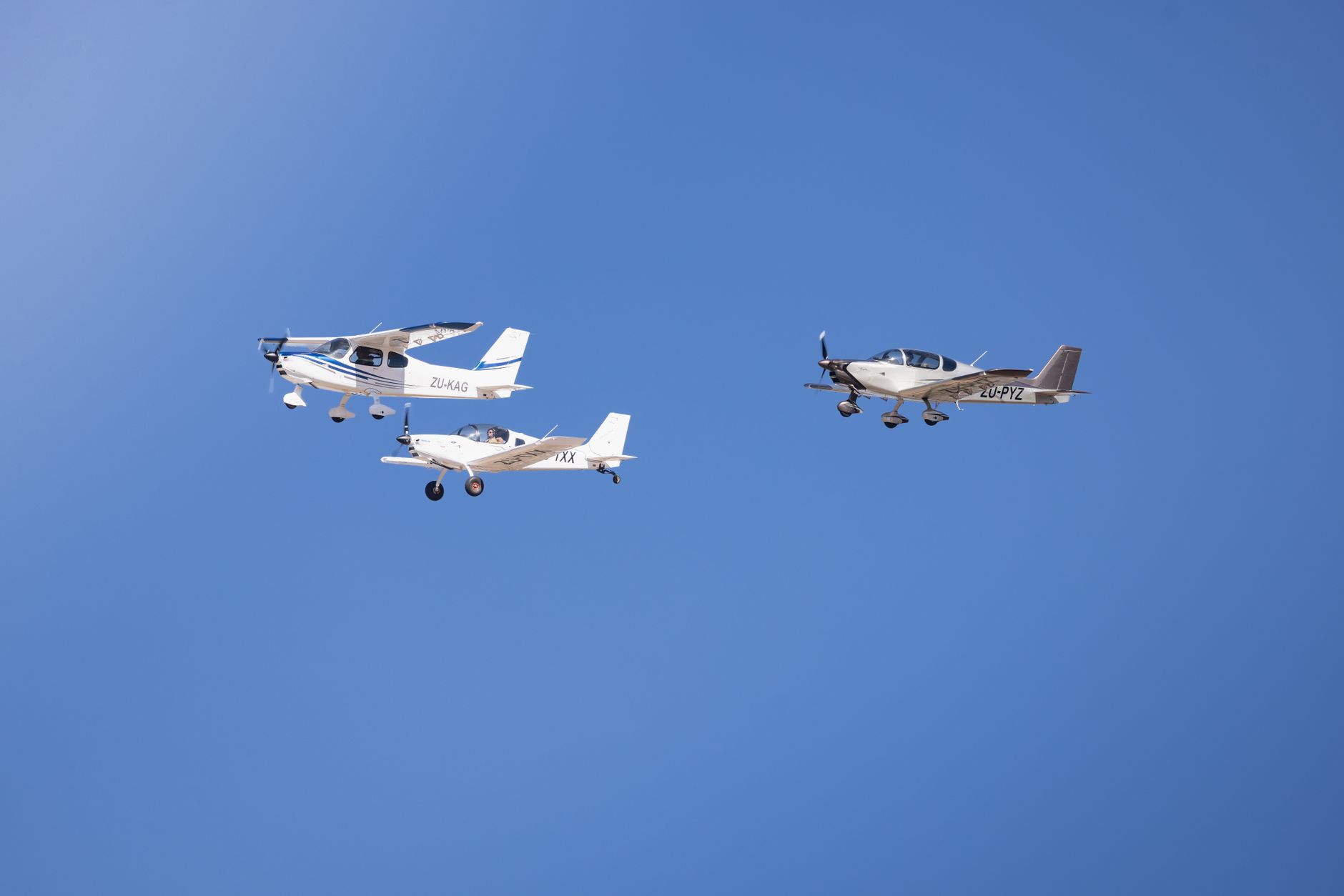
At the $180/hour median rate Redbird reports for training aircraft, that’s roughly $23,400. At $165/hour, about $21,500. Either way, hour building is frequently the single largest line item in the entire pathway — larger than the private certificate — and it’s the one most commonly omitted from published estimates.
Some of those hours do double duty. The commercial certificate requires specific cross-country and solo time that counts toward both the total and the requirement. But the bulk of it is time you’re buying to satisfy a number.
The Costs Nobody Puts on the Chart
Beyond aircraft and instructor time:
Checkride fees. You’ll take at least four or five practical tests on the way to CFI. Redbird found that 52% of DPEs charge $800 to $1,000 per checkride in 2025. Budget $4,000 to $5,000 across the pathway — more if you have a retest.
Written exams. Private, instrument, commercial, and the fundamentals and flight instructor exams. Figure $175 or more each.
Medical certificate. First-class if you’re pursuing an airline career. $100 to $250, recurring.
Ground school and test prep. Online courses, prep software, books. $300 to $1,000 across the pathway.
Equipment. Headset, iPad or EFB device, EFB subscription, charts, kneeboard, flight bag. A reasonable starting kit runs $1,000 to $2,500, with a premium headset alone accounting for much of it.
ATP CTP. Required before the ATP written. Redbird’s ATP figure of $5,000 reflects this stage. Many pilots have it paid for by a hiring airline.
Total ancillary: roughly $6,000 to $10,000.
Putting It Together
A realistic accounting for someone starting from zero and renting:
| Item | Cost |
|---|---|
| Private pilot certificate | $16,500 – $18,300 |
| Instrument rating | $11,500 |
| Hour building to 250 | $21,500 – $23,400 |
| Commercial certificate training | $10,000 |
| Multi-engine add-on | $6,000 |
| CFI initial | $5,500 |
| CFII or MEI add-on | $4,000 |
| Checkrides, exams, medical, equipment | $6,000 – $10,000 |
| Total | ~$81,000 – $88,700 |
Stop at commercial without instructor certificates and you’re at roughly $65,000 to $70,000. Add a second CFI add-on and you’re pushing $90,000.
The honest range is $70,000 to $95,000 for the full pathway through CFI, depending on market, consistency, and how you handle hour building.
Why the Number Keeps Rising
Flight training costs have risen far faster than general inflation. Redbird’s data shows the median private pilot certificate going from $9,000 in 2020 to $16,500 in 2025 — an 83% increase in five years, roughly 13% compounded annually.
The drivers are structural:
Aircraft acquisition costs. New trainers cost substantially more than five years ago, and that flows into rental rates.
Maintenance. Aircraft maintenance ranked among the top challenges for flight training organizations in 2026, with shop rates rising alongside everything else.
Insurance. Aircraft insurance ranked as the second-biggest challenge for both flight schools and independent instructors.
Instructor pay. CFI compensation has improved — good for retention, upward pressure on hourly rates.
Fuel. Avgas remains elevated, with state-level increases in some markets.
None of these suggest near-term relief.
Part 61 vs. Part 141
The structural choice that most affects total cost.
Part 61 is flexible and individually paced. The commercial certificate requires 250 hours.
Part 141 follows an FAA-approved structured curriculum. The commercial certificate requires 190 hours — 60 fewer hours.
At $180/hour, that difference is worth roughly $10,800, which is the strongest financial argument for Part 141 in the entire comparison. Part 141 schools also enable restricted ATP eligibility at 1,000 or 1,250 hours rather than 1,500 for qualifying collegiate pathways, and are generally required for VA benefits and federal financial aid.
The trade-offs: Part 141 is less flexible, often more expensive per hour, and the hour savings only materialize if you complete the program rather than transferring out partway.
Where You Can Actually Save
Fly frequently. This is the highest-leverage variable, and it isn’t close. Skills decay between lessons, and re-learning is time you pay for twice. Two or three lessons a week finishes in meaningfully fewer total hours than one every other week.
Use simulators deliberately. Redbird reports BATD time at roughly $20/hour and AATD at $75, against $180 for a training aircraft. Approved devices can be logged toward certain requirements, and even non-loggable sim time builds procedures cheaply. 80% of active students planned to use one in 2026.
Build hours efficiently. This is where the biggest savings live. Options include aircraft ownership or a partnership, flying clubs with below-market rates, time-building programs, and splitting cross-country costs with another pilot building time.
Ask schools for actual completion averages, not rates. A school at $155/hour averaging 80 hours costs more than one at $175 averaging 62. Rate is the number advertised; hours are the number that matters.
Pursue scholarships aggressively. AOPA, EAA, and numerous regional and local organizations distribute substantial funding annually, and local chapter awards typically see far fewer applicants than national programs.
Consider the CFI route for hour building. Getting paid to instruct from roughly 250 hours onward converts hour building from an expense into income — which is the structural reason most career pilots instruct.
The Bottom Line
Published estimates for commercial pilot training routinely land around $50,000. That figure reflects the certificates and ratings while quietly omitting the roughly $21,000 to $23,000 of hour building required to reach 250 hours.
The honest number for 2026 is $70,000 to $95,000 from zero through CFI at standard rental rates — and $65,000 to $70,000 if you stop at the commercial certificate.
It’s expensive, and it has become substantially more so since 2020. It’s also achievable with accurate expectations, consistent flying, deliberate use of simulators, a realistic hour-building plan, and scholarship applications. The pilots who run out of money partway through are rarely the ones who over-budgeted.
Plan for the top of the range. Treat finishing under it as a good outcome.
Frequently Asked Questions
How much does it cost to become a commercial pilot in 2026? A realistic total for someone starting from zero and paying standard rental rates is approximately $70,000 to $95,000 through flight instructor certification, or roughly $65,000 to $70,000 if stopping at the commercial certificate. This includes the private certificate ($16,500–$18,300), instrument rating ($11,500), hour building to 250 hours ($21,500–$23,400), commercial training ($10,000), multi-engine add-on ($6,000), CFI certificates, and approximately $6,000 to $10,000 in checkride fees, written exams, medical certification, and equipment.
Why are most published flight training cost estimates too low? Because they count the cost of training for each certificate but omit hour building. A commercial certificate under Part 61 requires 250 total flight hours. After completing a private certificate (roughly 72 hours) and an instrument rating (another 40 to 50), a pilot is at approximately 120 hours and must pay for roughly 130 additional hours to become eligible — about $21,500 to $23,400 at current rental rates. That is frequently the largest single line item in the entire pathway.
Does Part 141 training cost less than Part 61? It can. Part 141 requires 190 total hours for a commercial certificate versus 250 under Part 61 — a 60-hour difference worth roughly $10,800 at median rental rates. Part 141 programs also enable restricted ATP eligibility at reduced hours for qualifying collegiate pathways and are generally required for VA benefits and federal financial aid. The trade-offs are less scheduling flexibility, often higher hourly rates, and savings that only materialize if the program is completed rather than exited partway.
How much have flight training costs increased? According to Redbird Flight’s State of Flight Training 2026 report, the median cost of a private pilot certificate rose from $9,000 in 2020 to $16,500 in 2025 — an 83% increase, or roughly 13% compounded annually. Contributing factors include higher aircraft acquisition costs feeding into rental rates, rising maintenance and parts expenses, increased insurance premiums, improved instructor compensation, and elevated fuel prices.
What is the most effective way to reduce flight training costs? Flying frequently is the single highest-leverage factor, because skills decay between infrequent lessons and the resulting re-learning is time paid for twice. Beyond that: use approved training devices, which run roughly $20 to $75 per hour against $180 for an aircraft; build hours through ownership, a partnership, a flying club, or shared cross-countries; ask schools for actual average completion hours rather than comparing hourly rates; apply for scholarships, particularly through local chapters where applicant volume is lower; and consider instructing, which converts hour building from an expense into income.
Sources: