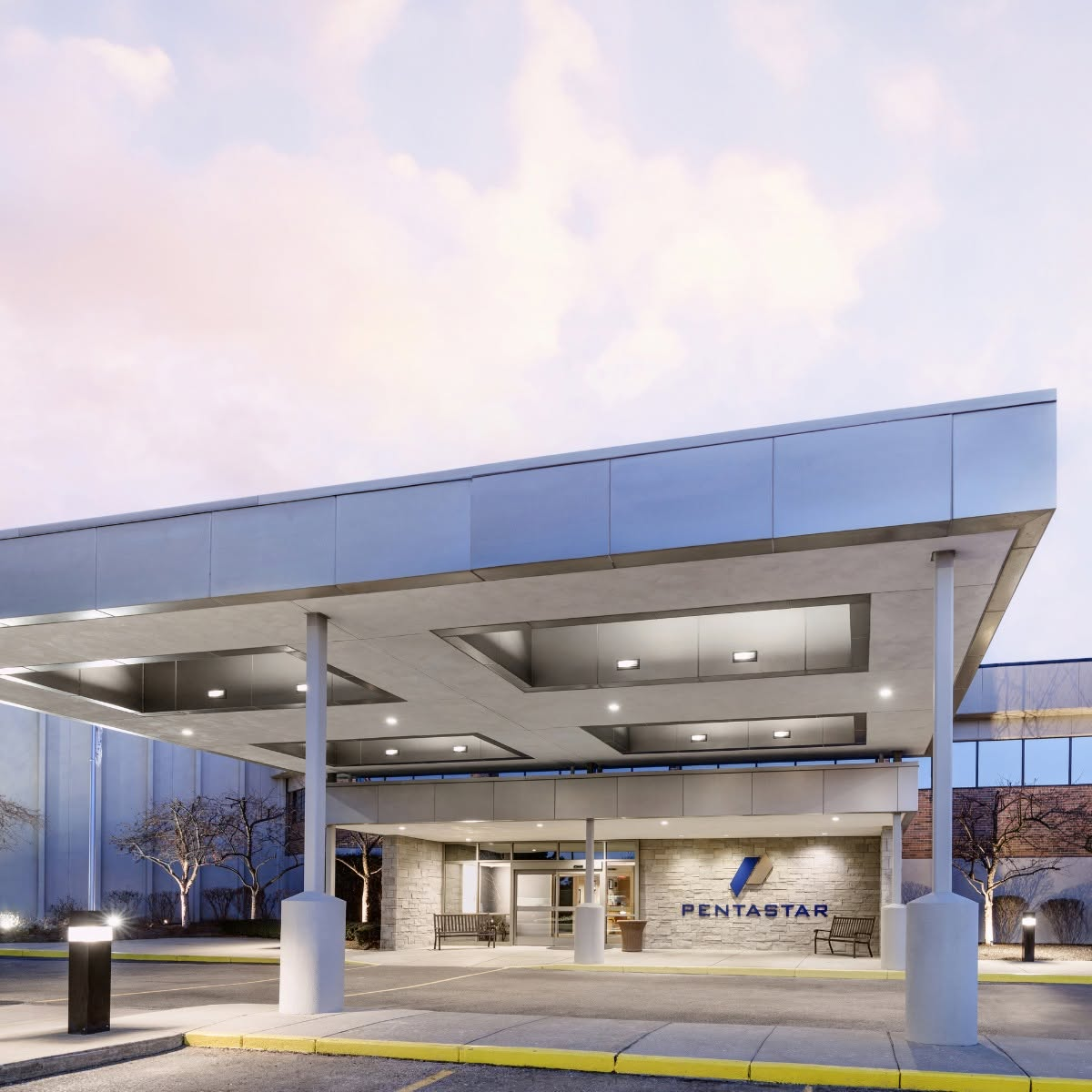
Pentastar Aviation has become the first aviation company to put autonomous wingwalking robots into day-to-day operations, deploying technology from Airtrek Robotics at its facility at Oakland County International Airport (PTK) in Waterford, Michigan. During towing operations, the robots move alongside the aircraft, monitoring the surrounding environment and identifying potential obstacles — giving ground crews additional visibility as they maneuver aircraft across ramps and inside hangars. Deployment began in August 2026, with full implementation expected by the fourth quarter of 2026. The stated target is one of business aviation’s most persistent and expensive problems: ground damage, which Pentastar’s FBO leadership says is caused by human error roughly 80% of the time.
For an industry where a single wingtip strike can cost hundreds of thousands of dollars and put an aircraft out of service for weeks, automating the eyes on the wingtip is a meaningful development. Here’s what the system does and why it matters.
What Wingwalkers Do — and Why It’s Hard
Traditional wingwalking is exactly what it sounds like. When an aircraft is being towed, crew members position themselves near the wingtips to monitor clearance, watch for hazards, and communicate with the tug operator. It’s one of the oldest jobs on the ramp and one of the most consequential.
The difficulty is that a wingwalker has to track several things at once in an environment full of moving parts — other aircraft, ground support equipment, hangar door frames, fuel trucks, jet bridges, and other personnel — often in poor light, bad weather, or noise that makes communication difficult. Hangar operations are especially demanding, where clearances can come down to inches.
The most common failure mode is a blind spot. A person standing at one wingtip cannot simultaneously watch the opposite wingtip and the tail. Airtrek CEO Chris Lee has specifically identified that gap as something the robots address: the system monitors an aircraft’s wingtips and tail at the same time, coverage a single human wingwalker cannot provide.
How the Airtrek System Works
Airtrek’s robots move alongside the aircraft during towing, continuously scanning the surrounding environment and flagging potential obstacles to the ground crew.
The underlying technology fuses LiDAR and computer vision, with an AI perception layer that identifies and tracks aircraft features — locking onto a wingtip and following it through the tow. The company has described the development path as running from simulation, to testing around real aircraft, to live robotic guidance in operational conditions. Airtrek demonstrated the system, which it calls GroundWatch, with the Pentastar team on August 12, 2026.
Importantly, both companies have framed this as augmentation rather than replacement. Pentastar describes the deployment as pairing its crew’s judgment and operational knowledge with technology purpose-built for the aviation environment — a model where the robot handles continuous monitoring and the humans retain decision-making.
Ben Hammond, Pentastar’s vice president of FBO Services, put the value in terms of attention: the technology reduces distraction and maximizes safety, and with less pressure on technicians to serve as spotters, the team has more capacity for passenger service.
The Ground Damage Problem
The economics behind this are substantial, even if they rarely make headlines.
Ground handling incidents — wingtip strikes, tail contact with hangar structures, ground support equipment collisions — are among the most common and costly events in aviation outside of flight operations. A damaged wingtip on a large-cabin business jet can mean a repair bill in the hundreds of thousands of dollars, weeks of downtime, and a grounded asset for an owner who purchased the aircraft specifically for availability.
Hammond’s figure — that roughly 80% of ground accidents stem from human error — is consistent with how the industry has long characterized the problem. Ground damage is not usually caused by inadequate procedures. It’s caused by attention lapses, communication breakdowns, and blind spots in exactly the conditions ramp crews work in every day.
That’s what makes continuous automated monitoring an interesting intervention. A sensor package doesn’t get distracted, doesn’t lose situational awareness at the end of a long shift, and doesn’t have a blind side.
Who Pentastar Is
Pentastar Aviation has operated from Oakland County International Airport since 1964, and in 2021 the company was acquired by Edsel B. Ford II, a member of the Ford family and a longtime figure in Detroit business.
The company runs an unusually integrated operation, combining aircraft maintenance and management with private jet charter, FBO services, full MRO capability, in-house catering through Fivestar Gourmet, and advisory services.
That integration is likely part of why Pentastar became the launch site. An operator running its own MRO absorbs ground damage costs directly rather than passing them along, which sharpens the incentive to prevent them — and Pentastar contributed operational input during Airtrek’s development, helping refine the system for real-world aviation use.
Airtrek Robotics is an early-stage company, and the Pentastar deployment represents its transition from demonstration to operational use.
Where This Fits in Aviation Automation
The wingwalking robots arrive during a broader push to automate and augment aviation operations at every level.
In the cockpit, 2026 has brought Garmin’s new integrated flight decks with autonomous emergency capabilities like Autoland reaching piston aircraft, the FAA’s Mobile Clearance system delivering IFR clearances digitally, and AI tools translating dense NOTAMs into plain English. In air traffic control, the largest modernization effort in decades is replacing decades-old infrastructure. In flight training, mixed-reality simulators are bringing military-grade fidelity to general aviation.
Ground operations have received comparatively little of that attention — which is part of what makes this notable. The ramp remains one of the least automated environments in aviation, and one where the cost of error is high and well documented.
The pattern here also matches what’s working elsewhere: automate the continuous monitoring, keep the human in the decision loop. That’s the same philosophy behind Garmin’s Runway Occupancy Awareness, behind surface awareness systems the FAA is installing at airports, and behind the safety systems increasingly standard in modern cockpits. The machine watches without fatigue; the person decides.
What to Watch
Several questions will determine whether this becomes an industry model or stays a single-FBO experiment:
Does it actually reduce incidents? The real test is Pentastar’s ground damage record after full implementation in Q4 2026 compared to before. That data, if published, would be the most persuasive argument for or against broader adoption.
How does it handle edge cases? Crowded ramps, snow and ice, low light, unusual aircraft configurations, and tight hangar operations are where wingwalking is hardest and where an automated system will be most tested. Michigan winters will provide a meaningful trial.
What does it cost, and who can afford it? Adoption beyond well-capitalized FBOs depends on economics. If the system pays for itself in avoided damage, uptake could be rapid; if not, it may remain a premium-operator technology.
Does the crew model hold? Both companies emphasize augmentation over replacement. Whether operators use the technology to make existing crews safer or to reduce headcount is a question the industry will work out in practice.
The Bottom Line
Pentastar Aviation’s deployment of Airtrek Robotics’ autonomous wingwalking robots at Oakland County International Airport is a genuine first — automation entering one of aviation’s most manual and consequential ground jobs. The system uses LiDAR and computer vision to monitor wingtips and tail simultaneously during towing, addressing a blind spot no single human wingwalker can cover, with full implementation targeted for Q4 2026.
Given that ground damage is overwhelmingly an attention and blind-spot problem rather than a procedural one, continuous automated monitoring is a logical intervention. Whether it becomes standard across the FBO industry will come down to results and economics over the next several years.
But the direction is consistent with everything else happening in aviation right now: put sensors where human attention is unreliable, keep human judgment where it matters, and measure whether the accidents stop.
Frequently Asked Questions
What are autonomous wingwalking robots? Autonomous wingwalking robots are ground-based robotic systems that move alongside an aircraft during towing operations, monitoring the surrounding environment and identifying potential obstacles. Developed by Airtrek Robotics, the system fuses LiDAR and computer vision with AI perception to track aircraft wingtips and tail simultaneously, providing ground crews with visibility coverage a single human wingwalker cannot achieve.
Who is the first company to deploy wingwalking robots? Pentastar Aviation is the first aviation company to integrate autonomous wingwalking robots into day-to-day operations, deploying Airtrek Robotics technology at its facility at Oakland County International Airport in Waterford, Michigan. Deployment began in August 2026, with full implementation expected by the fourth quarter of 2026.
What does a wingwalker do? A wingwalker is a ground crew member positioned near an aircraft’s wingtips during towing operations to monitor clearance, identify hazards, and communicate with the tug operator. The role is critical in busy ramp and hangar environments where clearances can be tight, but it is limited by the fact that one person cannot simultaneously observe both wingtips and the tail.
Do the robots replace human ground crew? Both Pentastar and Airtrek have described the technology as complementing rather than replacing ground crews. The stated model pairs the crew’s judgment and operational knowledge with automated continuous monitoring, with humans retaining decision-making authority. Pentastar has said the technology reduces distraction and frees capacity for passenger service.
Why is ground damage such a costly problem in aviation? Ground handling incidents like wingtip strikes and ground support equipment collisions are among the most common and expensive events in aviation outside of flight operations. Damage to a large-cabin business jet can mean repair costs in the hundreds of thousands of dollars plus weeks of downtime. Pentastar’s FBO leadership has cited human error as the cause of roughly 80% of ground accidents, reflecting that the problem stems largely from attention lapses and blind spots rather than inadequate procedures.
Sources:
- Business Airport International — Pentastar Aviation Deploys Autonomous Wingwalking Robots in FBO Operations
- Aviation International News — Pentastar Aviation FBO Introduces Wingwalking Robots for Aircraft Towing (August 19, 2026)
- DBusiness — Pentastar Aviation Deploys Autonomous Wingwalking Robots at Oakland Airport (August 17, 2026)
- Aviation Pros — Pentastar Aviation Deploys Autonomous Wingwalking Robots
- WJR-AM — First Autonomous Wing-Walking Robot at Pentastar Aviation (August 12, 2026)
- Crain’s Detroit Business — Pentastar Aviation Deploys Robots at Oakland County Airport