National Aviation Day falls on August 19 every year — including today, in 2026 — and the date is no accident. It marks the birthday of Orville Wright, born August 19, 1871, the man who made the first powered, controlled, sustained flight at Kitty Hawk in 1903. The observance was established in 1939 by President Franklin D. Roosevelt, who issued a proclamation designating the day to celebrate the development of aviation and authorizing future presidents to do the same each year. It is codified in federal law at 36 U.S.C. § 118, and unlike a federal holiday, it carries no closures — it’s an observance, meant to encourage Americans to mark the occasion with activities that advance interest in flight.
Remarkably, Orville Wright was still alive when the day honoring his birthday was created. He lived until January 1948, long enough to see aviation go from a wood-and-fabric biplane on a North Carolina beach to a global industry.
Where the Day Came From
Roosevelt’s 1939 proclamation arrived at a specific moment. Aviation had moved from novelty to necessity in barely three decades: airmail was routine, airlines were carrying passengers on schedules, and the aircraft that would define the coming war were already flying. Establishing a day to recognize aviation’s development was, in part, an acknowledgment that American air power and American aviation industry mattered — and would matter more.
The proclamation directed that the day be observed with appropriate exercises and activities designed to advance interest in aviation. That framing has held up well. National Aviation Day has never been about parades or a day off; it’s about getting people closer to flight.
Why Orville, and Not December 17?
It’s a fair question. The Wright brothers’ first flight happened on December 17, 1903, and that date is separately observed as Wright Brothers Day.
But mid-December in the United States is a difficult time to hold outdoor aviation events, and August is not. Choosing Orville’s summer birthday gave the country a date when airports, museums, flying clubs, and chapters could actually get people outside and around airplanes. It’s a practical choice, and the century of fly-ins and open houses held on and around August 19 suggests it was the right one.
Wilbur, the elder brother, was born in April 1867 and died in 1912 — more than a quarter century before the observance was created.
How Pilots and Aviation People Mark the Day
There’s no prescribed way to observe National Aviation Day, which is rather the point. Some ideas that fit the spirit of the original proclamation:
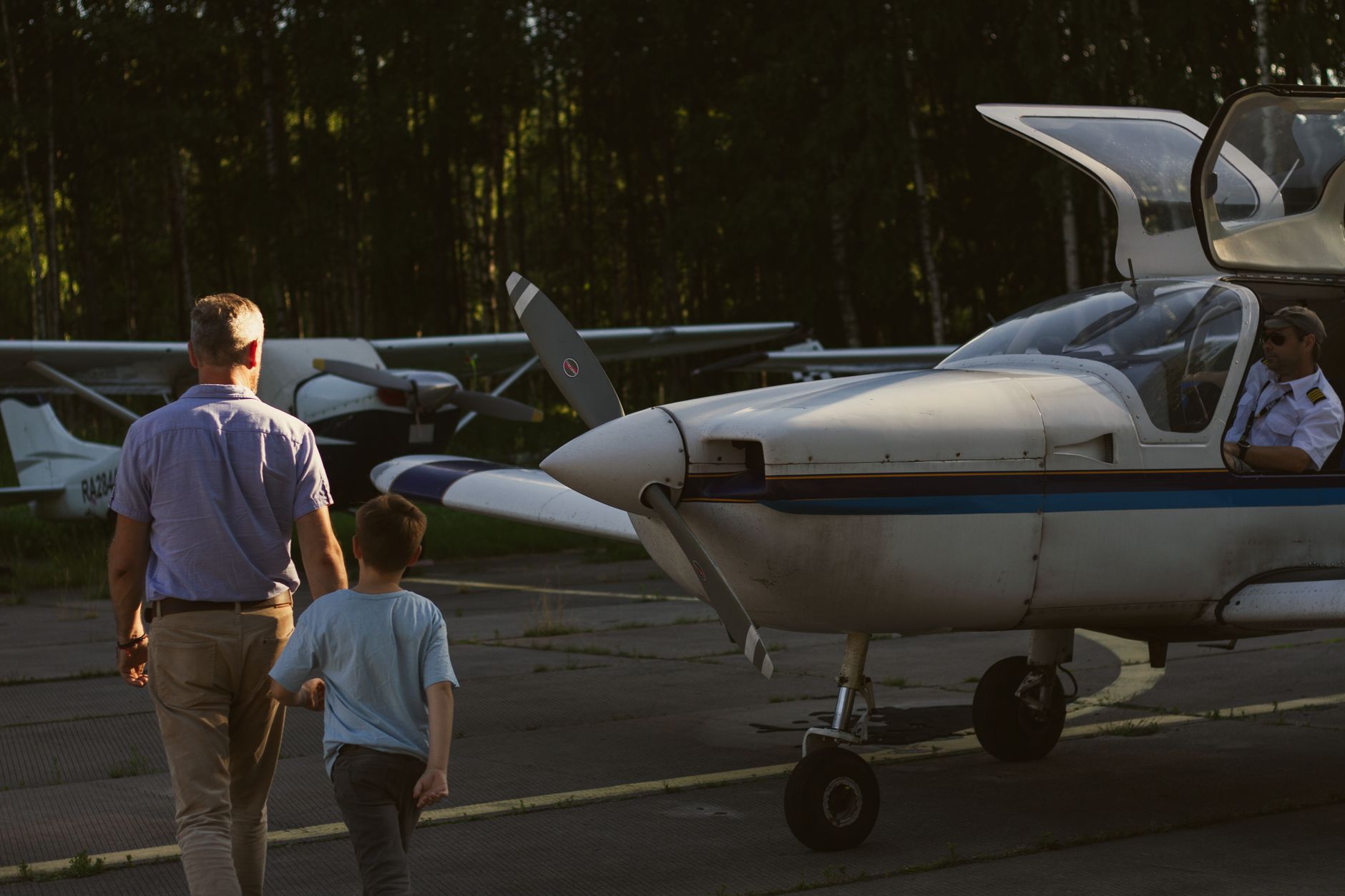
Take someone flying. The single most effective thing any pilot can do for aviation is put a person who has never been in a small aircraft into the right seat. More pilots trace their careers to one flight with a friend or relative than to any formal program.
Book a discovery flight. If you’re not a pilot, most flight schools offer introductory flights in the $150–$250 range where you’ll handle the controls yourself. It’s the lowest-cost way to find out whether flying is something you want to pursue.
Visit an aviation museum. Most communities are closer to one than they realize, and many run special programming around August 19.
Get out to your local airport. Airport restaurants, viewing areas, and ramps are open to anyone. Watching pattern work for an hour is a genuinely good way to spend an afternoon.
Support youth aviation. EAA’s Young Eagles program has flown more than two million young people free of charge since 1992. Chapter rallies happen year-round, and volunteers — pilots and ground crew both — are always needed.
Fly. If you have a certificate and an airplane available, the most fitting observance is the obvious one. Go somewhere for lunch. Take the long way.
Learn something. A safety seminar, a WINGS webinar, a chapter meeting, or an hour with the handbook all count. Aviation’s culture of continuous learning is part of what the day celebrates.
Aviation in 2026: What the Day Is Marking
Any anniversary is an occasion to take stock, and 2026 has been an unusually consequential year for aviation in the United States.
Regulation modernized. The FAA’s MOSAIC rule — the most significant change to light aircraft certification in nearly two decades — reached its second phase in July, expanding what qualifies as a light-sport aircraft and broadening sport pilot privileges.
The cockpit changed. Garmin introduced two new integrated flight decks, bringing autonomous emergency capabilities like Autoland down into piston aircraft. The FAA launched Mobile Clearance, letting general aviation pilots receive IFR departure clearances digitally through the apps they already use. AI-powered tools began translating dense NOTAMs into plain English.
Infrastructure got attention. The largest air traffic control modernization effort in decades is underway, replacing copper with fiber, paper flight strips with electronic ones, and 1970s radars with modern equipment — though significant funding questions remain unresolved.
The workforce problem got serious effort. AOPA added aviation maintenance to its free high school curriculum. Manufacturers opened talent centers. New training platforms launched. The industry finally began treating the pilot and technician shortage as a pipeline problem that starts long before flight school.
And people showed up. EAA AirVenture Oshkosh drew a record 734,000 attendees in July, with more than 10,000 aircraft and roughly 6,000 volunteers contributing nearly 300,000 hours.
That last number may be the most fitting thing to note on National Aviation Day. Aviation in this country runs substantially on people who show up voluntarily — to fly kids, to run chapter meetings, to marshal aircraft in a Wisconsin field in July, to teach someone else what they were taught.
The Bottom Line
National Aviation Day, observed every August 19 on Orville Wright’s birthday and established by Franklin Roosevelt in 1939, exists for a simple purpose: to advance interest in flight.
One hundred twenty-three years after Kitty Hawk, that mission looks much as it did — a person who has never flown in a small airplane, and a pilot willing to take them. Everything else in aviation, from the certificate to the career to the record-setting fly-in, tends to start there.
If you fly, take someone with you today. If you don’t, go find out what it’s like.
Frequently Asked Questions
When is National Aviation Day? National Aviation Day is observed annually on August 19, the birthday of Orville Wright, who was born August 19, 1871. The observance was established by President Franklin D. Roosevelt in 1939 and is codified at 36 U.S.C. § 118. It is an observance rather than a federal holiday, so government offices, businesses, and schools remain open.
Why is National Aviation Day on Orville Wright’s birthday instead of the anniversary of the first flight? The Wright brothers’ first powered flight took place on December 17, 1903, which is separately observed as Wright Brothers Day. August 19 was chosen for National Aviation Day in part because mid-August is far more practical than mid-December for outdoor aviation events, airport open houses, and fly-ins across the United States.
Who created National Aviation Day? President Franklin D. Roosevelt established National Aviation Day by proclamation in 1939, designating August 19 to celebrate the development of aviation and authorizing subsequent presidents to issue an annual proclamation. Orville Wright was still living when the observance was created; he died in January 1948.
Is National Aviation Day a federal holiday? No. It is a federally recognized observance, not a federal holiday. There are no closures, and it is not a paid day off. The original proclamation encouraged Americans to observe the day with activities that advance interest in aviation, which is how most airports, museums, flying clubs, and EAA chapters mark it.
How can I celebrate National Aviation Day? Take someone flying if you’re a pilot, or book an introductory discovery flight at a local flight school if you’re not — most run $150 to $250 and let you handle the controls. Other options include visiting an aviation museum, spending time at your local airport, volunteering with or supporting EAA’s Young Eagles program, attending a safety seminar or WINGS webinar, or simply going flying.
Sources: