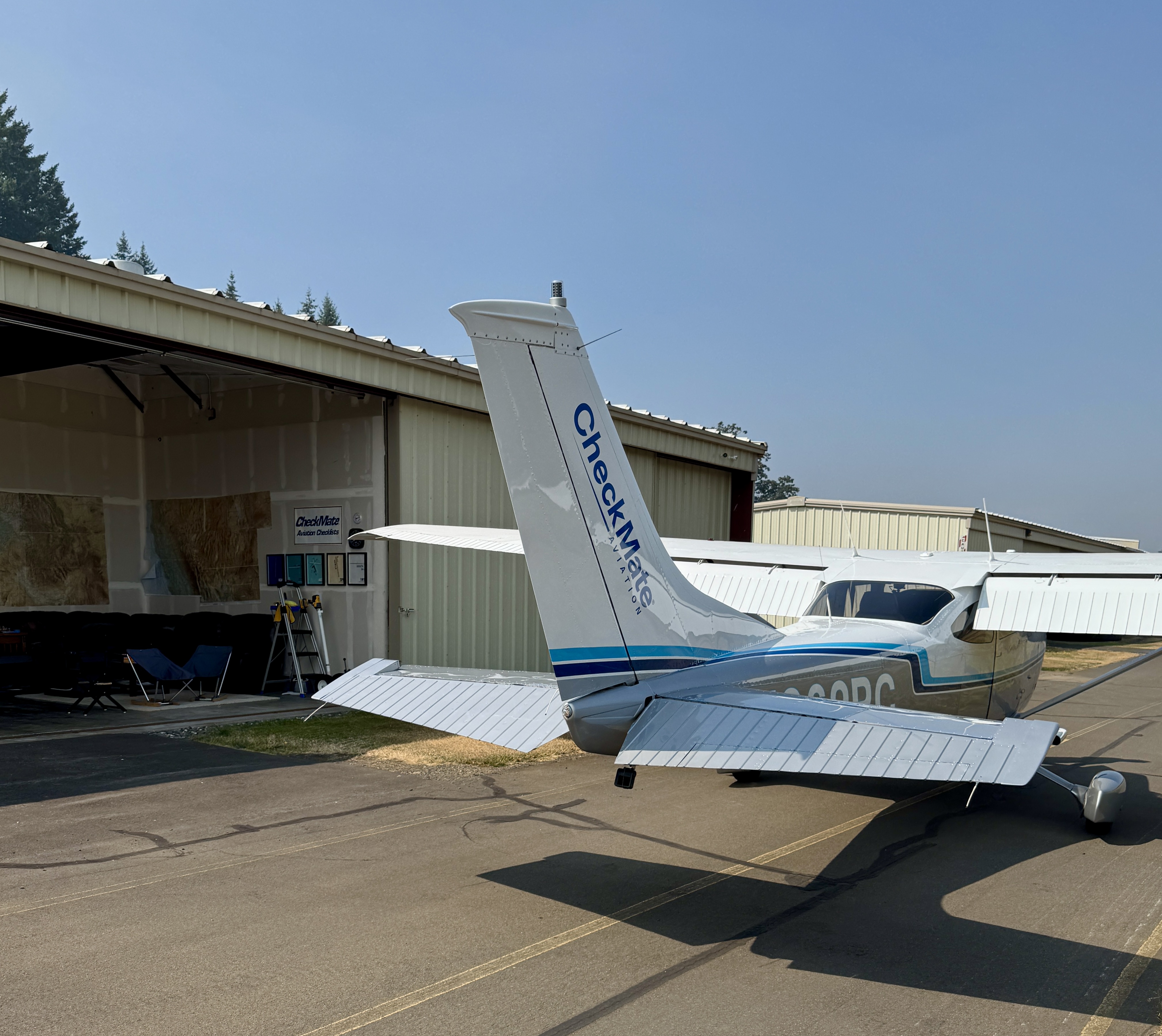
CheckMate Aviation has made laminated single-card aircraft checklists since 1992 — more than 1,000 products covering over 350 general aviation models, and a fixture in enough cockpits that pilots stopped thinking of it as a brand and started treating it as a category. In 2024, founders D. Rich Lang and Carol Finnegan-Lang retired and sold the company to Barry Munsterteiger, a three-decade UI/UX designer with stops at Apple, Mozilla, and Netgear who became a pilot in 2021 — and who bought his first CheckMate card the same evening he cancelled a training flight because the airplane’s checklist was missing. Under the Munsterteiger family, CheckMate has launched the redesigned CheckMate+ line, rebuilt around the flow of tasks through each phase of flight, and CheckMate Pro, a customizable version printed with a specific aircraft’s tail number, procedures, and data.
For over 30 years, one laminated card has been the quiet standard of general aviation safety. Here’s how it got there — and where it’s going.
Thirty-Two Years of One Good Idea
Walk the flight line at almost any GA airport and look inside the cockpits. Sooner or later you’ll spot it: a laminated, color-coded card clipped to a yoke or tucked beside a seat, dense with procedures yet somehow readable at a glance.
The numbers behind that familiarity are real. More than 1,000 checklist products cover over 350 aircraft models — from the Cessna 150s and 172s that carry most students through training, across Piper, Beechcraft, Cirrus, Mooney, and Diamond, down to light sport aircraft like the Flight Design CTLS. The company is an FAA Flight Safety Award winner, and its cards have drawn endorsements over the years from AOPA Pilot, The Aviation Consumer, and a long list of instructors who prefer a single durable card to a booklet that demands page-flipping at exactly the wrong moment.
CheckMate was founded by D. Rich Lang and Carol Finnegan-Lang, who ran it for 32 years on a deceptively simple premise: a pilot’s normal, abnormal, and emergency procedures — plus key speeds and data — should live in one place, on one card, durable enough for daily cockpit life and organized enough to scan under pressure. No flipping, no hunting, no dead battery.
That premise aged remarkably well. Even as glass panels and electronic flight bags transformed the cockpit, the laminated card kept its seat — not out of nostalgia, but because a physical checklist has no boot time, no screen lock, and no failure mode beyond falling on the floor. For emergency procedures especially, instant access is the entire point.
The Pilot Who Wouldn’t Fly Without One
In 2024, the Langs retired and sold the company — and the story of who bought it is the best checklist endorsement CheckMate has ever had.
Barry Munsterteiger spent three decades in technology as a UI/UX designer, with stops including Apple, Mozilla, and Netgear, before starting flight training in 2021. One day early in his training, he arrived at the airplane to find the checklist missing from the cockpit. He made the call that instructors dream of their students making: he didn’t fly. That evening, he bought his own CheckMate card so it would never happen again.
The designer in him couldn’t leave well enough alone. After earning his private certificate in 2023 — in a Cessna 182 he now owns and flies with an instrument rating — Munsterteiger redesigned a checklist for his own panel and reached out to CheckMate about printing it. Rich Lang was impressed enough by the work that the conversation turned into something bigger: he and Carol had just decided to retire, and would Barry want the company?
Today CheckMate is a family operation based in Vancouver, Washington. Barry runs product design, forecasting, and operations; his wife Sandra leads marketing and partner product development; his brother Cory handles finance. Their stated approach is continuity plus modernization — keep the safety-first, single-card philosophy that made CheckMate the standard, and bring three decades of design discipline to how the card actually works.

What’s New: CheckMate+ and CheckMate Pro
The first products of that approach are the redesigned CheckMate+ line and its customizable sibling, CheckMate Pro.
CheckMate+ rebuilds the card’s information architecture around the way tasks actually flow through a flight. Items are arranged phase by phase, in the logical sequence a pilot moves through the cockpit — which makes the card a natural companion to the flow-then-verify method that airline crews use and that we covered in depth in our guide to flows vs. do-lists. Configure the airplane from your flow, then let the card confirm nothing was missed. The cards come in two sizes: Standard (6.5″ × 9″) for maximum readability, and Compact (5″ × 7″) for smaller kneeboards and tighter cockpits.
CheckMate Pro takes the same redesign and makes it bespoke. Flight schools, flying clubs, and individual owners can have cards printed with their tail numbers, aircraft-specific procedures, weights and balances, frequently used airports, and their own branding — turning a model-generic checklist into an exact mirror of a specific airplane or fleet. For schools standardizing procedures across a mixed fleet, that’s not a cosmetic upgrade; it’s the difference between a checklist students work around and one they actually use. The line is expanding steadily, and the company invites pilots to reach out if their aircraft isn’t covered yet.
The new catalog also runs deeper than aircraft cards: an IFR card designed with a flight side and a proficiency side (which we wrote about in our instrument currency guide), crew and passenger briefing cards, an emergency checklist, and ramp tow cards — small artifacts of the same idea, that critical procedures belong on paper you can grab.
Why It Matters for Students and Instructors
For student pilots, the case for a purpose-built checklist is mostly about habit formation. Checklist discipline is a safety-of-flight item on every practical test, and habits form around the tools you train with. A card that’s organized, durable, and pleasant to use gets used; a faded photocopy of POH pages gets skipped. Reviewers consistently describe CheckMate cards the same way — everything in one place, flow-friendly ordering, readable in a glance — which is precisely the profile of a checklist that survives contact with real training.
For CFIs and schools, the Pro line answers a quieter problem: fleet standardization. When every airplane in the fleet carries a card matched to its actual configuration — its tail number, its quirks, its local procedures — instructors stop teaching workarounds and students stop learning them.
A few honest caveats from the field: some pilots find the Standard card large for smaller kneeboards (the Compact size exists for exactly this reason), pilots who fly with readers should look at the Compact’s denser text before choosing it, and renters should confirm whether their school or club requires its own approved checklist for specific aircraft.
Where to Get One
CheckMate cards are available directly from checkmateaviation.com — searchable by aircraft make and model — and through pilot shops like Aircraft Spruce and PilotMall. Custom and fleet orders for CheckMate Pro go directly through the company, which follows up with options and proof layouts before printing.
Frequently Asked Questions
What is CheckMate Aviation? CheckMate Aviation is a checklist company founded in 1992 that produces laminated, single-card aircraft checklists covering normal, abnormal, and emergency procedures for more than 350 general aviation aircraft models. It was acquired in 2024 by the Munsterteiger family, who have introduced the redesigned CheckMate+ and customizable CheckMate Pro lines.
What’s the difference between CheckMate+ and CheckMate Pro? CheckMate+ is the modernized standard line, with items reorganized to follow the flow of tasks through each phase of flight. CheckMate Pro adds full customization — tail numbers, aircraft-specific procedures, weights and balances, frequently used airports, and branding — for flight schools, clubs, and owners who want the card matched to a specific aircraft or fleet.
What sizes do CheckMate checklists come in? Two sizes: Standard (6.5″ × 9″), which offers more space and readability, and Compact (5″ × 7″), which fits smaller kneeboards and tighter cockpits with somewhat denser text.
Does CheckMate make a checklist for my aircraft? With over 1,000 products across 350+ models — including Cessna, Piper, Beechcraft, Cirrus, Mooney, Diamond, and light sport aircraft — coverage is broad. If your model isn’t in the CheckMate+ line yet, the company invites requests through its contact page and adds models on demand.
Why use a physical checklist instead of an app? A printed card has no boot time, no battery, and no screen lock — instant access matters most during abnormal and emergency procedures. Many pilots run both: electronic tools for planning and charts, with a physical card as the always-available backstop for procedures.
Sources: