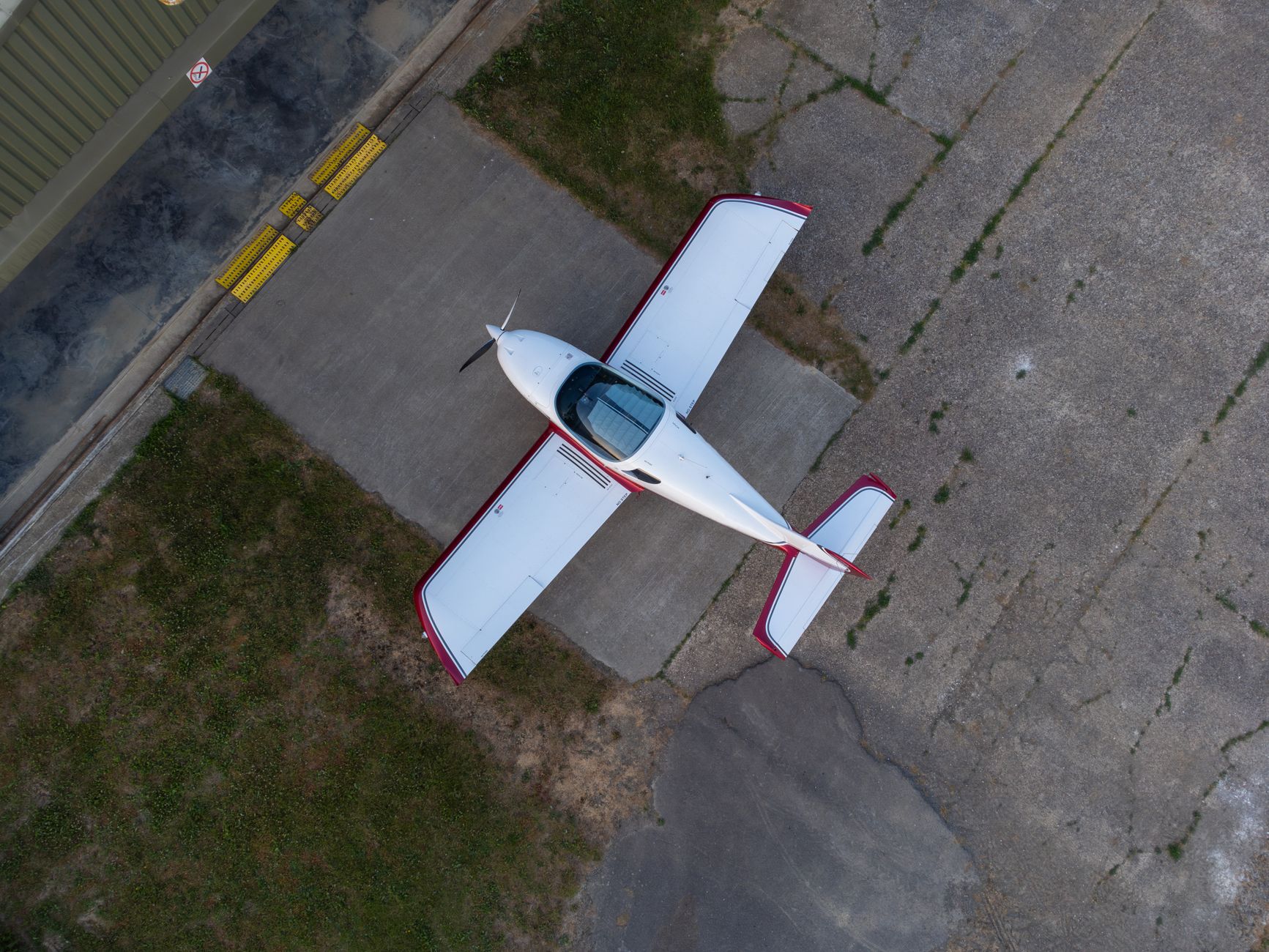

India’s Directorate General of Civil Aviation (DGCA) has cleared the Bristell B23 for registration and operation in India, issuing two Letters of Type Acceptance on July 31, 2026. The approval covers two variants — the B23-912iS and the B23-916iS — and rests on the aircraft’s existing EASA CS-23 type certificate (EASA.A.642, issue 8, dated December 17, 2025), which the DGCA reviewed against its own airworthiness requirements before formally accepting it. Announced by Czech manufacturer BRM AERO on August 12, 2026, the clearance brings the B23 to seven aviation authorities worldwide and arrives precisely as India moves to expand its pilot training capacity, with eleven new flight schools approved earlier this month.
For a market that issued more commercial pilot licences in 2025 than in any year of the past decade, the timing is notable. Here’s what the approval covers and why India’s training sector matters.
What the DGCA Approved
The two Letters of Type Acceptance are referenced IN26ATA055 for the B23-912iS and IN26ATA054 for the B23-916iS (which the type certificate designates as the B23-916). BRM AERO says additional variants in the family are planned to follow through the same process.
Rather than requiring a fresh certification campaign, type acceptance recognises an existing certificate from another authority — in this case EASA’s CS-23 certificate — after the accepting authority satisfies itself that the aircraft meets its own airworthiness standards. It’s the mechanism that lets a manufacturer expand into new markets without repeating the full certification effort in each country.
The two approved variants bracket a training fleet:
B23-912iS — powered by the fuel-injected Rotax 912 iS Sport producing 100 horsepower (73.5 kW), with Single Lever Power Control and a 2,000-hour time between overhauls.
B23-916iS — powered by the turbocharged Rotax 916 iS producing 160 horsepower (117.6 kW), also with a 2,000-hour TBO, and climbing at 1,320 feet per minute.
Both share the same airframe and equipment: an all-metal structure, a 130 cm (51-inch) wide cockpit that BRM AERO claims is the widest in its class, Garmin glass cockpit avionics with autopilot, a three-blade MT constant-speed propeller, and a BRS whole-aircraft parachute as standard equipment. Maximum takeoff weight is 750 kg (1,653 lbs).
Seven Authorities and Counting
The India clearance adds to a growing list of approvals for the B23. The aircraft’s certification record now spans:
- EASA — type certificated under CS-23 in October 2020
- CAA UK — separate certificate issued September 2023
- FAA — Part 23 type certificate issued September 2025
- Australia, Bangladesh, South Africa, and India — each recognising the European certificate for their own country
That progression matters commercially. A CS-23 certificate that multiple authorities have accepted is considerably easier to extend into additional markets, and it signals to buyers that the aircraft has survived scrutiny from several independent regulators rather than one.
Why India, and Why Now
The approval lands during a genuine expansion of Indian pilot training capacity.
On August 5, 2026 — less than a week after the DGCA issued the type acceptance letters — India’s Ministry of Civil Aviation awarded letters of intent for eleven new flight schools at seven Airports Authority of India airports. The expansion adds room for 750 additional students per year, and Indian press coverage of the announcement projects 110 to 120 additional training aircraft once all eleven are operating.
The existing base is substantial and growing:
- 41 approved flight schools currently operating in India
- 385 training aircraft across those schools
- 1,652 commercial pilot licences issued in 2025 — the highest annual total in a decade
That last figure is the clearest signal. India’s airlines have placed some of the largest aircraft orders in commercial aviation history over the past several years, and the pilots to fly them have to come from somewhere. Domestic training capacity is the constraint, and the government is moving to expand it.
For aircraft manufacturers, a market adding roughly a hundred training aircraft on top of an existing fleet of 385 is a meaningful opportunity — particularly for types positioned on training economics.
The First Indian Fleet
One operator has already committed. In April 2026, Melstarr Aviation Learning Academy — building a new Flight Training Organisation in Kurnool, Andhra Pradesh — announced a planned order for 20 Bristell B23 aircraft as part of a EUR 20 million investment in the school. From 2027, the academy aims to train 200 pilots per year.
BRM AERO’s dealer in the country is Air Taxi (Aviation Connectivity & Infrastructure Developers Pvt. Ltd) of New Delhi, which also flies regional routes under UDAN, the Indian government’s regional connectivity programme for smaller airports.
Air Taxi managing director Varun Suhag framed the appeal in terms of the gap between training aircraft and airline cockpits — noting that many Indian cadets fly aircraft older than they are and encounter a glass cockpit for the first time in an airline simulator. His summary of the B23’s pitch: <cite index=”14-1″>”Modern for the cadet, economical for the operator.”</cite>
That framing points at a real tension in flight training worldwide. Students who learn on steam gauges and then transition to glass at the airline level effectively train twice. Schools that can put students in a glass cockpit from the first lesson remove that step — though the counterargument, that basic instrument scanning is best learned on analog gauges first, remains a live debate among instructors.
Built Around Training Economics
The B23’s positioning for flight schools rests on operating cost as much as capability.
Fuel flexibility. Every B23 can run on automotive MOGAS (RON 95) as well as AVGAS — a meaningful advantage in markets where avgas is expensive, hard to source, or both. For a school flying thousands of hours a year, fuel is among the largest controllable costs.
Fuel burn. The fuel-injected B23-912iS burns 16.3 litres per hour (4.3 US gallons per hour) at 75% power at FL100.
Engine life. Both approved variants carry engines with a 2,000-hour TBO, spreading overhaul cost across more revenue hours.
The MOGAS capability is particularly relevant given the broader industry transition away from leaded avgas. Aircraft already certified to run on unleaded automotive fuel sidestep a problem the rest of the piston fleet is still working through.
A Note on the Broader LSA and Light Aircraft Market
The B23 sits in a segment that has been unusually active in 2026. BRM AERO’s model range spans the CS-23 certified B23, the B23M and high-wing B8M aimed at the US market under MOSAIC, the UL/LSA family, and the all-electric Energic in development.
The company also announced in July 2026 that Garmin’s new AXIS integrated flight display is coming to Bristell aircraft — connecting the manufacturer to one of the more significant avionics launches of the year. AXIS combines primary flight display, multifunction display, IFR GPS, NAV/COMM, and audio panel functions into a single unit, and its arrival in light training aircraft reinforces the same glass-from-day-one argument Air Taxi is making in India.
BRM AERO has produced aircraft in Kunovice, Czech Republic, since 2009, with aircraft now operating in more than 30 countries.
The Bottom Line
The DGCA’s type acceptance of the Bristell B23-912iS and B23-916iS opens India to a modern, glass-equipped, parachute-equipped trainer at exactly the moment the country is adding eleven flight schools and hundreds of training slots. With 20 aircraft already planned for a single new academy in Andhra Pradesh and a market that issued 1,652 commercial licences last year, the opportunity is real.
More broadly, the approval is a reminder of where general aviation growth is actually happening. While the North American and European training fleets modernise incrementally, markets like India are building capacity from a much lower base — and the aircraft they choose now will shape those fleets for decades.
Frequently Asked Questions
What did India’s DGCA approve for the Bristell B23? India’s Directorate General of Civil Aviation issued two Letters of Type Acceptance on July 31, 2026, clearing the Bristell B23-912iS (reference IN26ATA055) and B23-916iS (reference IN26ATA054) for registration and operation in India. Both rest on the aircraft’s EASA CS-23 type certificate, EASA.A.642 issue 8 of December 17, 2025, which the DGCA reviewed against its own airworthiness requirements. Manufacturer BRM AERO says additional variants are planned to follow through the same process.
What is the difference between the B23-912iS and B23-916iS? The two variants differ principally in powerplant. The B23-912iS uses the fuel-injected Rotax 912 iS Sport producing 100 horsepower (73.5 kW) with Single Lever Power Control. The B23-916iS uses the turbocharged Rotax 916 iS producing 160 horsepower (117.6 kW) and climbs at 1,320 feet per minute. Both carry a 2,000-hour TBO and share the same all-metal airframe, 130 cm (51-inch) cockpit, Garmin glass avionics with autopilot, three-blade MT constant-speed propeller, and standard BRS whole-aircraft parachute.
Which authorities have approved the Bristell B23? The B23 now holds approvals from seven aviation authorities. EASA type certificated it under CS-23 in October 2020, the UK CAA issued its own certificate in September 2023, and the FAA issued a Part 23 type certificate in September 2025. Australia, Bangladesh, South Africa, and now India each recognise the European certificate for operation in their countries.
How large is India’s flight training market? India currently has 41 approved flight schools operating 385 training aircraft, and issued 1,652 commercial pilot licences in 2025 — the highest annual total in a decade. On August 5, 2026, the Ministry of Civil Aviation awarded letters of intent for eleven new flight schools at seven Airports Authority of India airports, adding capacity for 750 students per year, with Indian press coverage projecting 110 to 120 additional training aircraft once all are operating.
Can the Bristell B23 run on automotive fuel? Yes. Every B23 is capable of operating on automotive MOGAS (RON 95) as well as AVGAS, which BRM AERO positions as an operating-cost advantage in markets where avgas is expensive or difficult to source. The fuel-injected B23-912iS burns 16.3 litres per hour (4.3 US gallons per hour) at 75% power at FL100, and both India-approved variants carry engines rated for a 2,000-hour time between overhauls.
Sources: