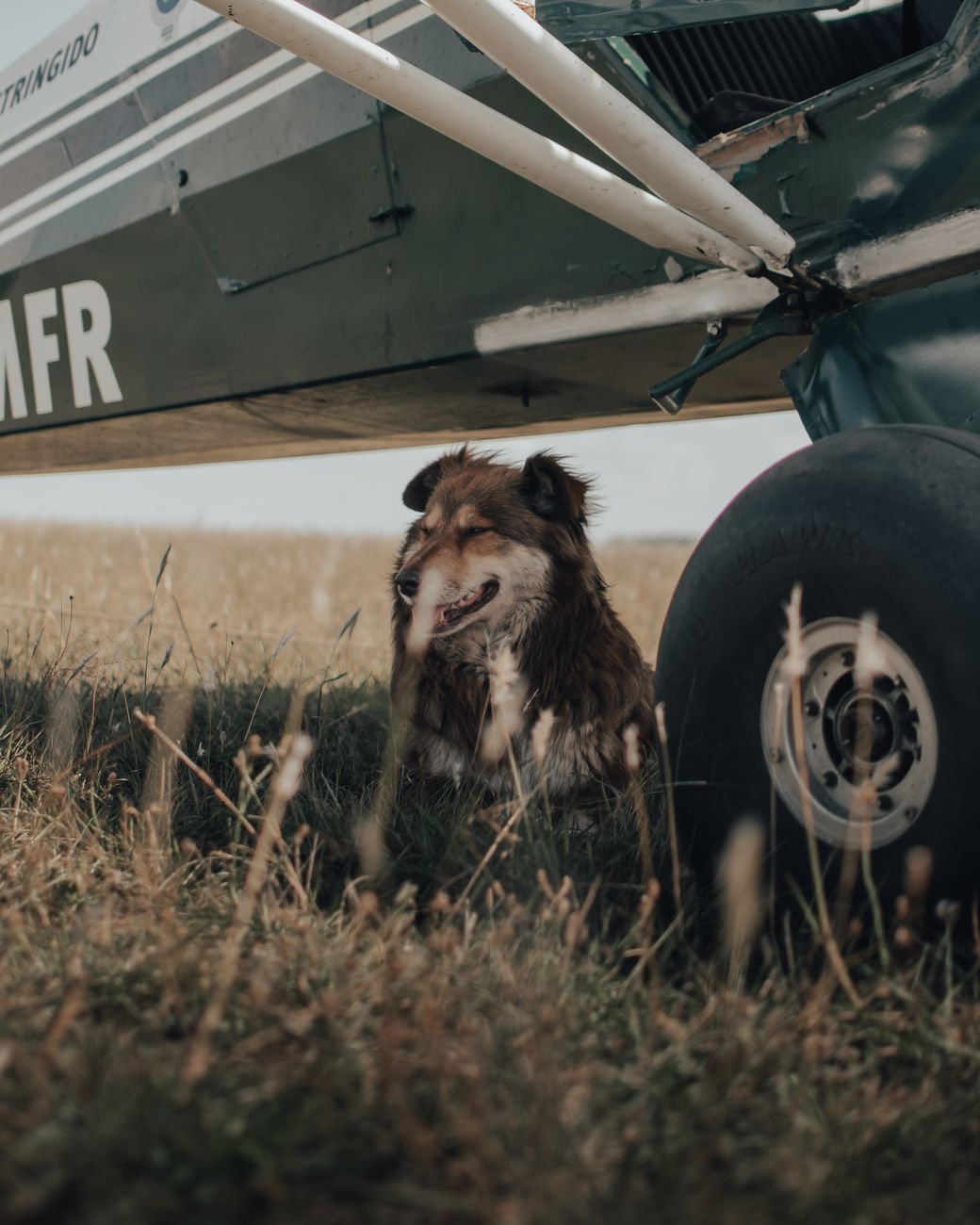
If your dog flies with you, they need hearing protection just as much as you do. A typical general aviation piston cockpit runs somewhere between 90 and 110 decibels in cruise — loud enough that no pilot flies without a headset, and loud enough to cause cumulative hearing damage in a dog sitting through the same flight unprotected. Dogs hear a considerably wider frequency range than humans and can’t tell you when something hurts. The two purpose-built options most GA pilots use are Mutt Muffs, originally designed specifically for dogs flying in small aircraft, and Rex Specs Ear Pro, developed by Zeteo Tech to protect military working dogs. Both provide passive sound reduction — they lower the volume rather than eliminating it — and both require ground acclimation before the first flight.
Here’s what to know before your dog rides right seat.
Why Cockpit Noise Matters for Dogs
The case is straightforward. You wouldn’t fly a two-hour cross-country without a headset. Your dog is sitting in the same cabin, at the same sound pressure level, for the same duration.
Two factors make it worse for them:
Dogs hear a broader frequency range, extending well above human hearing. Some of the sound energy in a piston cockpit sits in ranges that affect them more than it affects you.
They can’t self-report. Canine hearing loss is gradual and largely invisible until it’s advanced. A dog won’t refuse to fly because their ears hurt — they’ll come along because you’re going.
There’s a secondary benefit worth mentioning. Many dogs find reduced cabin noise calming, and owners frequently report that a dog who was restless on early flights settles once the noise comes down. Protection and comfort tend to arrive together.
One honest caveat: manufacturers are clear that ear protection is not a cure for noise phobia. A dog frightened of thunderstorms is often reacting to barometric pressure changes and static as much as sound, and muffs won’t fix that. These are hearing-damage prevention tools first.
The Two Main Options
Mutt Muffs are the product most associated with aviation — they were originally created to protect dogs’ hearing in airplanes, and they remain the default recommendation in GA circles. They’re an over-the-head design with wide foam-filled ear seals, made in the USA, available in multiple sizes.
Rex Specs Ear Pro, made by Zeteo Tech, came out of military working dog applications, where hearing damage from helicopters, gunfire, and vehicles is a documented problem. It uses a four-way stretch fabric wrap rather than a rigid muff, which some dogs tolerate better, and it’s designed to integrate with Rex Specs dog goggles if you want eye protection too. Real-ear testing in a sound booth at 95 dBA showed attenuation of roughly 18 to 24 dBA at low frequencies, with effectiveness increasing as frequency rises.
Beyond those two, a range of general-purpose dog ear muffs exists at lower price points, typically advertising noise reduction ratings in the 25–30 dB range. Their reputation is more mixed — the recurring complaint is inconsistent fit, and with passive hearing protection, fit is the entire product. A muff that doesn’t seal doesn’t attenuate.
Sizing Is the Whole Ballgame
Both major manufacturers say the same thing, and it’s the most important practical point in this article: measure your dog’s head circumference at its widest point, just in front of the ears and under the chin, and size accordingly.
Buying too large is the common error, and it’s counterproductive — muffs that don’t seal against the head lose most of their sound-reducing capability. You end up with a dog wearing an uncomfortable accessory that isn’t protecting anything.
Measure before you order. Check the specific manufacturer’s sizing chart rather than assuming sizes are comparable across brands.
Acclimation: Do This Before You Fly
This is where most people go wrong. A dog encountering ear muffs for the first time in a running airplane is a bad plan — you’ve combined an unfamiliar object, an unfamiliar environment, engine noise, and motion all at once.
A better sequence:
Start at home, engine off, aircraft nowhere in sight. Let the dog see and sniff the muffs. Treats. No pressure.
Put them on for seconds, then remove them. Reward immediately. The goal is that muffs predict good things.
Extend duration gradually over several sessions across days — a few seconds, then a minute, then several minutes, always ending before the dog gets frustrated.
Add distractions. Wear them during a walk, a car ride, or a meal so they become normal rather than special.
Move to the airplane, still on the ground. Sit in the parked aircraft with muffs on. Then with the engine running, if your dog is comfortable and you can do it safely.
Then fly — ideally something short for the first trip.
One owner’s account on Rex Specs’ site describes roughly an hour of ground training with plenty of treats before a first flight, followed by an initial attempt by the dog to remove the muffs during taxi, and then a settled three-hour flight once they were back on. That’s a realistic arc: some early resistance, then acceptance.
Never leave a dog unsupervised in ear protection, and be aware that reducing your dog’s hearing has trade-offs in environments where hearing is useful — which is another reason ground handling and taxi need your attention.
The Rest of Flying With a Dog
Hearing protection is one piece. If your dog is going to be a regular right-seat passenger, a few other things matter:
Restraint. An unrestrained dog is a loose object in turbulence and a genuine hazard around the controls. A properly secured crate or an aviation-appropriate harness system is standard practice.
Temperature. Cockpits get hot on the ramp and cold at altitude. Dogs regulate heat differently than we do, and a black dog in a greenhouse canopy on a summer ramp is a real risk.
Ear pressure. Dogs experience pressure changes on climb and descent as we do, without the ability to clear deliberately. Gradual descents help.
Hydration and relief stops. Plan them into cross-countries the way you would fuel stops.
Anxiety. Some dogs love flying and some genuinely don’t. Short, positive first flights and honest assessment of your dog’s response matter more than persistence.
Check with your vet before making a dog a regular flying companion, particularly for older dogs, brachycephalic breeds, or dogs with existing ear or respiratory conditions.
The Bottom Line
If your dog flies with you regularly, hearing protection belongs on the same list as your own headset. Mutt Muffs and Rex Specs Ear Pro are the two purpose-built options with real aviation and working-dog pedigrees, both passive, both dependent on correct sizing.
Measure your dog’s head before ordering, acclimate on the ground across multiple sessions before the first flight, and treat the muffs as one part of a broader setup that includes restraint, temperature management, and honest attention to whether your dog actually enjoys this.
Done right, a lot of dogs turn out to be excellent copilots.
Frequently Asked Questions
Do dogs need hearing protection in small airplanes? Yes. A typical general aviation piston cockpit runs roughly 90 to 110 decibels in cruise — the same environment that requires pilots to wear headsets. Dogs are exposed to the same sound levels for the same duration, hear a wider frequency range than humans, and cannot indicate when noise is uncomfortable or damaging. Canine hearing loss from noise exposure is cumulative and often not apparent until advanced.
What are the best dog ear muffs for flying? The two purpose-built options most commonly used by pilots are Mutt Muffs, originally designed to protect dogs’ hearing in airplanes, and Rex Specs Ear Pro from Zeteo Tech, developed to protect military working dogs from noise-related hearing loss. Mutt Muffs use an over-the-head design with foam-filled ear seals; Rex Specs Ear Pro uses a stretch fabric wrap that integrates with the company’s dog goggles. Both provide passive sound reduction rather than active noise cancellation.
How do I size dog ear muffs correctly? Measure the circumference of your dog’s head at its widest point — just in front of the ears and under the chin — and compare against the specific manufacturer’s sizing chart. Sizing correctly is critical: muffs that are too large won’t seal against the head and lose most of their sound-reducing effectiveness, which is the most common fitting error.
How do I get my dog used to wearing ear protection? Acclimate on the ground over multiple sessions before flying. Introduce the muffs at home with treats, put them on briefly and reward, then gradually extend the duration across several days. Add distractions like walks or car rides so they become routine, then progress to sitting in the parked aircraft, then with the engine running, before attempting a short first flight. Never leave a dog unsupervised while wearing ear protection.
Will ear muffs stop my dog’s fear of thunderstorms? Manufacturers are explicit that they generally will not. Dogs often sense an approaching storm through barometric pressure changes and static well before any thunder, so the anxiety frequently isn’t sound-driven. Passive ear protection reduces volume but doesn’t eliminate sound, and a dog frightened by a noise will often still be frightened by a quieter version of it. These products are designed primarily to prevent hearing damage.
Sources: