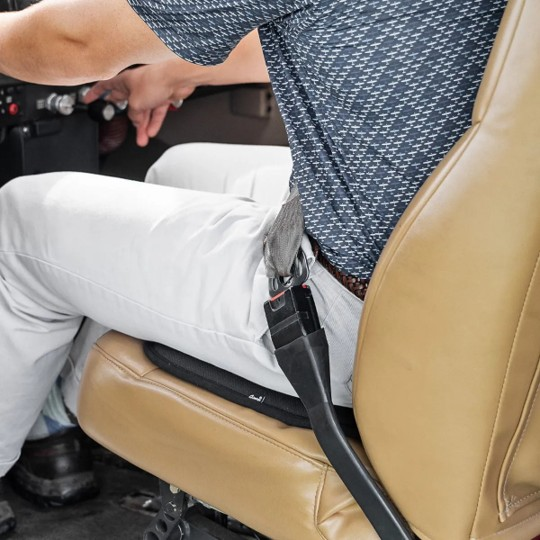
Sporty’s has introduced the Compact Pilot Gel Seat Cushion, a lightweight, foldable cushion built around a breathable honeycomb gel design that provides support while promoting airflow. Announced September 29, 2026, it’s aimed at a specific and widely shared problem: long cross-countries, extended training sessions, and older aircraft with well-used seats.
The design priority is portability. The cushion folds in half to fit in a flight bag or under a seat, and a slip-resistant bottom keeps it in place.
Why Seat Comfort Is a Legitimate Topic
It’s easy to file a seat cushion under creature comforts. There’s a better argument for taking it seriously.
Discomfort is a fatigue source. A pilot shifting position every few minutes on the third hour of a cross-country is spending attention on something other than flying. Fatigue degrades scan, decision-making, and tolerance for workload — and physical discomfort is one of its more avoidable inputs.
Training aircraft seats are usually the worst seats in aviation. A 172 that has absorbed forty years and several thousand students has a seat bottom that compressed into uselessness sometime during a previous decade. Students and instructors spend more hours in those seats than almost anyone.
Renters can’t fix the airplane. An owner can reupholster. A renter or a student flying a club aircraft can bring a cushion.
The honeycomb design addresses a real failure mode. Solid foam compresses under sustained load and stops supporting you partway through the flight. A gel matrix distributes weight more evenly and resists flattening — which matters most on exactly the long flights where comfort degrades.
The airflow point is also more than marketing. Sitting on a non-breathable surface for three hours in a greenhouse cockpit in July is its own kind of misery, and anything that moves air helps.
The Safety Considerations Nobody Mentions
This is the part worth knowing before you put any cushion in an airplane.
It changes your sight picture. Raising your seating position alters eye height, which alters where the cowling sits relative to the horizon. That reference is the foundation of your landing flare. Adding a cushion mid-training — or flying one lesson with it and the next without — introduces an inconsistency that can cost you landings while you recalibrate.
The fix is simple: be consistent. Use it or don’t, but don’t alternate without expecting an adjustment period.
It changes your reach. Sitting higher can subtly change your relationship to rudder pedals and controls. Verify full control deflection before flight, every time, as you should anyway.
It must not interfere with anything. Confirm the cushion doesn’t block seat track locking, impede seat adjustment, or sit anywhere it could migrate under a control. A slip-resistant bottom helps, but check.
Weight and balance is trivial but real. A cushion weighs almost nothing. Mentioning it only because aircraft loading questions sometimes come up on checkrides, and the honest answer is that it’s negligible.
Know the difference between comfort and position cushions. A gel cushion is for comfort. A booster or elevator cushion — Sporty’s makes one of those too, a firmer, thicker design — is for pilots who need an inch or two to see over the nose or reach the rudders. Those serve different purposes, and a soft gel cushion that compresses is the wrong tool for a position problem.
Who It’s For
Cross-country pilots. The three-to-five hour leg is where seat comfort stops being cosmetic.
Students and CFIs. Instructors in particular spend enormous hours in whatever seat the fleet provides, and a portable cushion follows them between airplanes.
Renters and club members. The people with the least control over their seats and the most to gain.
Anyone flying an older airframe. If the seat bottom in your airplane has given up, this is a cheaper intervention than reupholstering.
Probably not necessary if you fly short flights in a well-maintained aircraft with good seats, or if you already use a cushion you like.
The Bottom Line
The Compact Pilot Gel Seat Cushion is a small product addressing a real annoyance: airplane seats, particularly in training and older general aviation aircraft, are frequently terrible. A breathable honeycomb gel design that folds into a flight bag is a reasonable answer.
The only genuine caution is consistency. Changing your seating height changes your sight picture, and sight picture is what your landings are built on. Pick an approach and stick with it — then enjoy actually being comfortable on the way to the $200 hamburger.
Available through Sporty’s.


Frequently Asked Questions
What is the Sporty’s Compact Pilot Gel Seat Cushion? Introduced in September 2026, it is a lightweight, foldable seat cushion with a breathable honeycomb gel design intended to add comfort to aircraft seats without taking up significant space in a flight bag. It folds in half for storage and has a slip-resistant bottom. Sporty’s positions it for long cross-country flights, training sessions, and older aircraft with worn seats.
Does using a seat cushion affect flying? Yes, in one meaningful way: it changes your seating height, which changes your eye position and therefore your sight picture over the nose. Because the landing flare depends heavily on that visual reference, alternating between flying with and without a cushion can temporarily affect landing consistency. Pilots should also verify full control deflection and confirm the cushion cannot interfere with seat track locking or migrate near any control.
What is the difference between a gel cushion and an elevator cushion? A gel cushion is designed for comfort and pressure relief, using a soft but supportive material that reduces fatigue over long periods of sitting. An elevator or booster cushion uses firmer, thicker foam and is designed to raise a pilot’s seating position so they can see over the nose or reach the rudder pedals. Because a soft gel cushion compresses under load, it is not an appropriate substitute when additional height is needed for visibility or control reach.
Why does cockpit comfort matter for safety? Physical discomfort contributes to fatigue, and fatigue degrades instrument scan, decision-making, and tolerance for workload. A pilot repeatedly shifting position during a long flight is diverting attention from flying. While a seat cushion is a minor intervention, reducing avoidable sources of discomfort supports sustained attention on longer flights.
Who benefits most from an aircraft seat cushion? Pilots flying long cross-country legs, flight instructors who spend many hours in fleet aircraft, students and renters who cannot modify the aircraft they fly, and anyone operating an older airframe with compressed or worn seat cushions. Pilots flying short flights in well-maintained aircraft with good seats are less likely to notice a difference.
Sources: