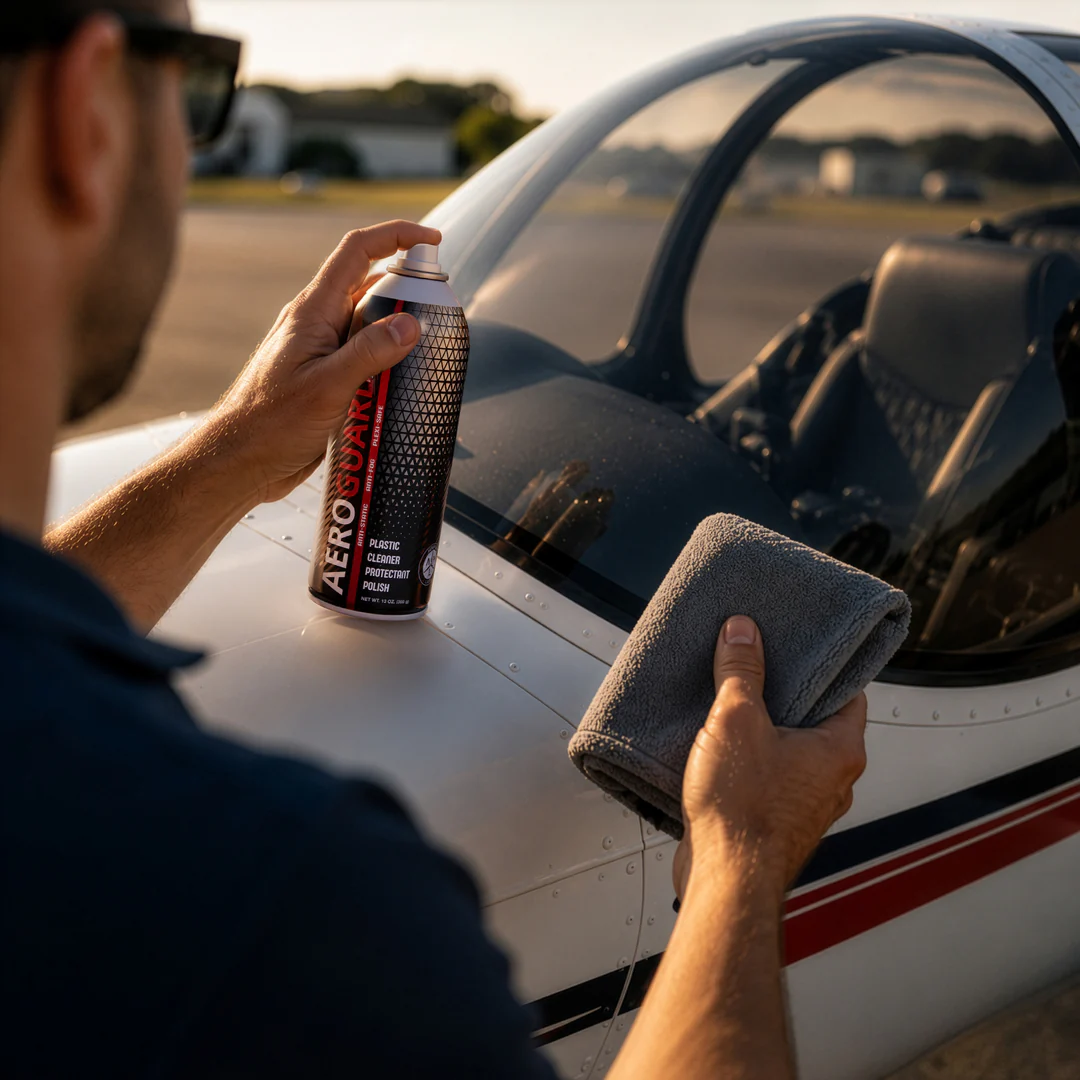
Aircraft windows aren’t glass. Most are acrylic or polycarbonate — Plexiglas, Lucite, Perspex, or Lexan — and the household glass cleaners sitting in most hangars can permanently damage them. Ammonia and alcohol, the active ingredients in the majority of consumer glass cleaners, attack acrylic and polycarbonate over time, producing clouding, crazing, and discoloration that no amount of polishing will reverse. That’s why AeroGuard Acrylic & Plastic Cleaner, made by AeroPlex Labs, is formulated without ethanol, alcohol, or ammonia — engineered specifically for the transparencies and interior plastics found in aircraft. Skyfarer readers get 10% off with code SKYFARER10 at aeroplexlabs.com/skyfarer.academy.
Here’s what makes aircraft window care different, and what AeroGuard actually does.
The Problem: Your Windscreen Is Plastic
This trips up more aircraft owners than it should. A windscreen looks like glass and gets treated like glass — but acrylic and polycarbonate behave nothing like it.
Chemical damage is permanent. Ammonia and alcohol-based cleaners cause micro-fractures in acrylic, a phenomenon called crazing — a fine network of cracks that scatters light and progressively hazes the surface. Once crazing sets in, the transparency can’t be restored. It has to be replaced.
Scratching is cumulative. Acrylic is far softer than glass. Wiping a dry, dusty windscreen, using a paper towel, or reusing a contaminated cloth grinds grit across the surface and leaves fine scratches that build over time.
Replacement is expensive. Aircraft transparencies are certified components. Replacing a hazed or crazed windscreen means real money and downtime — which is why the case for using the right product is economic as much as anything.
Visibility is a safety issue. A scratched, hazed windscreen scatters light, and the effect is worst when it matters most: flying into low sun, in haze, or at night. Degraded transparency directly reduces your ability to see and avoid traffic.
The workaround many pilots have adopted — furniture polish — is exactly what AeroPlex Labs built AeroGuard to replace.
What AeroGuard Does


AeroPlex Labs describes AeroGuard as a three-function product: clean, polish, and protect.
Clean. Removes bugs, grime, fingerprints, and smudges without ammonia, alcohol, or ethanol. The company says the formula leaves no smears, sticky residue, or visible marks — a meaningful claim for anyone who has fought streaks across a windscreen in direct sunlight. The finish is described as water-repellent and fog-resistant.
Polish. The formula includes polishing wax elements that fill micro-abrasions and surface pores — the fine imperfections that accumulate on any well-used transparency and cause light scatter. AeroPlex Labs also cites anti-static and dust-repellent properties, which matter because static is what makes a freshly cleaned windscreen attract dust within a day.
Protect. The wax elements leave a protective layer behind, intended to slow future contamination and repel dust and dirt between cleanings.
Compatible surfaces. AeroGuard is intended for Perspex, Lucite, Plexiglas, Fiberglass, ABS, Mylar window tints, Lexan, and other acrylics, along with polycarbonate and laminated glass.
Beyond the Windscreen
The product’s usefulness extends well past transparencies, which is worth knowing before you buy a can for one job:
In the cockpit. Instrument panels, avionics bezels, touchscreens, and plastic interior trim — all surfaces that suffer from harsh cleaners and all of which benefit from an anti-static finish.
Personal equipment. Helmets, visors, goggles, and sunglasses.
Other vehicles. Motorcycle windshields, boat windows, headlights and taillights, ATVs, snowmobiles, and RVs.
Miscellaneous. Camera lenses and high-gloss finishes, including on musical instruments.
For hangar or flight bag purposes, one product covering the windscreen, the panel, and your headset visor is genuinely practical.

How to Use It
AeroPlex Labs’ recommended process is four steps:
- Shake the can well to properly mix the formula.
- Spray a light, even coat from six to eight inches away.
- Let it sit briefly so it can penetrate dirt, grime, and smudges.
- Wipe with a clean microfiber cloth, then flip to a dry side and buff lightly for a streak-free finish.
Two additions worth making from general acrylic-care practice: rinse or flush heavy grit off first if the windscreen is genuinely dirty, so you’re not dragging debris across it, and use clean microfiber only — never paper towels or shop rags, which are abrasive enough to scratch acrylic.
Sizes and Pricing
AeroPlex Labs offers three options:
| Product | Size | Price |
|---|---|---|
| AeroGuard Mini | 1.5 oz | $5.00 |
| AeroGuard | 13 oz | $26.00 |
| AeroGuard Case | 12 × 13 oz | $300.00 |
With code SKYFARER10, Skyfarer readers take 10% off.
The Mini is the interesting one for pilots — a 1.5 oz can is small enough to live permanently in a flight bag for bug removal on the road, and at $5 it’s a low-risk way to try the product before committing to a full can. The case makes sense for flight schools, FBOs, and maintenance shops going through it across a fleet.
Built by Pilots, Sold Through the Aviation Channel
AeroPlex Labs describes itself as founded by people whose passion is aviation, with AeroGuard engineered around the specific demands of aircraft windows and cockpits before being extended to other applications.
The product is carried through established aviation retail channels including Aircraft Spruce, Banyan Pilot Shop, and My Pilot Store, alongside partners including Tundra Tailwheels, Big Papa Aviation, Z-Air, and Skyfarer Academy. Distribution through those retailers is a reasonable signal — pilot shops are cautious about what they put on the shelf next to certified parts.
Customer reviews on the AeroPlex Labs site run strongly positive across dozens of verified reviews, with owners commenting on clarity, ease of use, and how long a single can lasts. As with any product claim, the honest advice is to try it on your own aircraft and judge the result yourself — which is what the $5 Mini is for.
Get 10% Off
Use code SKYFARER10 for 10% off your AeroGuard order.
Shop through the Skyfarer partner link: aeroplexlabs.com/skyfarer.academy
Whether you’re an owner protecting a windscreen you’d rather not replace, a flight school maintaining a fleet of trainers, or a renter who just wants to see clearly on a hazy afternoon, a purpose-built acrylic cleaner is one of the least expensive investments you can make in your aircraft.
Frequently Asked Questions
Why can’t I use regular glass cleaner on aircraft windows? Most aircraft windows are acrylic or polycarbonate rather than glass, and the ammonia and alcohol in typical consumer glass cleaners can chemically damage those plastics. The result is crazing — a fine network of micro-fractures — along with clouding and discoloration that cannot be reversed and eventually requires replacing the transparency. Cleaners formulated specifically for acrylic and polycarbonate, without ammonia or alcohol, avoid that damage.
What is AeroGuard Acrylic & Plastic Cleaner? AeroGuard is an aviation-focused cleaner, polish, and protectant made by AeroPlex Labs, formulated without ethanol, alcohol, or ammonia so it is safe for polycarbonate, acrylic, and laminated glass. It is designed to clean grime and bugs, polish out micro-abrasions using wax elements that fill surface pores, and leave a protective, anti-static, water-repellent layer. It is compatible with Perspex, Lucite, Plexiglas, Fiberglass, ABS, Mylar window tints, and Lexan.
How do I use AeroGuard on my aircraft windscreen? Shake the can well, spray a light even coat from six to eight inches away, let it sit briefly to penetrate dirt and smudges, then wipe with a clean microfiber cloth and buff lightly with a dry side for a streak-free finish. Flush heavy grit off the surface first so you aren’t dragging debris across the acrylic, and use only clean microfiber — paper towels and shop rags are abrasive enough to scratch aircraft transparencies.
How much does AeroGuard cost, and how do I get the Skyfarer discount? AeroGuard is available in a 1.5 oz Mini for $5.00, a 13 oz can for $26.00, and a case of twelve 13 oz cans for $300.00. Skyfarer readers receive 10% off using code SKYFARER10 at checkout. Shop through the Skyfarer partner link at aeroplexlabs.com/skyfarer.academy.
What else can I use AeroGuard on besides aircraft windows? Beyond transparencies, AeroGuard is used on instrument panels, avionics bezels, touchscreens, and plastic interior trim, as well as helmets, visors, goggles, and sunglasses. Outside aviation, applications include motorcycle windshields, boat windows, headlights and taillights, ATVs, snowmobiles, RVs, camera lenses, and high-gloss finishes including musical instruments.
Sources: