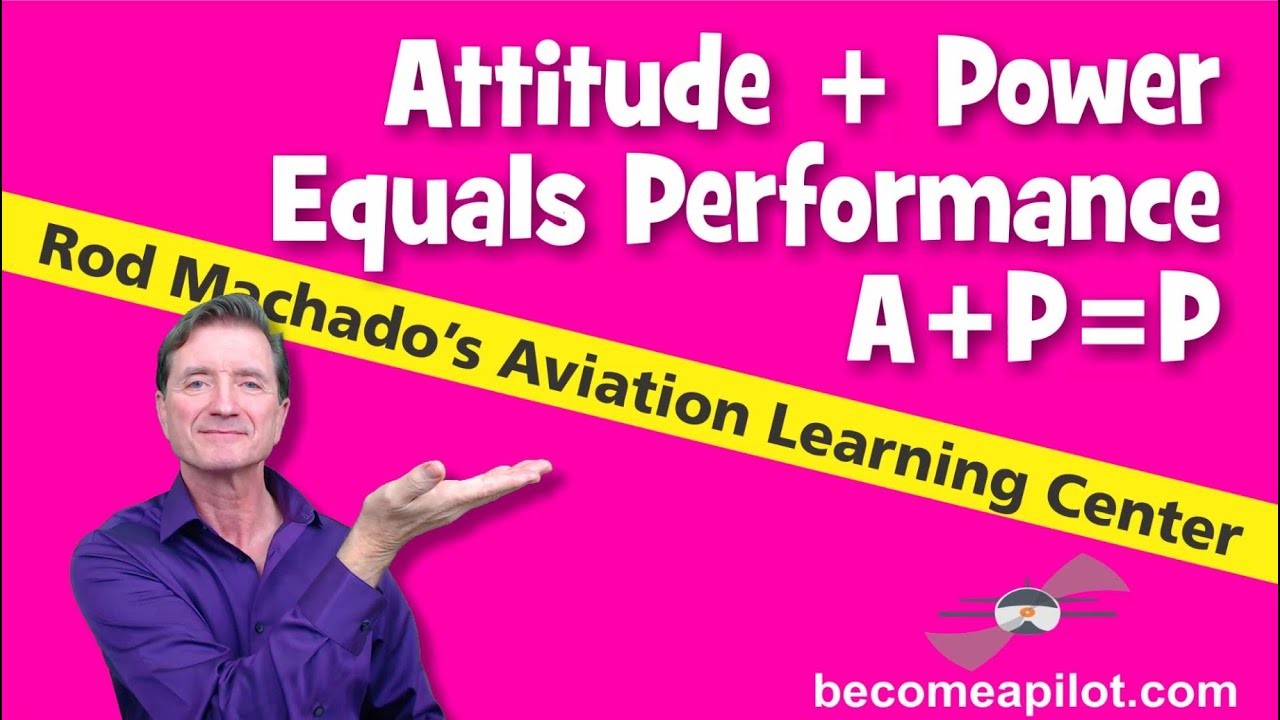
In short: Rod Machado’s favorite aviation equation is attitude plus power equals performance. Choose a specific attitude and a specific power setting and you can predict how the airplane will perform. It works on every flight, as long as you remember that throttle position isn’t the same as power and attitude isn’t the same as angle of attack.
Video: “The Ultimate Flying Equation: A+P=P” by Rod Machado, from his YouTube channel.
What you’ll learn
- What A+P=P means and how Rod uses it to predict climbs and descents
- Trap one: why throttle position isn’t a reliable measure of power at high density altitude
- Trap two: why pitch attitude and angle of attack are different things
- How to set attitude outside first, then fine-tune with the instruments
- A hand-based memory aid for five common flight attitudes
An equation with no real math
Rod introduces A+P=P with a nod to Einstein and a reminder that it should be taken seriously but not literally. Exchange the two variables for specifics and you can estimate performance with a lot of precision. Full throttle at sea level on a cool day plus a climb attitude means you can expect good climb performance for that airplane. Idle power plus a particular nose-down attitude on the turn to base lets you predict your descent airspeed.
Two traps that break the equation
The first trap is reading the equation as attitude plus throttle position. For normally aspirated engines, throttle position becomes less meaningful as density altitude rises. Full throttle at higher or warmer conditions produces less power than it would at sea level, so your sea level climb attitude won’t give you sea level climb performance.
The second trap is confusing attitude with angle of attack. Most pilots judge attitude by the cowling against the horizon, but Rod suggests also glancing at the wing’s chord line. Even so, angle of attack is measured between the chord line and the relative wind, which is opposite the flight path, not the horizon. Thinking in terms of angle of attack while flying by attitude is what Rod means by flying the wing, and it helps you avoid an attitude that could exceed the critical angle of attack.
Outside first, instruments second
Rod explains that you make attitude changes by looking outside, then fine-tune with the instruments. To enter a climb, you pitch to a remembered attitude, add climb power and trim, then check the airspeed and adjust pitch by reference to the horizon. Each instrument only provides a piece of the puzzle, while the view outside, plus sound and feel, gives the big picture. That is the heart of attitude, or stick-and-rudder, flying.
He closes with a memory aid from a friend: hold your hand with the ring finger parallel to the ground, and your fingers represent the attitudes for best angle of climb, best rate of climb, cruise, best glide and the power-off final approach. Most flying, Rod says, uses one of these five attitude and power combinations.
Go deeper with Rod Machado
Rod’s human factors audiobook explores more of how pilots think in the cockpit and how simple mental models like this one can make flying less complicated. Learn more in Human Factors for Pilots (Audiobook).
Looking for a flight instructor or flight school near you? Browse instructors and training programs on Skyfarer.
Affiliate disclosure: Skyfarer may earn a commission from qualifying purchases via our links. This funds our content for pilots.