
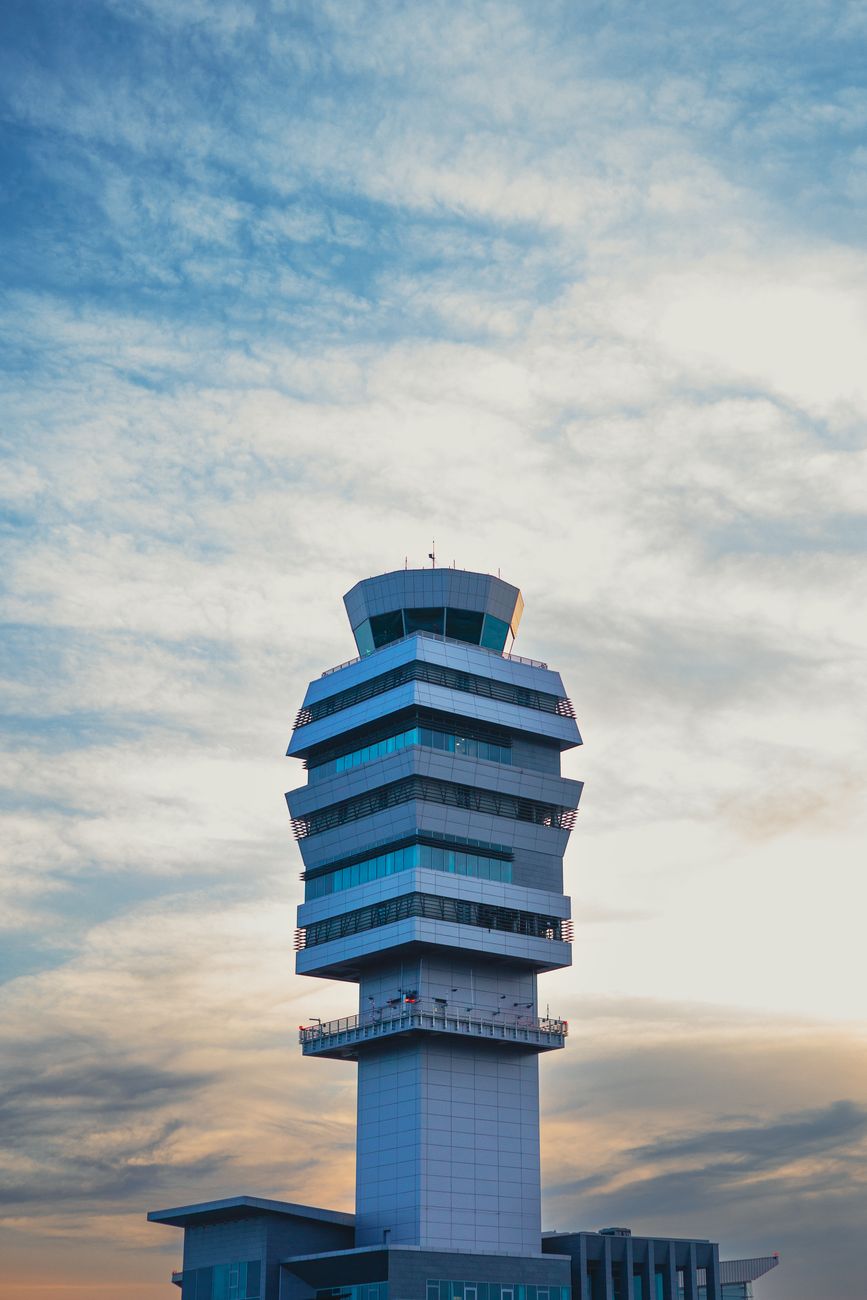
Quick quiz: Your radios fail, so you squawk 7600. As you approach a towered airport, the tower points a steady red light gun signal at you. Are you cleared to land?
No. In the air, a steady red light means give way to other aircraft and continue circling. You’re not cleared to land until the tower shows you a steady green. Light gun signals are one of those topics pilots study for the knowledge test and then rarely see, which is exactly why they’re easy to get wrong on the one day you need them.
Key Takeaways
- Only a steady green clears you to land (in the air) or take off (on the ground).
- Steady red in flight means give way and keep circling. Flashing red means the airport is unsafe, so don’t land.
- Acknowledge in flight by rocking your wings during the day, or flashing your landing or navigation lights at night.
- Light signals are the tower’s backup for aircraft without working radios. Expect them after a radio failure.
- A phone call to the tower, if you can make one safely, is often the fastest way to sort things out.
What Does Each Light Gun Signal Mean?
The meanings are defined in 14 CFR 91.125 and the Aeronautical Information Manual (AIM 4-3-13). The same color can mean different things depending on whether you’re on the ground or in the air.
| Signal | On the ground | In flight |
|---|---|---|
| Steady green | Cleared for takeoff | Cleared to land |
| Flashing green | Cleared to taxi | Return for landing (to be followed by steady green at the proper time) |
| Steady red | Stop | Give way to other aircraft and continue circling |
| Flashing red | Taxi clear of the runway in use | Airport unsafe, do not land |
| Flashing white | Return to starting point on airport | Not applicable |
| Alternating red and green | Exercise extreme caution | Exercise extreme caution |
How Do You Remember Them?
A few patterns make the table easier to remember:
- Green means go, steady for the big step (takeoff or landing), flashing for the step before it (taxi, or come back around to land).
- Steady red means hold where you are. On the ground that’s stop. In the air, the closest you can get to stopping is circling.
- Flashing red means get away from where you’re headed. On the ground, clear the runway. In the air, don’t land at this airport.
- Flashing white only applies on the ground: go back where you started, such as the ramp.
- Alternating red and green is a general warning everywhere: be very careful.
How Do You Acknowledge a Light Signal?
| Situation | How to acknowledge |
|---|---|
| In flight, daytime | Rock your wings |
| In flight, night | Flash your landing light or navigation lights |
| On the ground, daytime | Move the ailerons or rudder |
| On the ground, night | Flash your landing light or navigation lights |
If your receiver still works but your transmitter doesn’t, the tower may also tell you to acknowledge this way over the radio.
Landing at a Towered Airport Without a Radio
Under 14 CFR 91.129, if your radio fails in flight under VFR, you may continue and land at a towered airport in Class D airspace if the weather is at or above basic VFR minimums, you maintain visual contact with the tower, and you receive a clearance to land (a steady green). A practical sequence, consistent with AIM 4-2-13:
- Troubleshoot first. Check volume, squelch, headset plugs, the selected frequency and the audio panel. Many “radio failures” turn out to be a loose jack.
- Squawk 7600. It tells ATC you’ve lost communications.
- Consider an alternate. A non-towered airport nearby may be simpler than working a busy tower without a radio.
- Call the tower by phone if you can do so safely. Tower numbers are in the Chart Supplement, and a quick call can resolve everything.
- If you can still receive, listen on the tower frequency (and the ATIS) and follow instructions, acknowledging by wing rock or lights.
- Remain outside or above the traffic pattern until you’ve worked out the direction and flow of traffic, then join the pattern.
- Watch the tower for light signals, especially on downwind and final. The tower will aim the light gun at you.
- Land only on a steady green. If you see steady red, go around and keep circling. If you see flashing red, don’t land at that airport.
- After landing, watch for taxi signals, and call the tower by phone once you’re parked.
What If You’re Departing Without a Working Radio?
Pilots of aircraft without radios, or with a known radio problem, can sometimes arrange to operate at a towered airport using light signals. The AIM recommends calling the tower beforehand to coordinate. Expect to wait for a flashing green to taxi and a steady green to take off.
Why Pilots Rarely See Them, and Why That’s a Problem
Most pilots never receive a light gun signal outside of a training demonstration. Radios are reliable, phones offer a backup, and many towers handle NORDO (no-radio) traffic by phone coordination. But the rare day you need them, you’ll be dealing with a failure, workload and possibly busy traffic all at once. That’s not the moment to be trying to remember what flashing green means.
Many control towers welcome pilots and student groups for visits, and some will demonstrate the light gun. Ask your instructor about setting one up. Seeing the colors from the cab, and then from the cockpit, makes them stick.
The Bottom Line
Light gun signals are the tower’s last-resort way to talk to you, and only a steady green clears you to land. Memorize the six signals, know how to acknowledge them, and practice the no-radio arrival in your head before you ever need it.
Have you ever had to use light gun signals? What was your experience like? Share your story in the comments.
Frequently Asked Questions
Does a steady red light mean I can land?
No. In flight, steady red means give way to other aircraft and continue circling. Wait for a steady green.
What does a flashing green light mean in flight?
Return for landing. It will be followed by a steady green when you’re cleared to land.
How do I acknowledge a light signal in the air?
Rock your wings during the day, or flash your landing or navigation lights at night.
What squawk code do I use for a radio failure?
7600.
Can I land at a Class D airport without a radio?
Under 14 CFR 91.129, yes, if your radio failed in flight, the weather is at or above basic VFR minimums, you keep visual contact with the tower and you receive a clearance to land.
Sources: 14 CFR 91.125 — ATC Light Signals; 14 CFR 91.129 — Operations in Class D Airspace; FAA — Aeronautical Information Manual, sections 4-2-13 and 4-3-13


