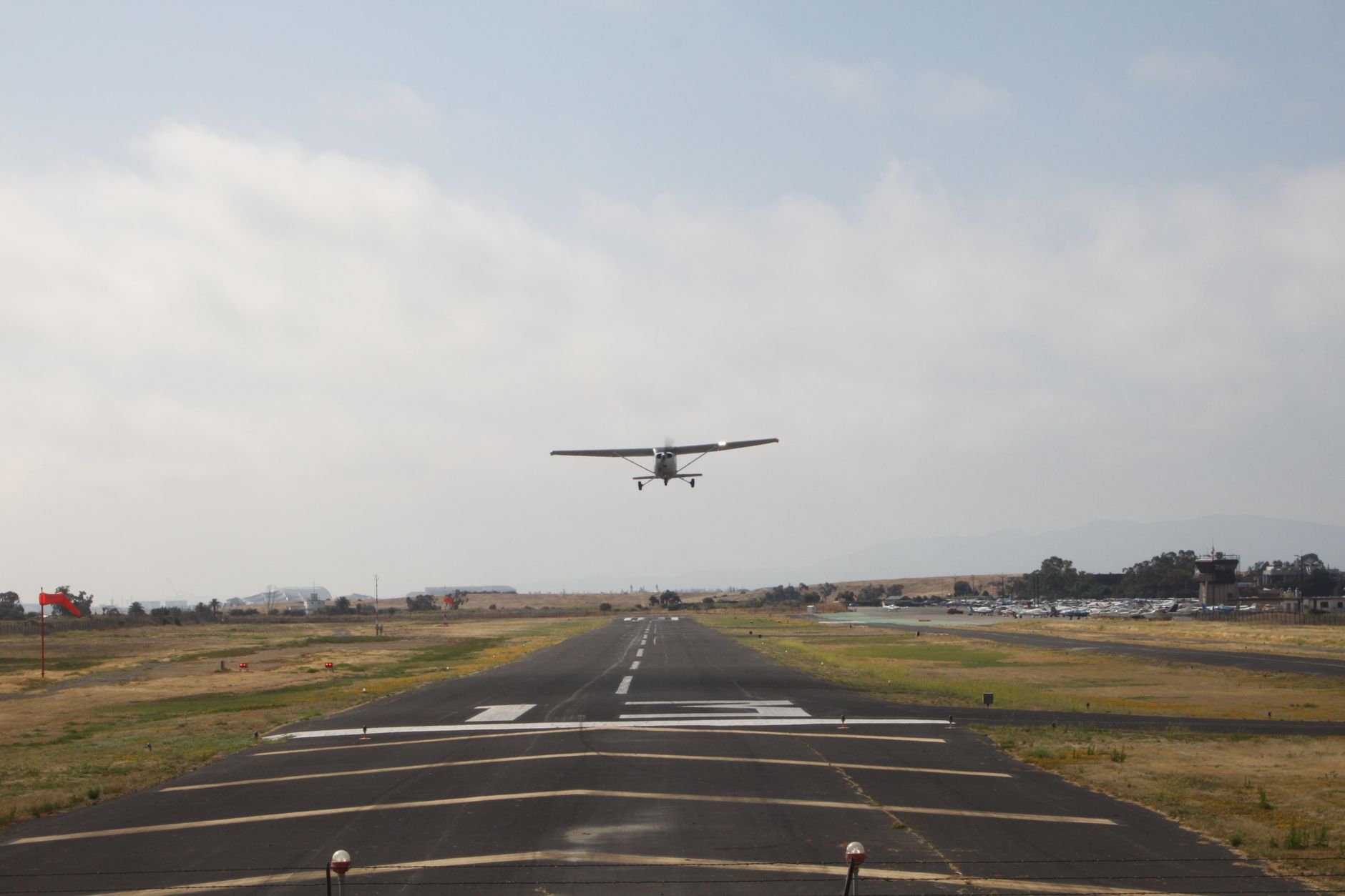
Short answer: Whether you’ll do touch-and-goes on a checkride depends on the examiner, the airport and the airplane. Many examiners prefer full-stop or stop-and-go landings because touch-and-goes add workload and risk, such as forgetting to retract flaps or carb heat, and some airports restrict them. Ask in the preflight briefing how the examiner wants landings handled, and don’t assume.
Options Compared
| Type | What happens | Considerations |
|---|---|---|
| Touch-and-go | Land, reconfigure and take off without stopping | High workload; configuration errors possible |
| Stop-and-go | Stop on the runway, reconfigure, take off | Requires enough runway length |
| Full stop, taxi back | Exit the runway and taxi back | Slowest, but lowest workload |
If You Do Touch-and-Goes
- Keep the airplane on the centerline first. Fly the airplane before reconfiguring.
- Use a short, consistent flow: flaps up (per your POH sequence), carb heat off, trim set, full power.
- If anything feels rushed or you’re running out of runway, convert to a full stop.
The Bottom Line
Clarify expectations during the briefing. Whatever the examiner prefers, the safest choice is always available: make it a full stop.
Frequently Asked Questions
Will I fail for doing a full stop instead of a touch-and-go?
No. Choosing the safer option is sound judgment.
Can an airport prohibit touch-and-goes?
Yes. Some airports restrict them. Check the Chart Supplement and NOTAMs.
Should I practice touch-and-goes before the checkride?
Practice whatever you plan to do on the checkride, with your instructor.
Sources: FAA — Airplane Flying Handbook; FAA — Airman Certification Standards