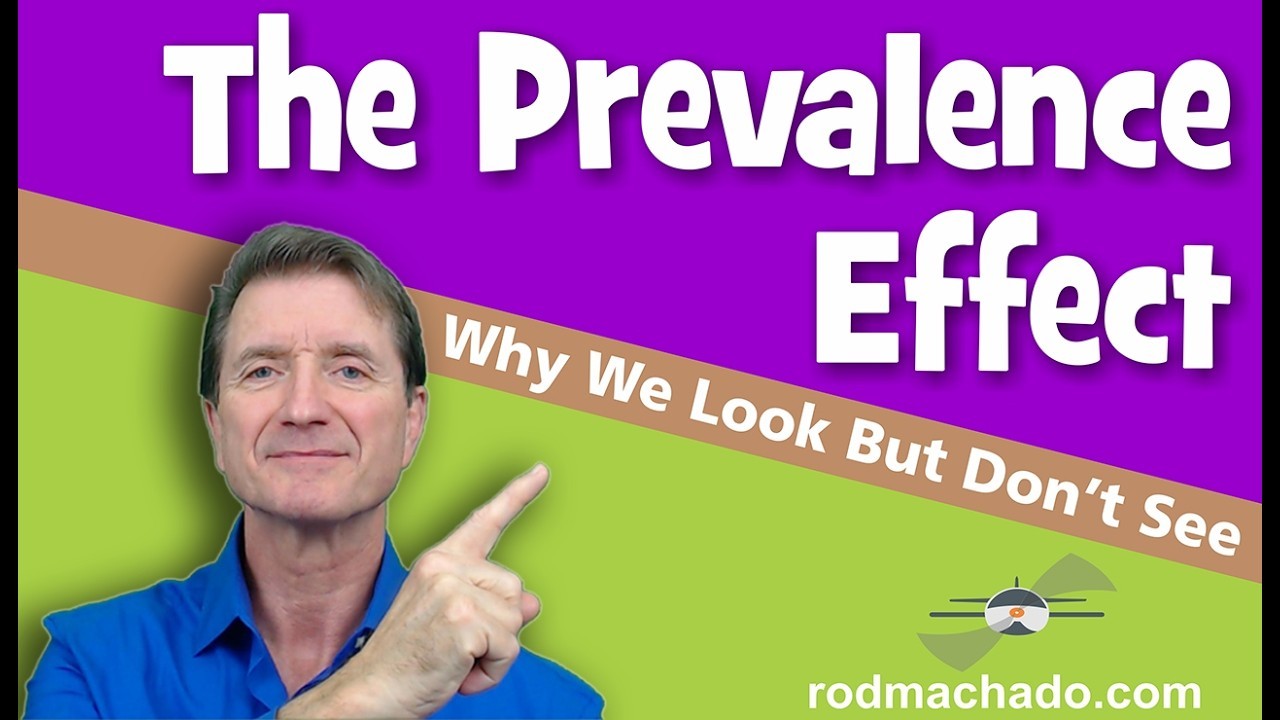
In short: The prevalence error is the brain’s habit of quitting a search early when the thing it’s looking for rarely shows up. Rod Machado explains why that makes runway intruders, nearby traffic and preflight defects easier to miss, and why the cure is to treat critical areas with deliberate suspicion.
Video: “The Prevenance Error” by Rod Machado, from his YouTube channel.
What you’ll learn
- What researchers at Harvard’s Visual Attention Lab found about searching for rare targets
- Why your brain cuts a search short when experience says nothing is there
- How the effect explains missed items in airport baggage screening
- Where the prevalence error threatens pilots: the runway, traffic near airports, the propeller and preflight
- Rod’s antidote: profile critical areas as guilty until proven innocent
A missing candy bar and a lazy brain
Rod opens with a household mystery. A candy bar he hid in the pantry turned up on a different shelf, and despite scanning every shelf he simply didn’t see it. His eyesight was fine. The problem was that his expectation of where it should be collided with where it actually was, and his search ended too soon.
He connects this to work by Dr. Jeremy Wolfe at Harvard’s Visual Attention Lab. When we repeatedly search for something and don’t find it because it rarely appears, we become less likely to spot it on a later search when it really is there. Rod’s blunt explanation is that the brain is built to save effort, and persistent looking is hard work. That’s sensible for trivia, but not for hazards that can hurt you.
Why it matters on the runway and during preflight
Baggage screeners are a classic example: they look for weapons that almost never appear, which makes the rare real one easier to miss. Pilots face the same trap. If you’ve glanced down hundreds of runways and almost never found a vehicle, an animal or another airplane, you may give the next runway a quick look and move on.
Rod lists the places where this matters most: the runway environment on takeoff and landing, airborne traffic near airports, a cracked propeller, and items checked during preflight that are rarely wrong but serious when they are.
The fix: deliberate suspicion
Rod’s antidote is to borrow a page from police officers working rough neighborhoods and treat everything critical as a suspect. He calls it runway profiling: assume the runway is guilty until proven innocent. Who is near it, on it or approaching it, and why?
Suspicion forces you to spend more time looking where it counts and keeps you from abandoning the search early. It won’t make you see better, but it will make you look longer in the places where a missed target has consequences.
Go deeper with Rod Machado
Rod explores how attention, perception and expectation shape pilot decisions in much more depth in his audiobook on aviation psychology. Learn more in Human Factors for Pilots (Audiobook).
Looking for a flight instructor or flight school near you? Browse instructors and training programs on Skyfarer.
Affiliate disclosure: Skyfarer may earn a commission from qualifying purchases via our links. This funds our content for pilots.