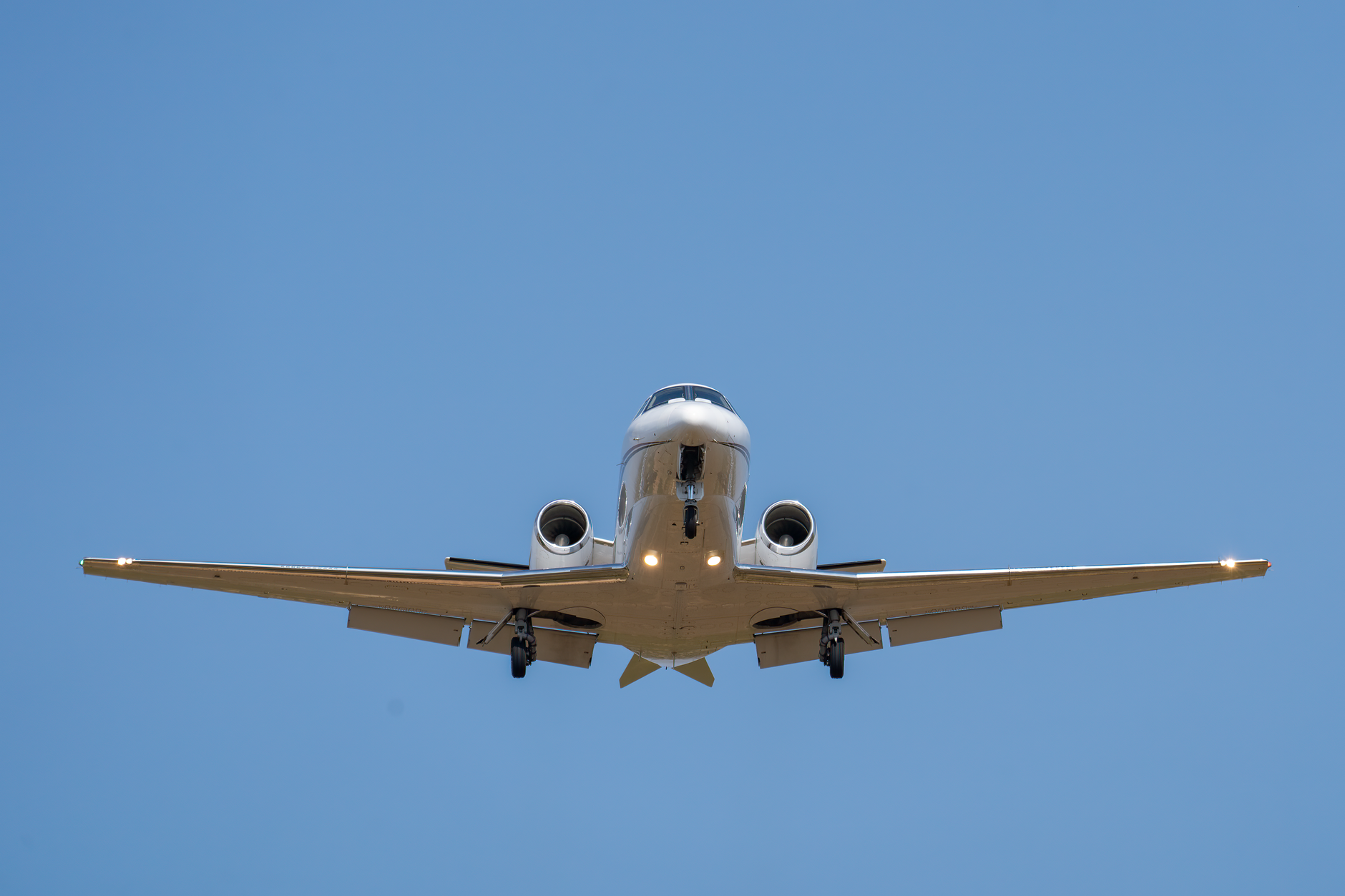
Joby Aviation completed New York City’s first-ever point-to-point electric vertical takeoff and landing (eVTOL) demonstration flights between April 20 and April 27, 2026, flying its production prototype aircraft (registration N545JX) from John F. Kennedy International Airport to three Manhattan heliports — Downtown Skyport, West 30th Street, and East 34th Street — in under 10 minutes per leg. The week-long campaign was the second stop on Joby’s 2026 Electric Skies Tour and the highest-profile demonstration so far under the FAA’s eVTOL Integration Pilot Program (eIPP). For an industry that has spent years proving the technology works, the JFK flights represent something different: proof that the regulatory and operational infrastructure for commercial air taxi service is also starting to come together.
Here’s the full story behind the flights, what they actually accomplished, and what comes next for advanced air mobility (AAM) in the United States.
What the Flights Actually Did
The headline detail — JFK to Manhattan in under 10 minutes — is what makes the campaign tangible to anyone who’s ever sat in JFK traffic. A typical drive from Manhattan to JFK takes 60 to 120 minutes depending on time of day, day of week, and weather. Joby’s electric air taxi demonstrated that the same journey can be completed in under 10 minutes when air-side operations replace surface traffic.
The aircraft used was N545JX, Joby’s production prototype S4 — a five-seat aircraft (one pilot, four passengers) with all-electric propulsion designed for urban and regional air mobility. Over the course of the campaign, the aircraft flew multiple legs between JFK and three of Manhattan’s most established heliport sites:
Downtown Skyport (Pier 6) at the lower edge of Manhattan, serving the Financial District and World Trade Center area.
West 30th Street Heliport, home to Blade Air Mobility’s premium passenger lounge, serving Chelsea and the West Side.
East 34th Street Heliport, serving Midtown East and the United Nations district.
Each flight used existing FAA-controlled airspace and existing certified heliport infrastructure — proving that future commercial air taxi operations can integrate into the existing aviation system rather than requiring entirely new infrastructure from scratch.
No paying passengers were carried. The flights were demonstrations, not revenue service. But everyone watching — from the Port Authority to the financial markets — understood the message: this is what commercial service will look like once full FAA certification is in place.
Joby’s Statement on the Flights
JoeBen Bevirt, Joby’s founder and CEO, framed the campaign in terms of the company’s long arc with New York. “New York has always been a city that defines the future by demanding better,” Bevirt said. “We first flew here in 2023, and now we’re showing what the next chapter looks like: a quiet, zero operating emissions air taxi service designed to better serve New Yorkers. This week, flying between JFK and Manhattan, we showed what the White House-backed eIPP initiative makes possible and offered New York a look at what’s coming.”
Eric Allison, Joby’s chief product officer, was more direct about the operational case. “This is how we supercharge this,” he told Yahoo Finance from the Blade lounge at West 30th Street. “This is how we are able to scale, both in terms of the cost structure and in terms of the environmental friendliness of this. This is a zero-emissions aircraft, flying from JFK to here and back, but also incredibly low noise.”
Allison also flagged the noise advantage as essential to unlocking destinations that helicopters cannot serve. “There are places where people don’t want helicopters to land. With this type of technology, the convenience of vertical flight — being able to book a trip through the Uber app and fly at 200 miles an hour to the airport — you want that closer to you.”
The financial markets responded positively: Joby’s stock rose roughly 3 to 6 percent on the day of the demonstration.
What Is the eVTOL Integration Pilot Program (eIPP)?
The flights happened under the FAA’s eVTOL Integration Pilot Program, a White House-backed initiative announced in 2025 to test how electric vertical takeoff and landing aircraft can be integrated into the U.S. national airspace.
The eIPP is expanding test operations across 26 states with multiple manufacturers and operators. The program’s goals include:
Validating air traffic integration. Determining how eVTOL aircraft can operate in shared airspace with conventional aircraft, including in busy controlled airspace like New York’s Class B.
Testing infrastructure compatibility. Confirming that existing heliports and emerging vertiports can support electric aircraft, including charging infrastructure and operational procedures.
Building operational data. Generating real-world flight data that informs final FAA certification standards, operational rules, and noise impact assessments.
Coordinating with state and local authorities. Working with city governments, port authorities, and airports to develop the regulatory and procedural frameworks for commercial operations.
The Port Authority of New York and New Jersey is a winning eIPP applicant, which is what made the JFK-Manhattan flights possible. As Port Authority Chairman Kevin O’Toole framed it: “This cutting-edge aircraft is exactly the kind of innovation we have a responsibility to test, understand, and help shape for the good of the region and the public.”
Why JFK and Why Now
Joby chose New York for several strategic reasons.
Existing heliport network. Manhattan already has a robust heliport infrastructure, much of it operated by Blade Air Mobility — which Joby acquired in 2025. Blade transported approximately 90,000 passengers in the New York market in 2024 using conventional helicopters. The infrastructure exists; the question is what aircraft fly through it.
Traffic congestion. New York commuters lost an average of 102 hours to traffic congestion in 2025, according to data Joby has cited. The JFK-to-Manhattan corridor specifically is one of the country’s most acute time-loss scenarios — high-value travelers routinely budget 90+ minutes each way.
Symbolic value. New York airspace is among the most tightly controlled in the world. A successful demonstration in this airspace signals that regulators are increasingly comfortable with eVTOL operations in even the busiest environments. The same flight in a remote desert test range would not have the same regulatory significance.
Commercial network density. New York supports the highest concentration of business travelers, premium ground transportation users, and helicopter charter customers in the U.S. — exactly the early-adopter demographic that air taxi services will rely on at launch.
Where Joby Stands in FAA Certification
The demonstration flights happened in parallel with Joby’s ongoing FAA type certification process. The S4 aircraft is in Stage 4 of the FAA’s five-stage certification process. As of early 2026, Joby has begun flight testing its first conforming aircraft and is preparing for FAA pilot inspection later in 2026.
The company is targeting initial U.S. commercial operations in the second half of 2026, though full type certification remains a multi-quarter effort. Joby’s certification position is ahead of its primary U.S. competitor Archer Aviation (NYSE: ACHR), which is at an earlier stage of the same process.
The faster path to commercial service may actually be international. Joby and Dubai’s Roads and Transport Authority (RTA) are working toward launching passenger-carrying service in Dubai in 2026, where infrastructure and regulatory approvals are moving more quickly than in the U.S.
The Partnership Ecosystem
Joby’s commercial strategy depends on partnerships that integrate the air taxi into broader transportation experiences:
Uber. Joby and Uber have signed a multi-year partnership integrating Joby’s air taxi into the Uber app. According to Uber’s head of product Sachin Kansal, the service will be called Uber Air and priced similarly to Uber Black (premium tier), though the final fare structure is still undefined. Passengers would book a ride through the Uber app, be driven to the nearest heliport, fly to their destination, and complete the final leg by car — all in a single seamless transaction.
Delta Air Lines. Joby’s partnership with Delta is designed to offer connecting air taxi service from major Delta hubs to city centers, integrating into airline passenger journeys. JFK-to-Manhattan is exactly the kind of route this partnership targets.
Blade Air Mobility. Joby acquired Blade’s passenger business in 2025, gaining access to Blade’s network of heliports, established passenger base, and operating know-how in New York and other markets.
Toyota. Toyota has invested approximately $500 million in Joby and is a strategic manufacturing partner. The investment provides Joby with capital and access to Toyota’s automotive-scale manufacturing expertise.
What This Means for the AAM Industry
The Joby JFK demonstration is one data point in a broader industry inflection. Several signals suggest 2026 may be the year urban air mobility moves from demonstrations to early commercial operations:
Regulatory progress. The eIPP framework, Stage 4 certification progress at Joby, and parallel work at Archer Aviation suggest the FAA is closing in on production certification standards for the entire eVTOL category.
Infrastructure investment. Cities and airports are actively planning vertiport infrastructure. The Port Authority’s $45 billion 2026-2035 capital plan includes provisions for advanced air mobility integration at JFK and Newark Liberty. The FAA broke ground on an AAM research range in Oklahoma City in June 2026 specifically to support vertiport testing and eVTOL integration work.
Aircraft production scaling. Joby’s Marina, California production facility is ramping up to deliver aircraft for commercial service. The company has accumulated over 50,000 miles of test flights across its development fleet.
International parallel paths. Dubai, the EU, and several other jurisdictions are running their own certification and integration programs, creating multiple geographies where commercial service could launch first.
For competitor companies, the Joby flights validate the underlying market opportunity but also intensify competitive pressure. Archer Aviation, Vertical Aerospace (developing the Valo aircraft with American Airlines and Virgin Atlantic partnerships), and emerging competitors all need to demonstrate similar operational capability to remain competitive.
What This Means for the GA and Aviation Community
For general aviation pilots, controllers, and airport operators, the eVTOL integration push has several practical implications worth tracking:
Airspace integration. As eVTOL operations scale, GA pilots will share airspace and procedures with these aircraft. Familiarity with eVTOL operations will become part of standard pilot knowledge over the next several years.
Heliport and airport infrastructure changes. Vertiports — heliports designed for eVTOL operations, often with charging infrastructure — will appear at GA airports and reliever airports. Some of this infrastructure will be funded through programs like the FAA’s $26 million Aviation Workforce Development Grants and related capital programs.
New career pathways. eVTOL operations are expected to generate demand for thousands of new pilots over the next decade. Joby plans to operate its own air taxi service, which means hiring and training pilots specifically for eVTOL operations.
Maintenance and avionics changes. The technical workforce supporting eVTOL aircraft will require new skill sets in battery systems, electric propulsion, and the unique avionics requirements of these aircraft.
The Bottom Line
Joby’s JFK-to-Manhattan demonstration flights were not commercial operations — no paying passengers, no fares, no scheduled service. But they were one of the clearest signals yet that the commercial eVTOL air taxi era is approaching. The technology works. The regulatory frameworks are advancing. The infrastructure exists. The partnerships are in place. What remains is the final stretch of FAA type certification, the buildout of production capacity, and the operational shakedown of the first commercial services.
If Joby hits its target of second-half 2026 commercial operations, the United States will see its first sustained electric air taxi service before the year is out. JFK and Manhattan are the natural starting point. The April 2026 demonstrations were the dress rehearsal.
For New Yorkers losing two hours a day to traffic — and for the broader aviation industry watching whether urban air mobility can transition from concept to reality — the next 12 months will be among the most consequential in modern aviation history.
Frequently Asked Questions
When did Joby fly its electric air taxi between JFK and Manhattan? Joby Aviation completed its New York City demonstration flights between April 20 and April 27, 2026, flying its production prototype S4 air taxi (registration N545JX) from John F. Kennedy International Airport to three Manhattan heliports — Downtown Skyport, West 30th Street Heliport, and East 34th Street Heliport. The flights took place under the FAA’s eVTOL Integration Pilot Program (eIPP).
How long does the Joby JFK-to-Manhattan flight take? Joby’s demonstration flights between JFK and Manhattan heliports took under 10 minutes per leg, with some routes completed in approximately seven minutes. By comparison, the same trip by ground transportation typically takes 60 to 120 minutes depending on traffic conditions.
When will Joby begin commercial air taxi operations? Joby Aviation is targeting initial U.S. commercial operations in the second half of 2026, pending completion of FAA type certification. The company has completed Stage 4 of the FAA’s five-stage certification process and is preparing for FAA pilot inspection later in 2026. Commercial passenger-carrying service in Dubai through a partnership with Dubai’s Roads and Transport Authority is also targeted for 2026.
What is the eVTOL Integration Pilot Program (eIPP)? The eVTOL Integration Pilot Program is a White House-backed FAA initiative announced in 2025 that supports test operations across 26 states with multiple eVTOL manufacturers. The program is designed to validate how electric vertical takeoff and landing aircraft can integrate into the U.S. national airspace, test infrastructure compatibility, generate operational data, and coordinate with state and local authorities. The Port Authority of New York and New Jersey is a winning eIPP applicant.
What is the Joby S4 air taxi? The Joby S4 is an all-electric, vertical takeoff and landing (eVTOL) aircraft developed by Joby Aviation. It accommodates one pilot and four passengers, has a top speed of approximately 200 mph, and is designed for urban and regional passenger transport with zero operating emissions and significantly lower noise than conventional helicopters. The aircraft is being produced at Joby’s facility in Marina, California, with strategic manufacturing support from Toyota.
Sources:
- Joby Aviation — Joby Brings Electric Air Taxis to New York City in Week-Long Flight Campaign (April 27, 2026)
- Yahoo Finance — Joby Aviation Completes First NYC Test Flight, Sending Electric Air Taxi From JFK to Manhattan (April 28, 2026)
- electrive.com — Joby Demonstrates Its Air Taxi in New York City (April 29, 2026)
- 24/7 Wall St. — Joby’s NYC Air Taxi Demo: Is the eVTOL Commercial Breakthrough Finally Here? (April 28, 2026)
- Joby Aviation Investor Relations — Press Release Archive